From the stylish Bogotanos to the Colombian Highland muisca

An early morning arrival into Bogotá, the capital of Colombia. My lovely airbnb hosts, Juliana and Juan, had arranged for a driver to collect me at the airport taking away some of my anxieties about visiting this city that has, regardless of whether it is deserved, a poor reputation in terms of crime.
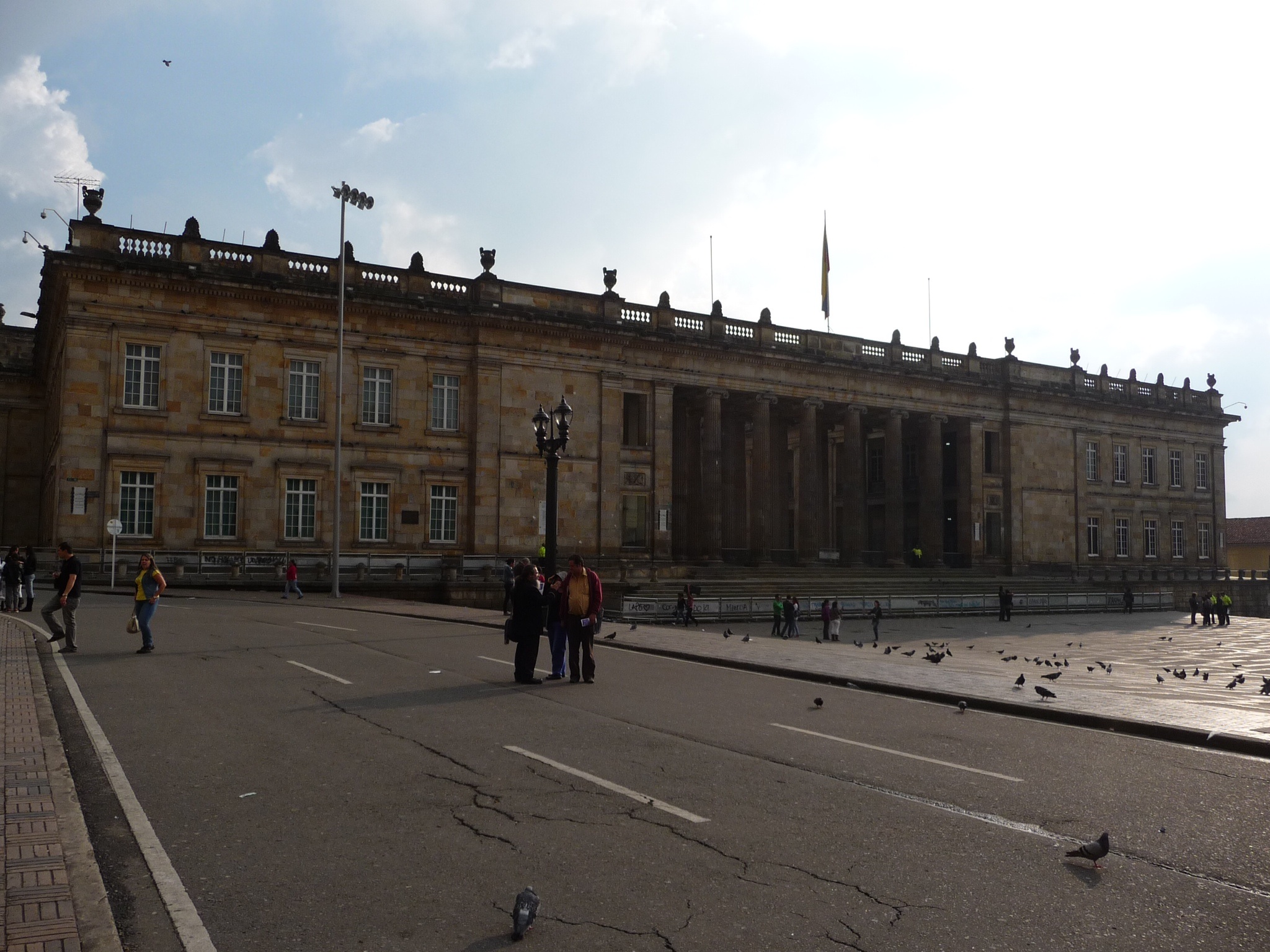
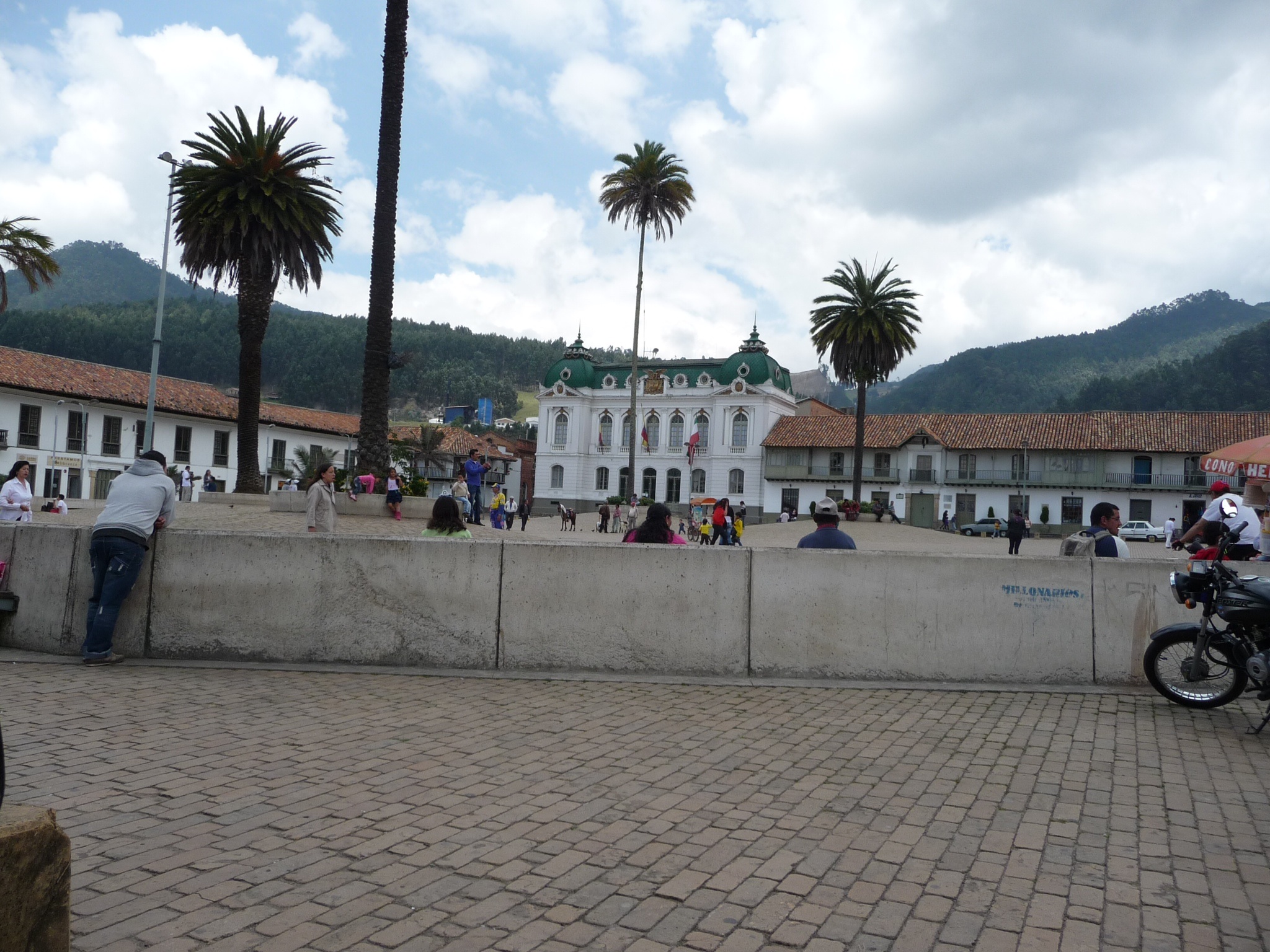
After a bit of rest I was off exploring the city heading straight for Plaza de Bolívar, (commemorates El Liberatador, Simón Bolívar, first President of the Republic of Gran Colombia) for a bit of orientation and people watching. A lovely plaza surrounded by the Congress, Council chambers, court and cathedral.
I was then off to lose myself in La Candelaria; with it’s lovely old colonial buildings and myriad of museos.  My first stop was Museo Botero, which houses a wonderful art collection donated by the Colombian artist Fernando Botero in 2000. Botero is a prolific producer of art and has a wonderfully distinctive style of oversized subjects. He’s particularly know for his renaissance inspired pieces – the Mona Lisa was definitely one of my favourites. The collection also includes many works by European artists such as Picasso, Renoir, Degas, Monet, Miro, Moore and the list goes on; quite a treat.
The Casa de Modena (the Mint) was the next to be visited. It provided a great history of the colonisation and independence of Colombia through coins and notes.
Colombia’s history is pretty fascinating given its past relationship with neighbouring countries of Peru, Ecuador, Panama and Venezuela. Essentially these countries were colonised by the spaniards in the 1500s and established as Nueva Granada. There was then a period in which a number of the provinces (now countries) were established as a republic in 1819 – the colonists had lost interest in retaining ties with Spain once the French had taken rule of parts of Spain.  Infighting continued between the united countries who had opposing views on centralisation and federalisation until finally Colombia obtained independence as the republic of Colombia.
The usual decimation of the indigenous population occurred with 95% of the muiscas (central indigenous peoples) and taironas (Sierra Navada indigenous peoples) being wiped out in the first century of colonial times. Disease was one of the causes but another was the overwork of people through the form of a Clayton’s slavery that was created – high taxes imposed, assigned to colonists to work and then a pittance paid to enable taxes to be paid.
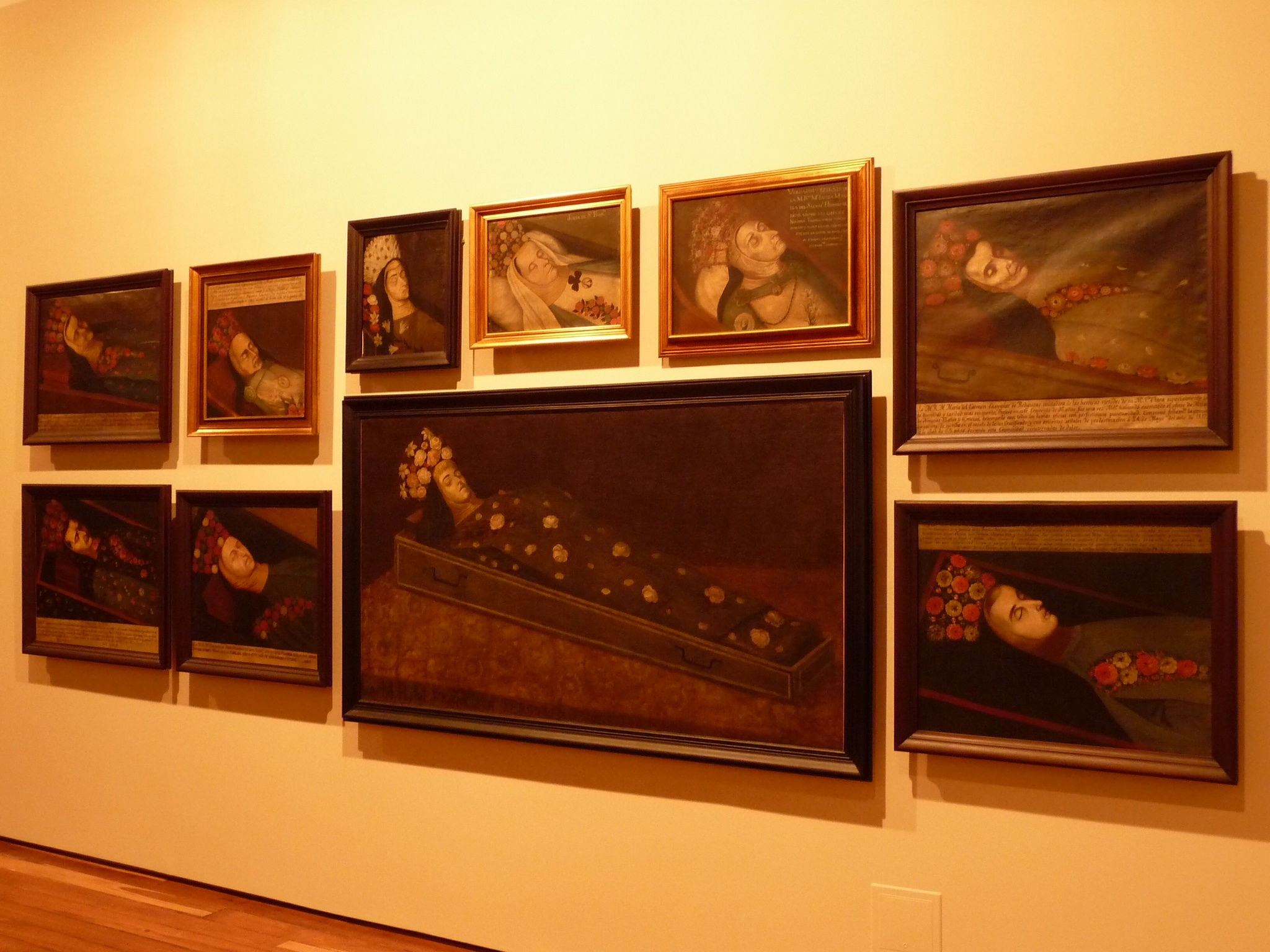
The mint also contained an art collection from local artists. One group of paintings that caught my eye was of women lying in their coffins with flowers adorning their dresses. Apparently the colonial women of the elite had two fates (as determined by their father) – the convent or marriage.  The paintings depicted those who had led a life of sanctity; the flowers representing the virtues of the nun while alive – red rose for passion, iris for chastity, carnation for love, lily for purity, jasmine for elegance and grace and violets for humility.  I ponder what my flower would be had I chosen the nunnery!
Time to check out what food the supermarket had on offer for this vego – motorbikes, yep, right next to the bananas!  I wonder if Aldi will branch into this market?
There was no real evidence of tourists on the street or at least they were difficult to spot unless you heard them speak, although Juliana and Juan tell me that the number of tourists is growing markedly.
The streets are packed with people, regardless of the day of the week. Eight million of the 45 million Colombians live in Bogotá.
Wheeled stalls are everywhere selling hotfood, snacks and fresh fruit – whole, cut, fruit salad or as juices. The other occupants of the streets are horses – pulling buggies of all sorts of things from rubbish to fuel for cooking to construction materials. With all these people and activity it’s not surprising that the traffic and fumes are quite bad in the city. A system of regulating car use in the city by number plate has been adopted to help this – I’m told the rich get around it by buying two cars enabling city driving any day of the week.
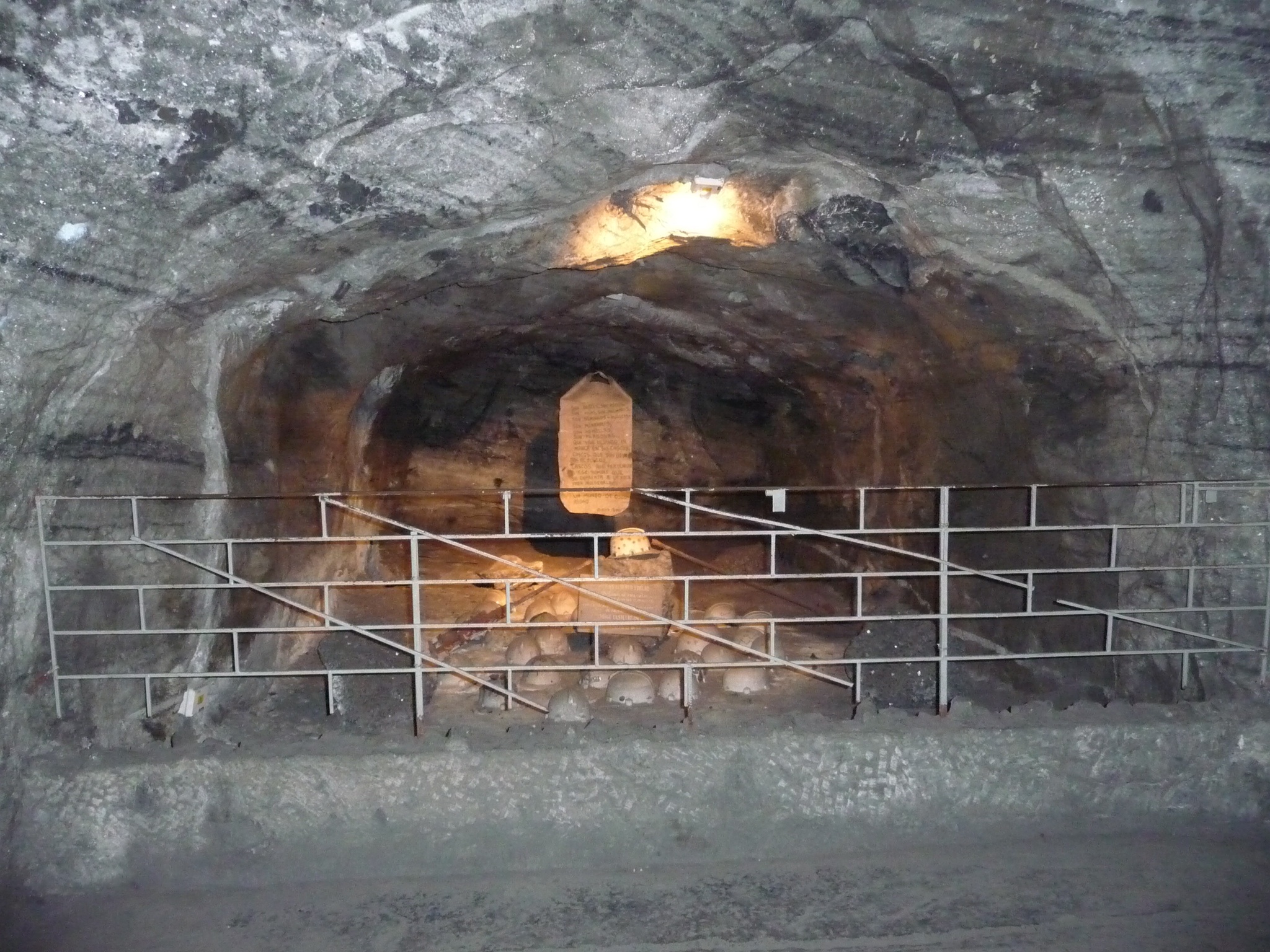
I visited the Catedral de Sal (Cathedral carved into salt 130m underground) in Zipaquira the following day. The cathedral adjoins the 4th largest salt mine in the world. More than 400 tonnes of salt is mined here per day and there’s enough to continue mining for another 500 years.
Salt was the first commodity of the muiscas; used to barter for other goods (‘sal’ > salary?). Next was gold, reflected in the legend of El Dorado (the chief who as part of a spiritual ritual coated himself in gold dust and then immersed himself in the lake – rather than any treasure trove as hoped by the Spaniards). Emeralds were the final commodity with Colombia being the largest miner of emeralds. Interestingly Colombia is the second largest exporter of cut flowers, after Holland. Lovely flower stalls and shops run along streets in particular districts.
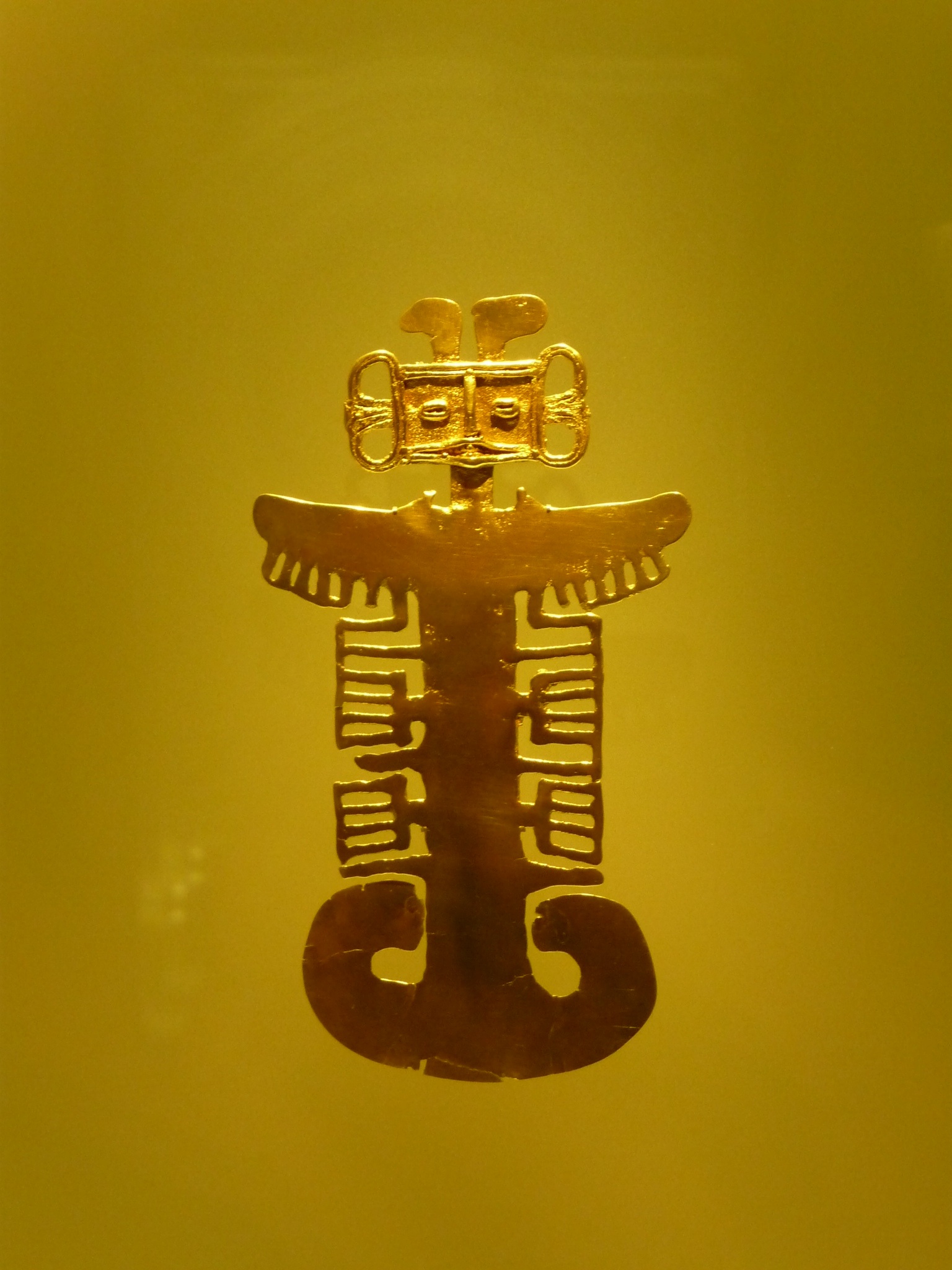
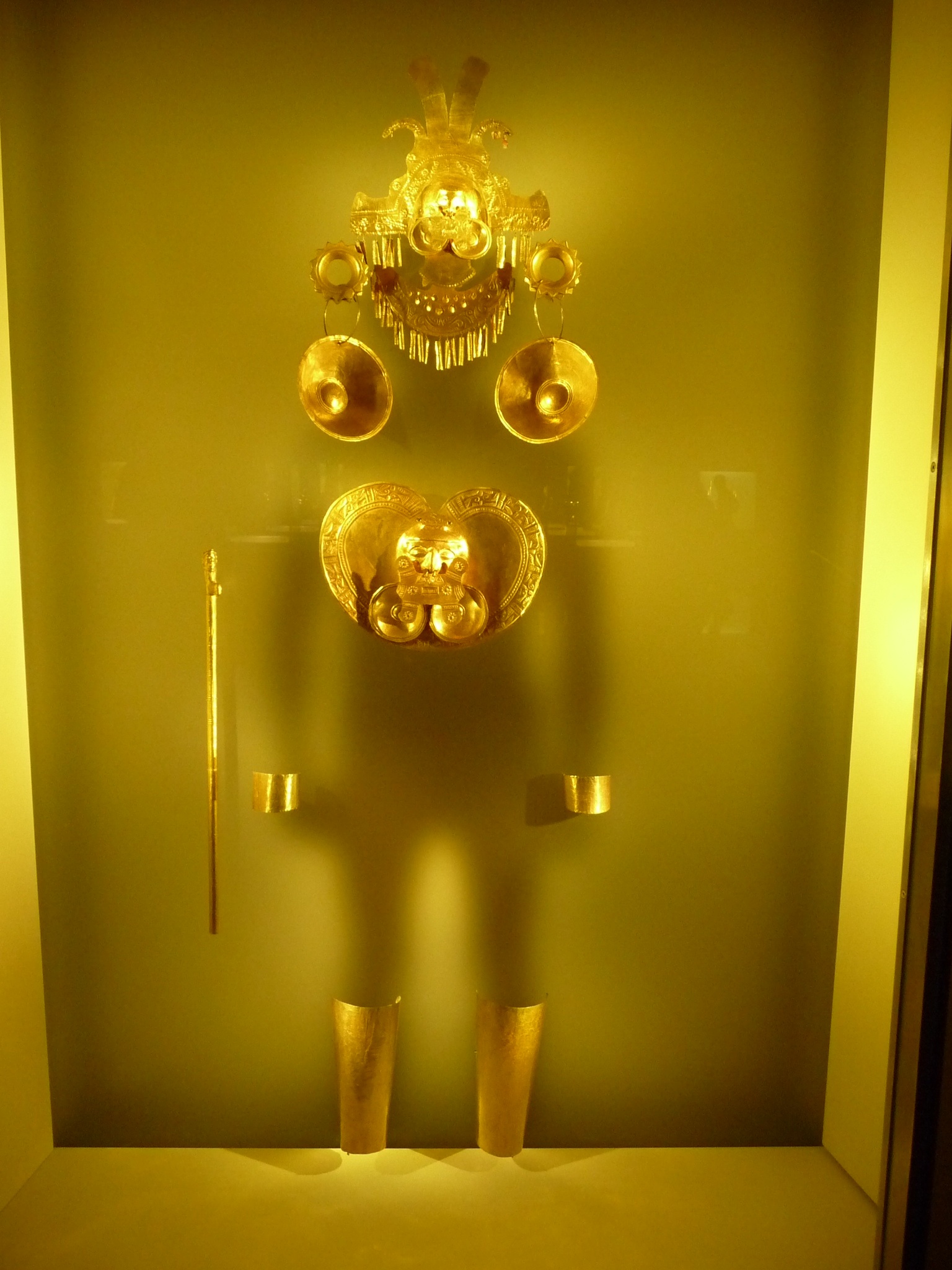
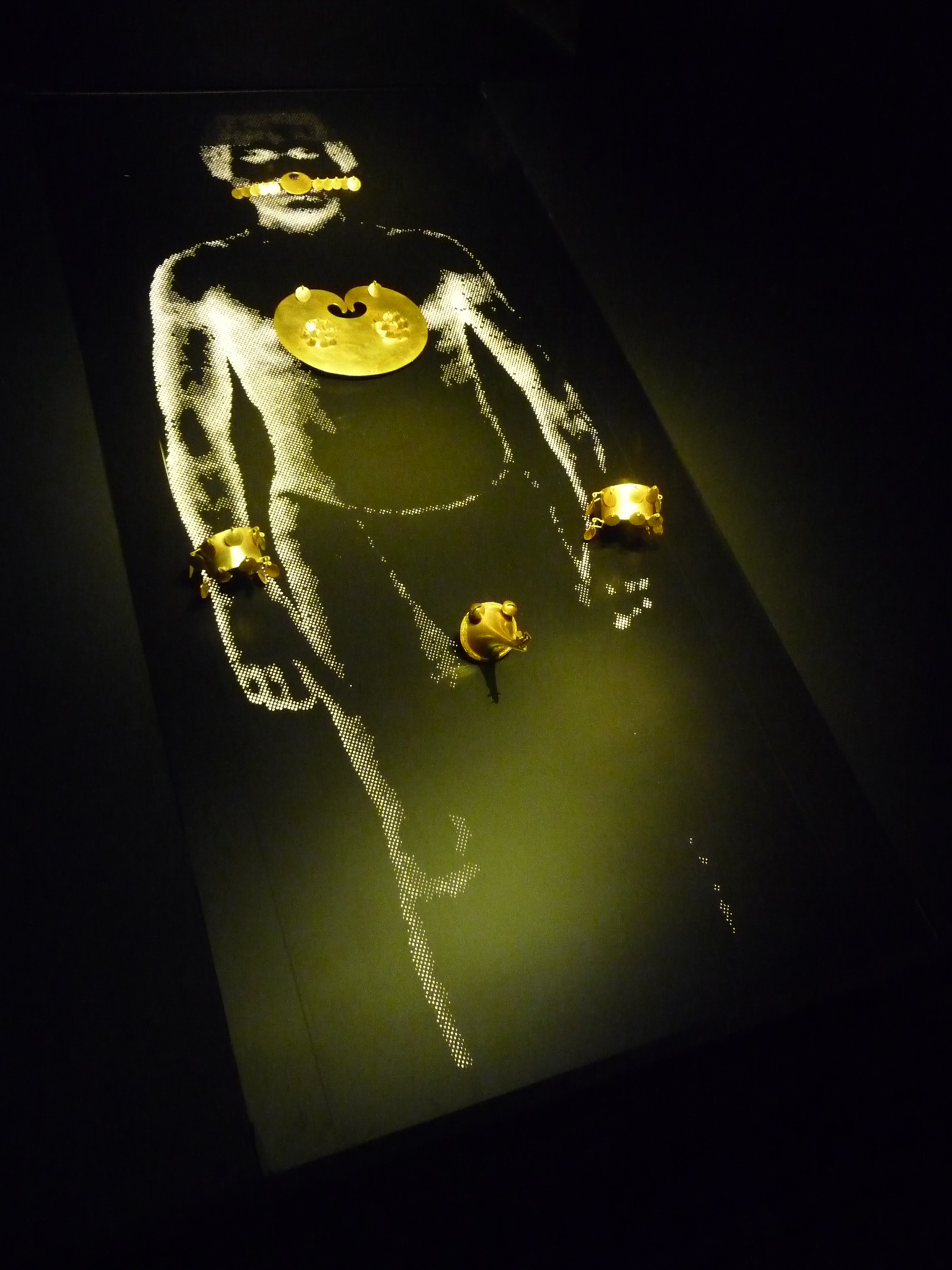
The Museo del Oro (gold museum) provided a good insight into the use of gold by the indigenous people of Colombia and South America. Easy to see where the current style of tribal body piercings originated and why the spaniards were so interested in Colombia – the collection  of body and wall adornments was amazing. The choice of adornment for breasts and the penis are interesting!
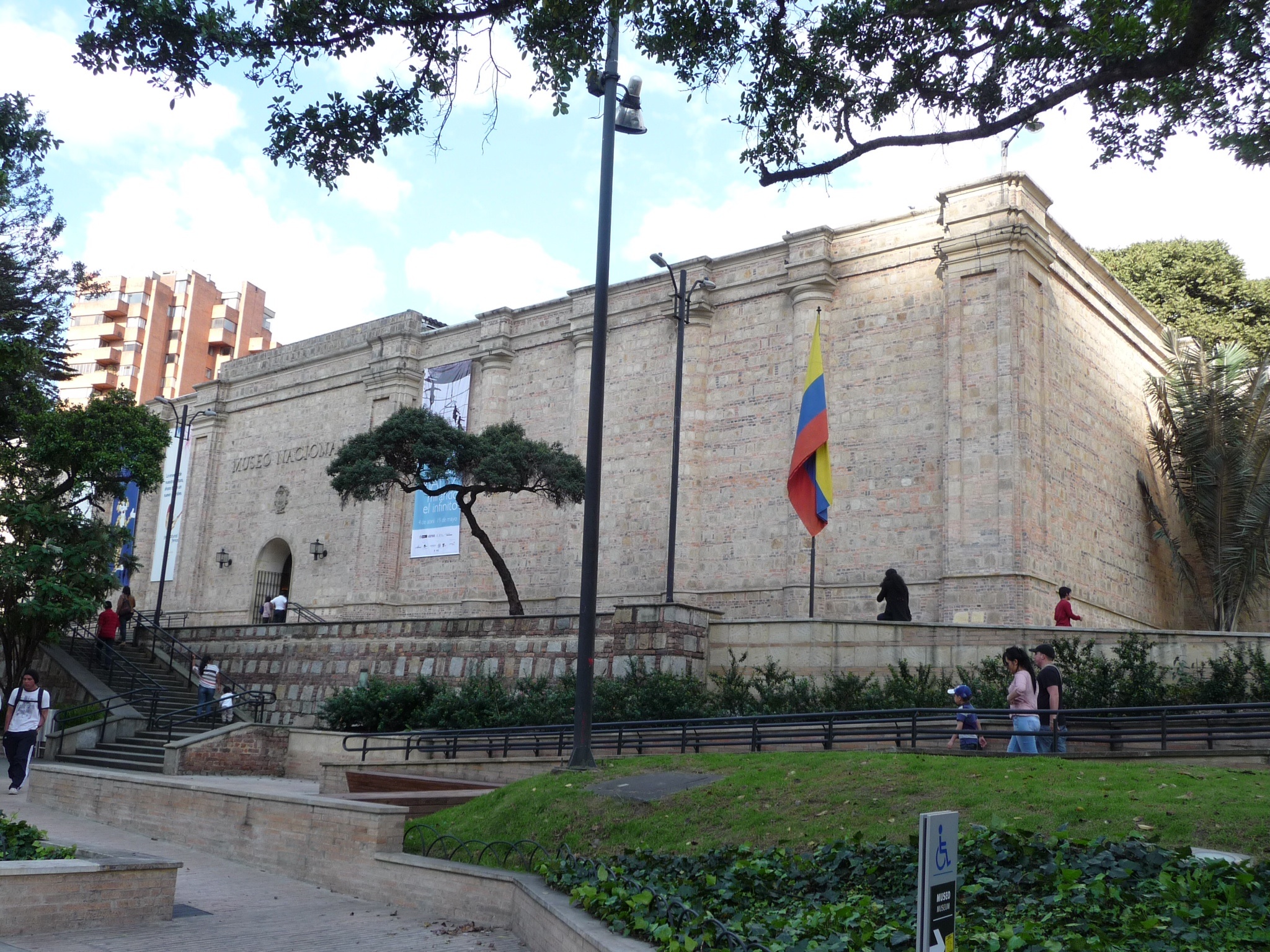
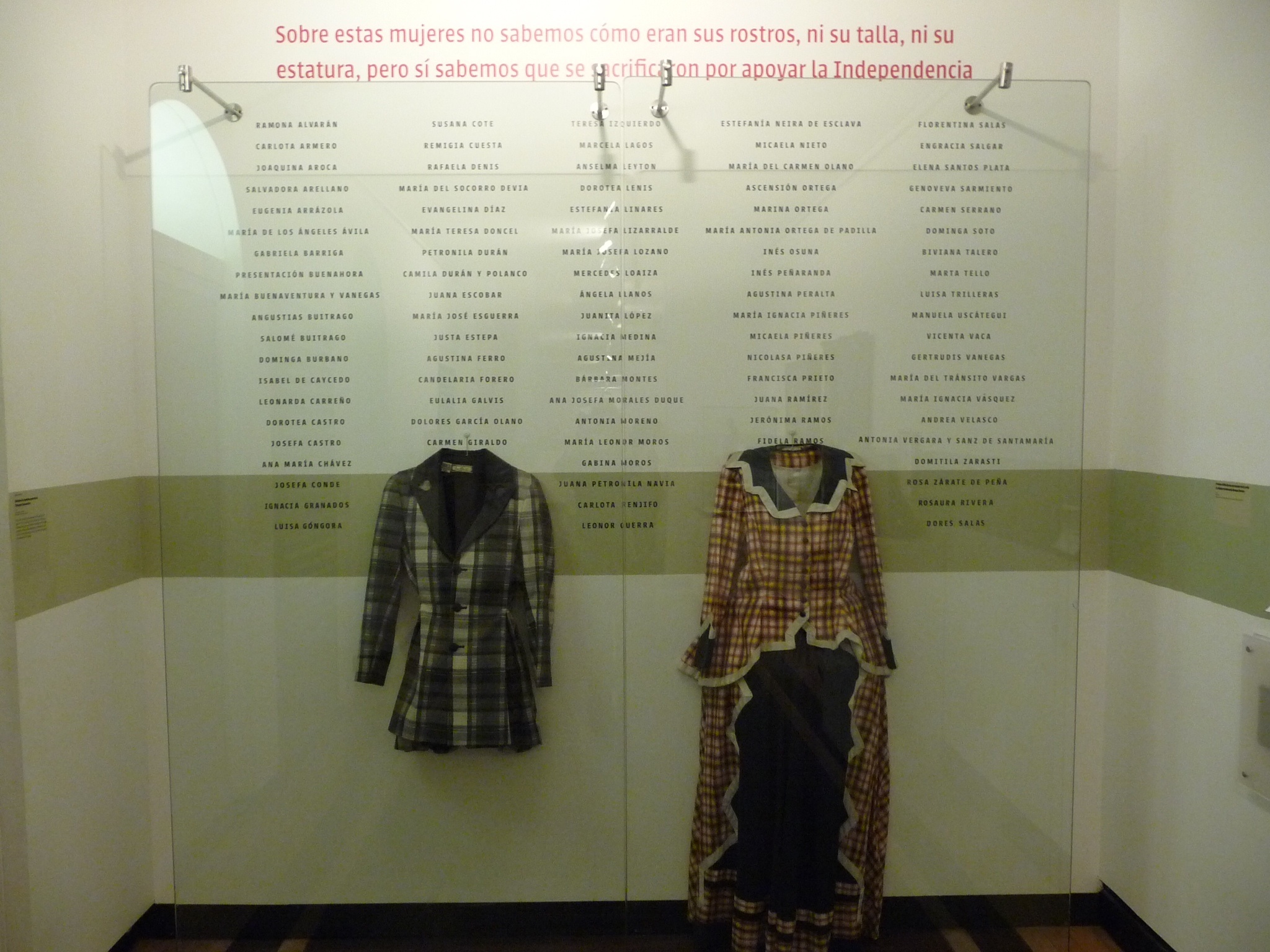
Final stop for the day was the national museum – another in a prison.  It was lovely to see all of the locals there taking advantage of free entry on Sundays (by luck I too had managed to visit all of the museos on their free days).  Wonderful museum exhibiting pre-Hispanic pieces through to pieces associated with the liberation of Colombia. Unfortunately most of the information was in Spanish but I was able to get the gist of most of it. Botero’s works also featured as did some art from South American artists like Ceballos – I didn’t think it was quite in the class of the European masters. There was also a great display of the women who had made a significant contribution to Colombia’s independence.
Took me a bit to get the street numbering system (on a grid using numbers rather than names). Knowing my Spanish numbers (thanks Paula) certainly helped as I asked people directions (the rest was worked out by hand gestures!).
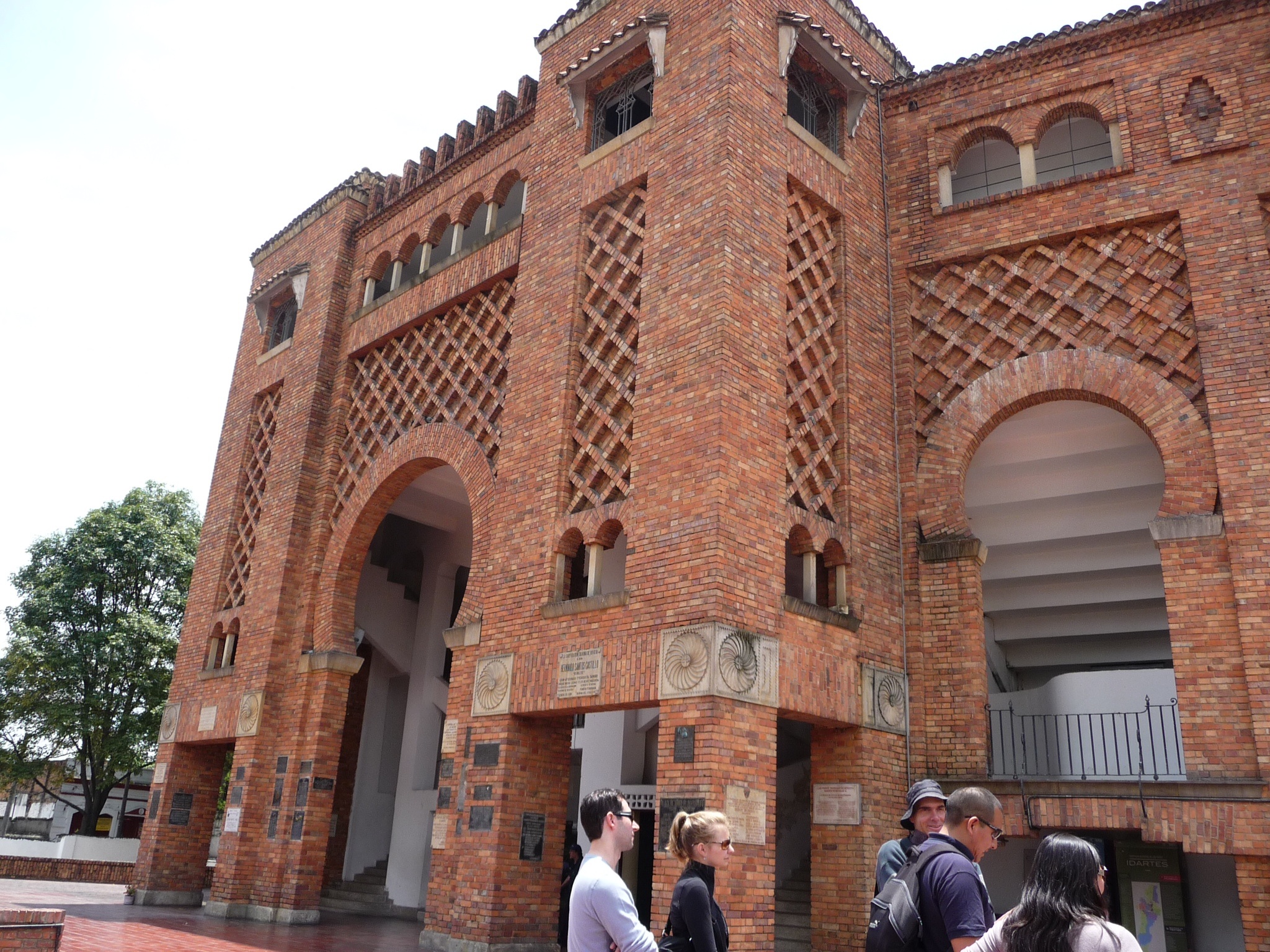
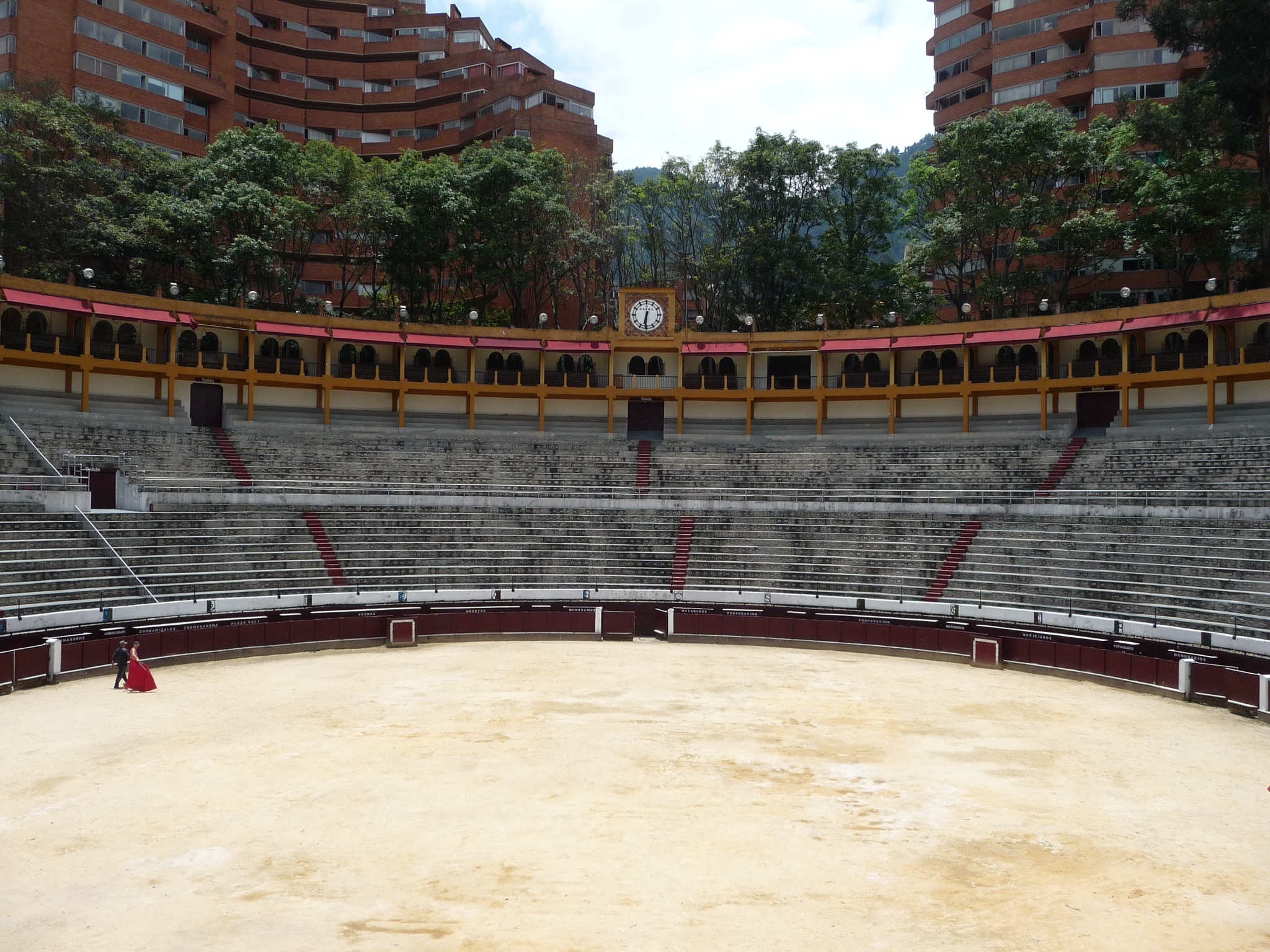
Final full day in Bogotá and I was off on a bicycle tour. We did the rounds of the national park, hockey and blind football fields (ball bearings in the ball guide the players – seeing refs are used), bullfighting ring (current mayor doesn’t support bullfighting, nor does a lot of the population, so he turns it into an ice skating rink on occasions).
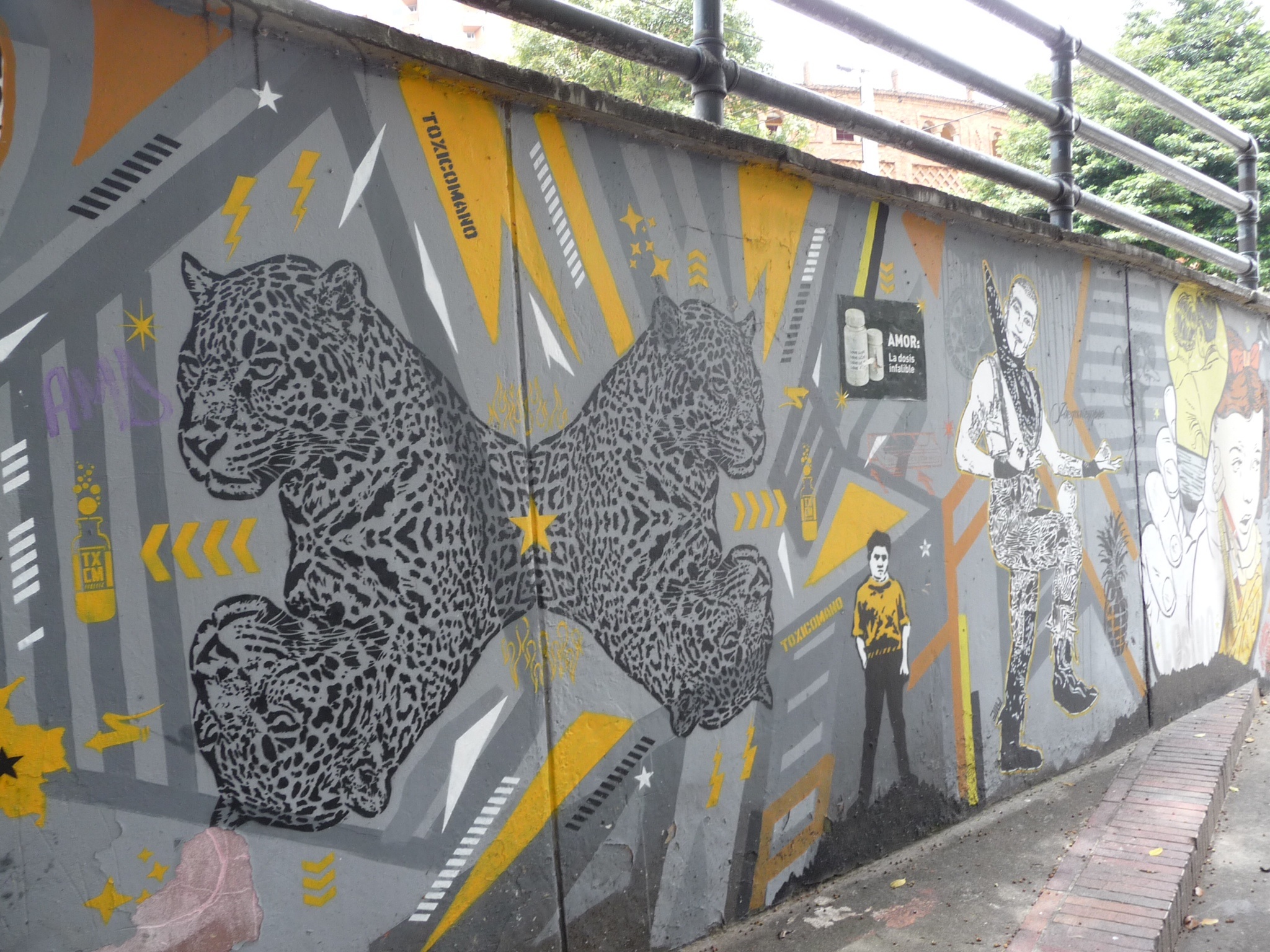
The street art is pretty amazing – you know it’s well respected when others haven’t tagged all over it!
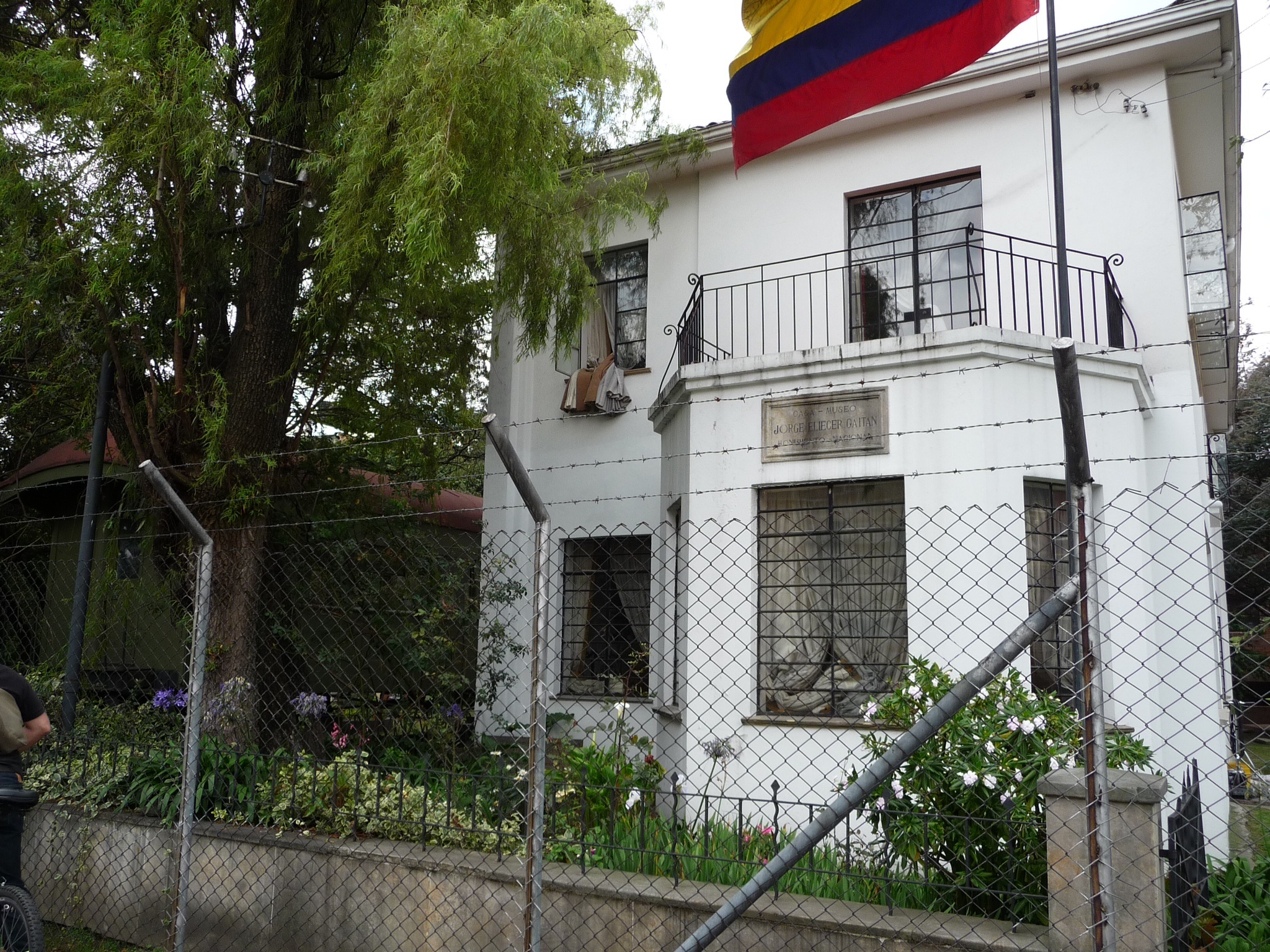
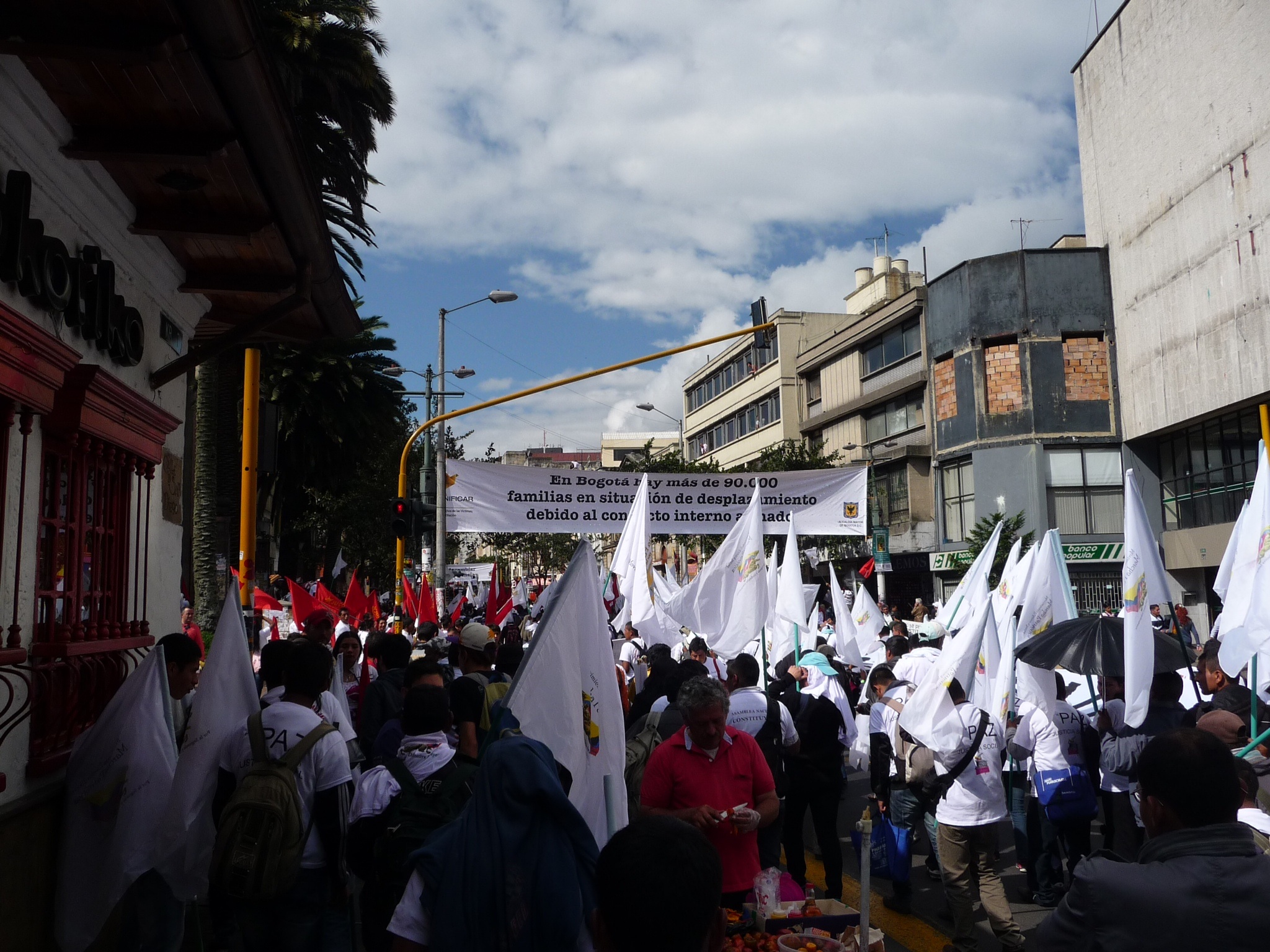
A visit to the national university (public and very left wing) was interesting – plenty of political slogans painted on the buildings along with faces of some adored revolutionaries. I chuckled at the so-named Lenin Plaza at the art building. We were told that the peace rally planned for tomorrow on the anniversary of Jorge Gaitan’s death (parliamentary candidate assassinated in 1948) was likely to be well attended as the country attempted to finalise peace negotiations between the guerrilla group, FARC, and the government).
Riding through the red light district was pretty depressing (Juan has since told me that there is an increase in men coming to Colombia to use the services of these women – doesn’t bode well for the plight of these women). The final stop on the tour was the fruit markets. I’ve never seen so many varieties of fruit in the one place at the one time in all my life – standard citrus and apples, mixed with stone fruits and tropical varieties I’d never seen before, even in Asia. The benefits of this temperate climate.
All in all the bicycle tour was a success once I realised I needed to ride like an Italian driver – assertive and full bottle, brake, full bottle, brake!  For some drivers the traffic lanes seem to be more for decoration than use as lane delineation.
I had the realisation on my return home that the reason I was getting so out of breath with little exertion was the altitude – Bogotá is the world’s third highest capital city after Lima and Quito respectively.  Nothing a lovely meal of tapas in La Macarena (the bohemian area) with Juliana and Juan couldn’t fix!
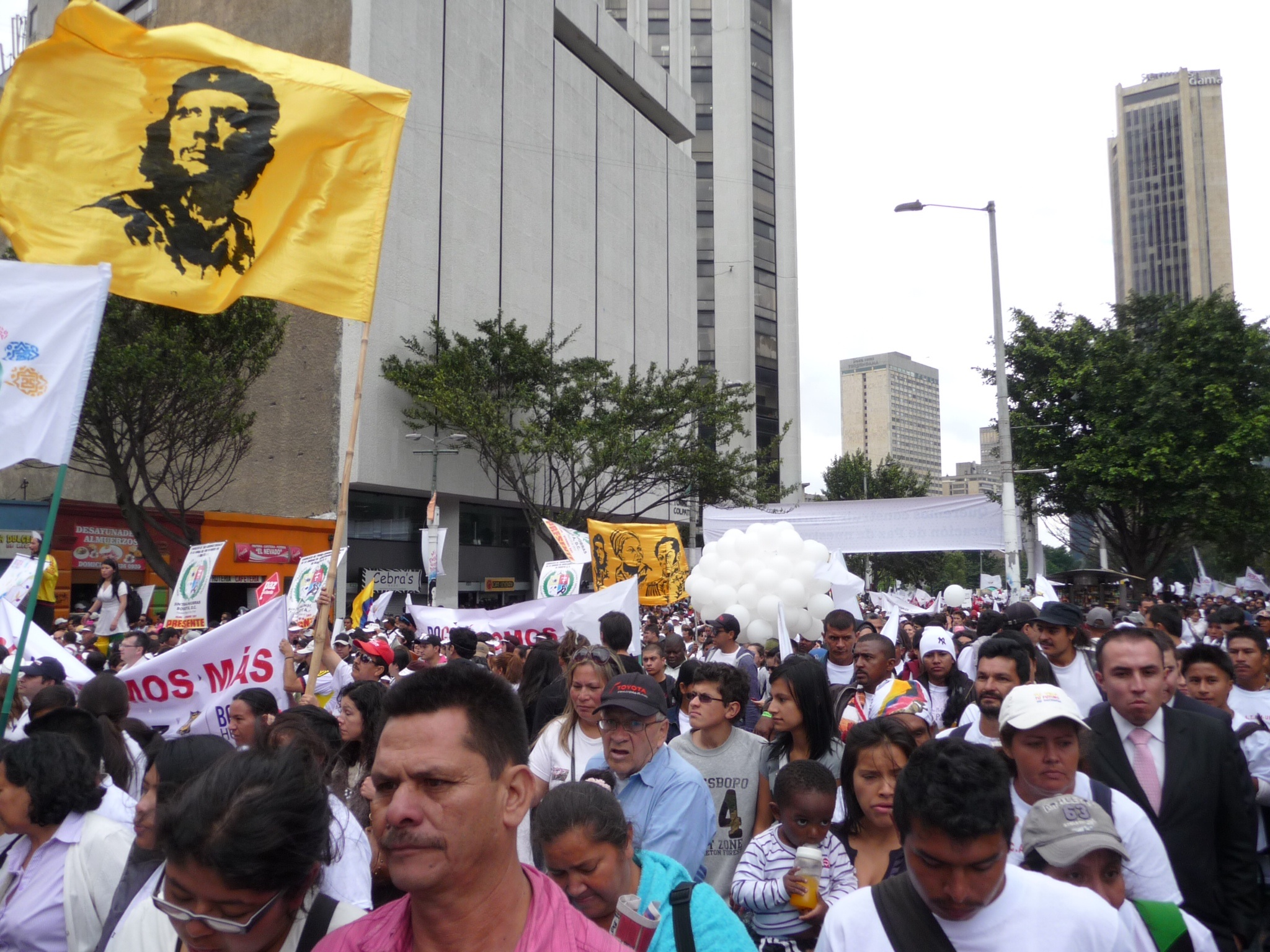
Wow, Colombians know how to rally! The peace march was huge – I woke to the sounds of the chanting. Once on the ground all I could see was a sea of white shirts and flags with people organised into their respective associations and chanting their respective anthems. It was wonderful to see such a huge turnout – I would have thought there were at least a million on the streets. I had to actually get into the march and move with it a couple of blocks to take a side street up to Cerro Monteserrate.
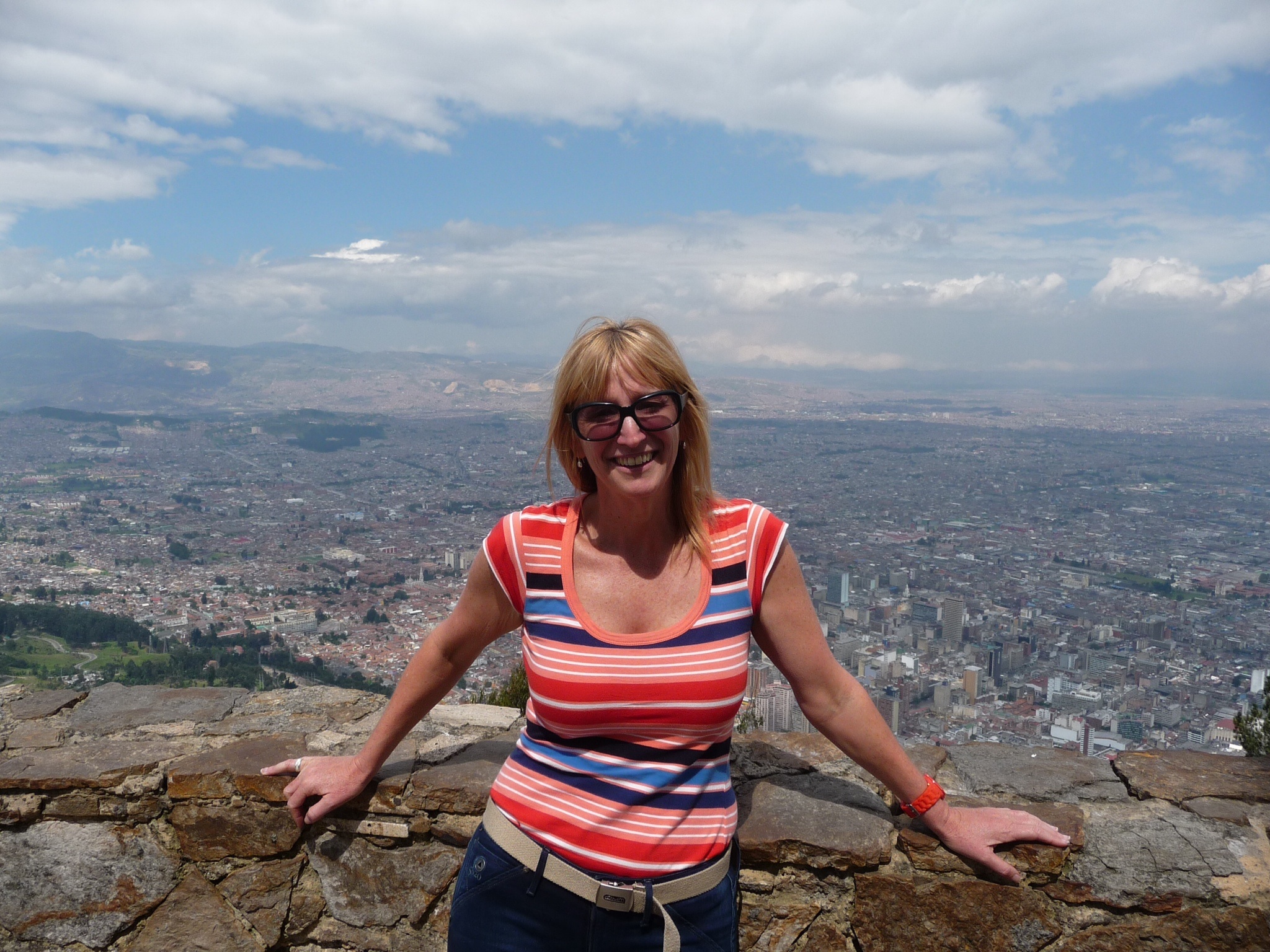
Up to Monteserrate by funicular (it’s 3150m above sea level) and I could still hear the chanting – was pretty powerful.  I then bolted home, again weaving through the sea of marchers still coming to the square, to get to the bus terminal for a trip to the preserved colonial town of Villa de Leyva in the Colombian Highlands.
The very comfortable coach trip was just over $10 AUD for the 4 hour journey!  We passed a huge contrast in housing highlighting the extremes between the wealthy and poor.  The usual food and fruit stalls dotted along the way and at the stops (sometimes just light signal stops) vendors were allowed onto the bus to sell their wares to passengers.
The short intervals between roadside crosses was disturbing – looked like a good proportion of the 100 000 people killed on the roads in Colombia each year may have occurred in these parts.
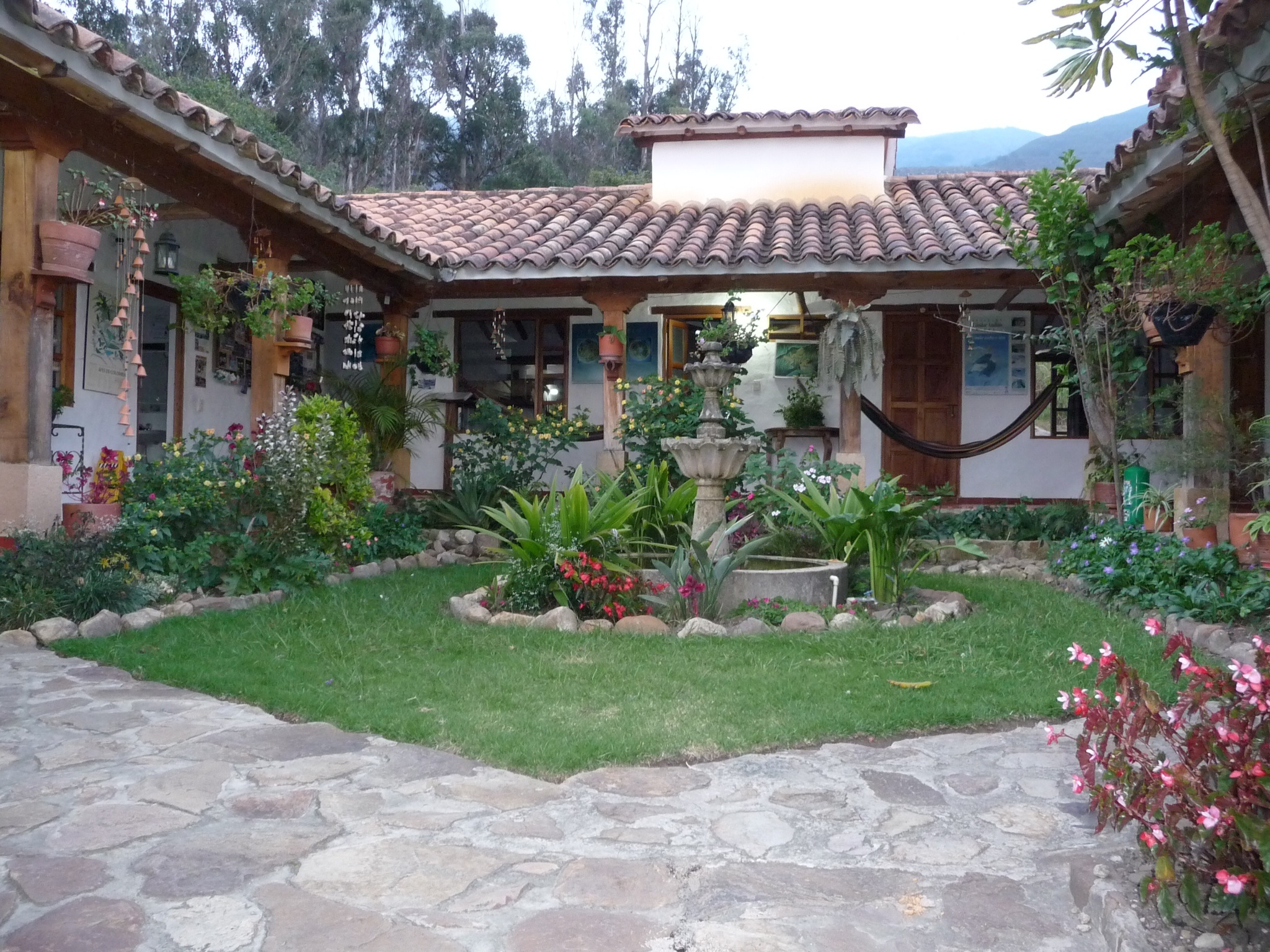
My home for the next two nights was Renacer Hostal – a lovely colonial finca in the hills just out of town. Another biker – this time he was sharing my dorm room along with his body guards that took up half the room. Unfortunately he had no concept of lighting and it’s effect on sleeping people so had no concerns about turning on the lights on his return from town well after midnight. Obviously didn’t have the itorch app on his phone!
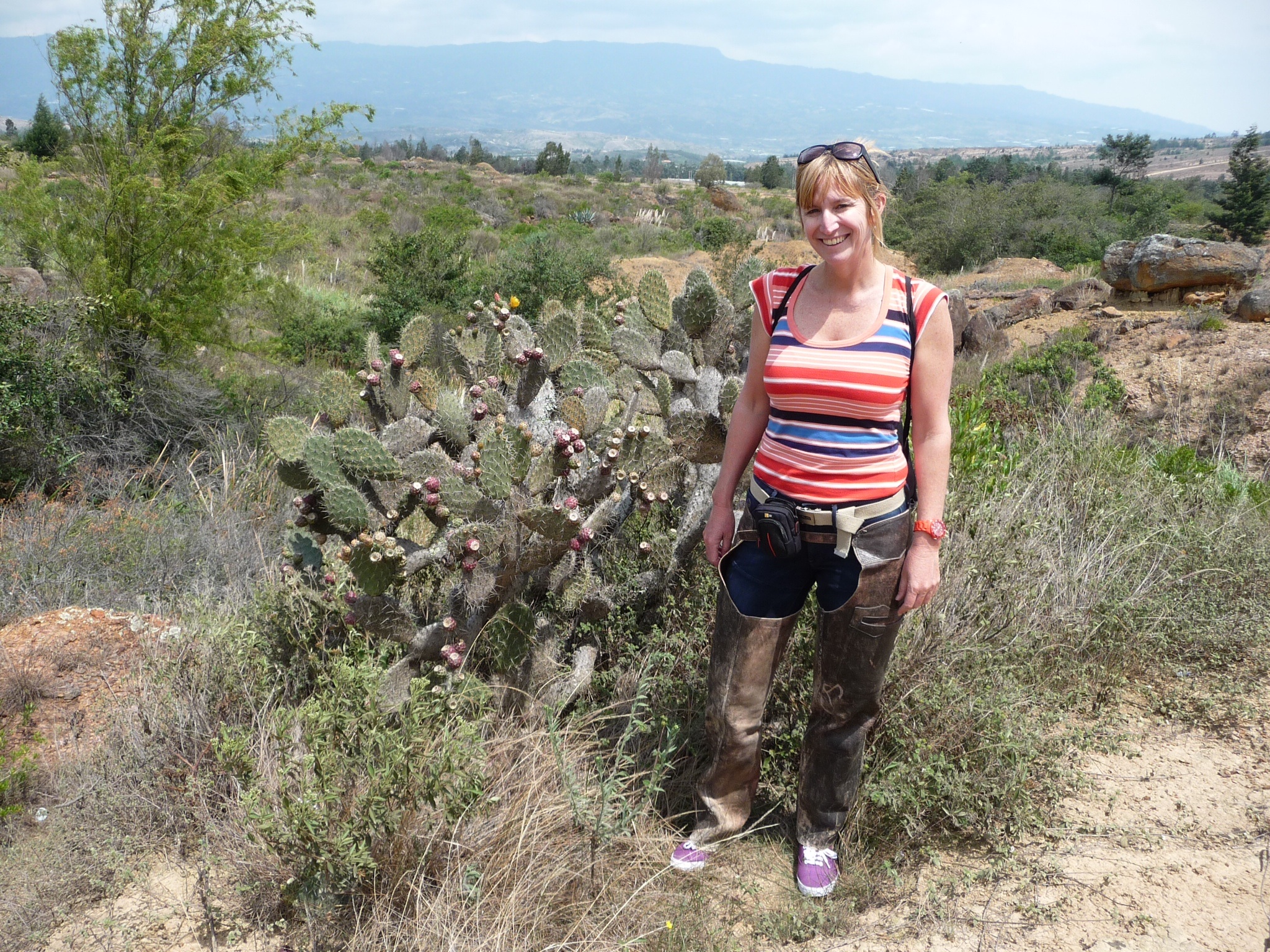
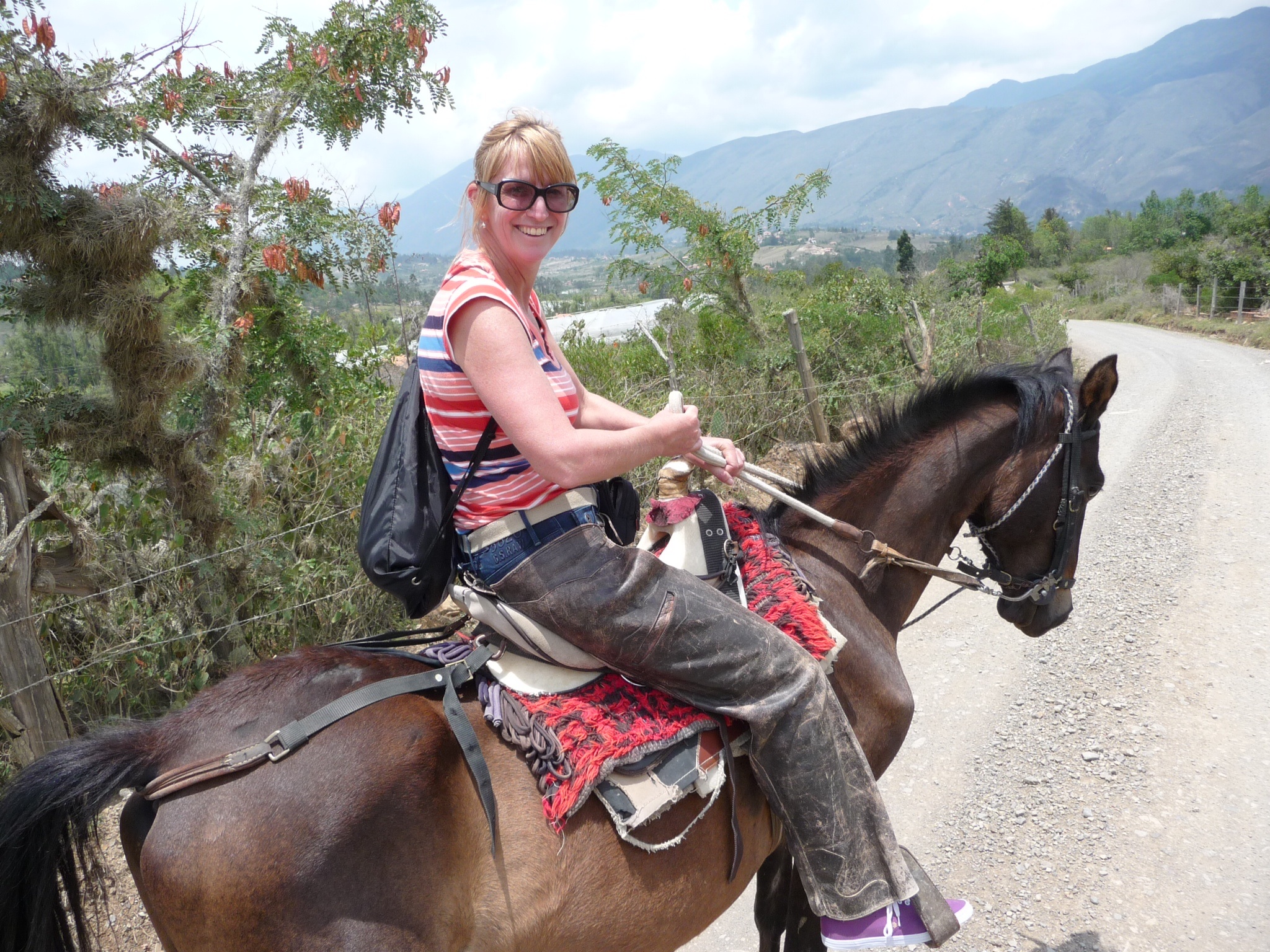
My orientation of the town was on horseback. It’s been a while but I was off galloping in no time – these boobs weren’t made for trotting; something I think my guide worked out quickly as well!
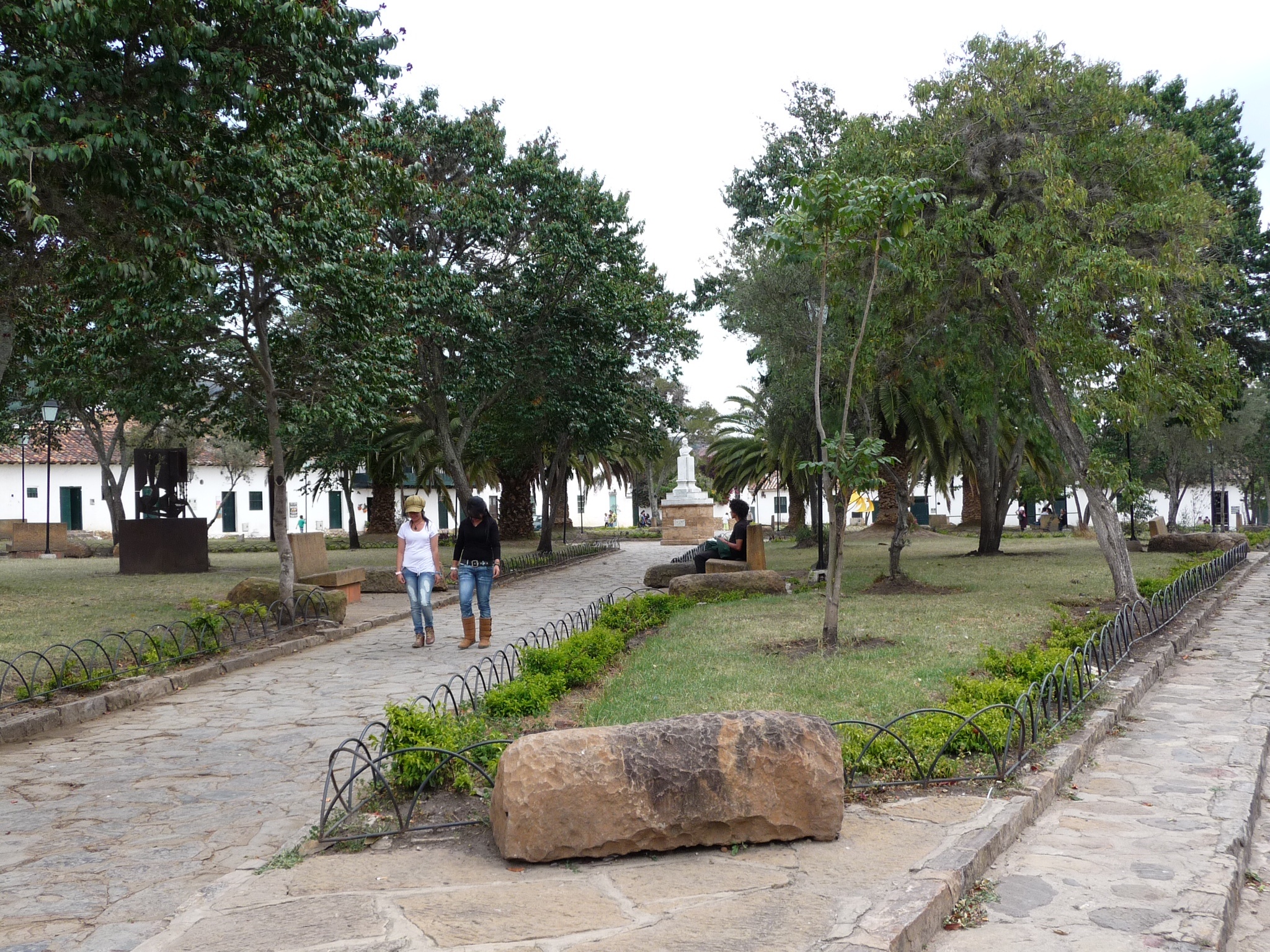
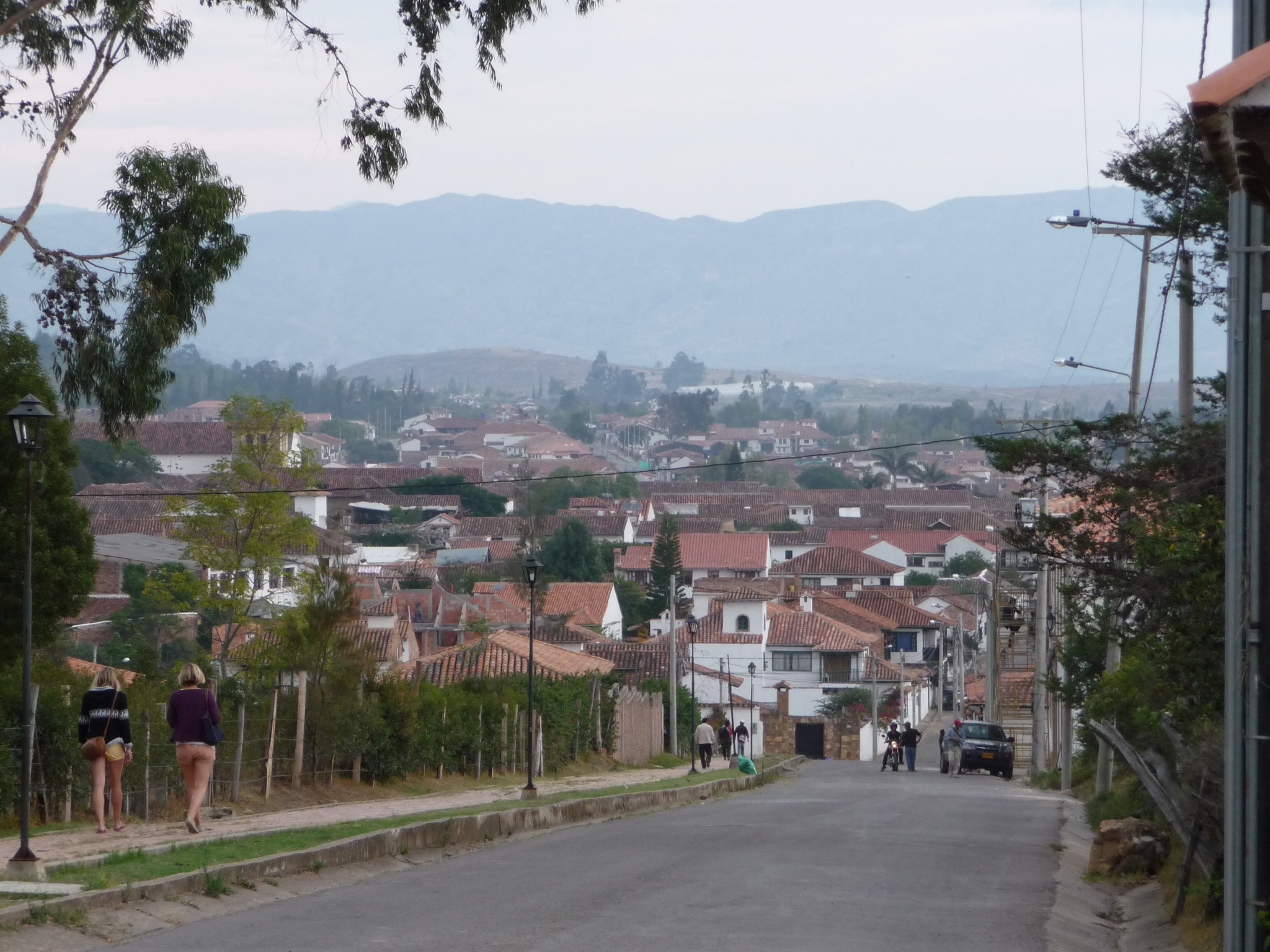
The town is very attractive. The local building by-laws have helped ensure its character is preserved. The 14 000 square metre plaza is said to be the largest in Colombia.
Passed the flour mill established in 1568, four years before the town, and onto the ‘desert’ – land in the plateau below the mountains which has become arid as a result of the over-farming and tree culling of the colonials. I was shown some  ‘blue pools’ in the same area which were essentially dams that were blessed with white clay bases giving them a lovely blue hue.
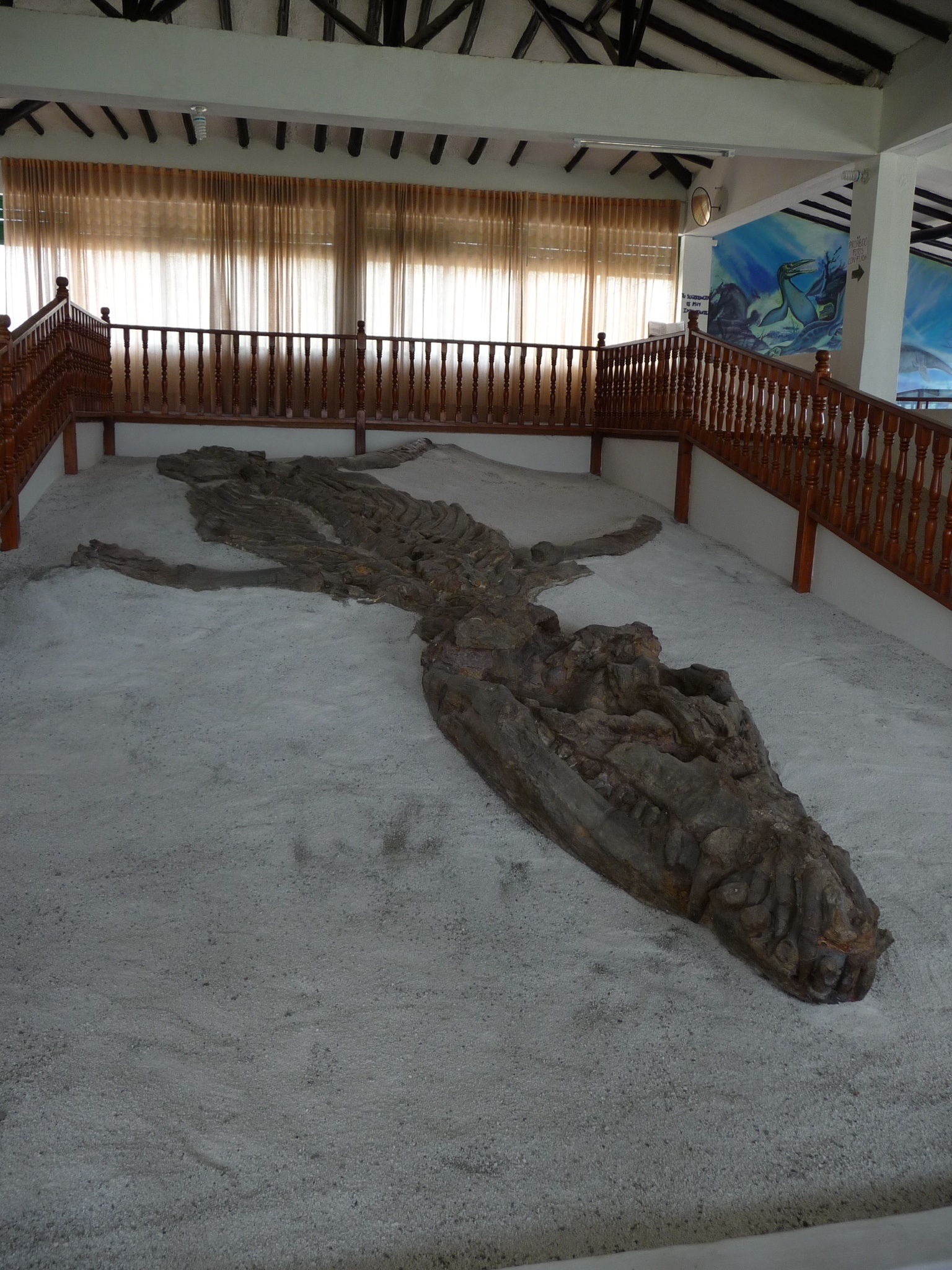
It was then onto the fossil museum, which was supplied with the finds of local farmers. The most significant was the find of a pliosaur in 1977, which has been left in-situ and the museum built around it.
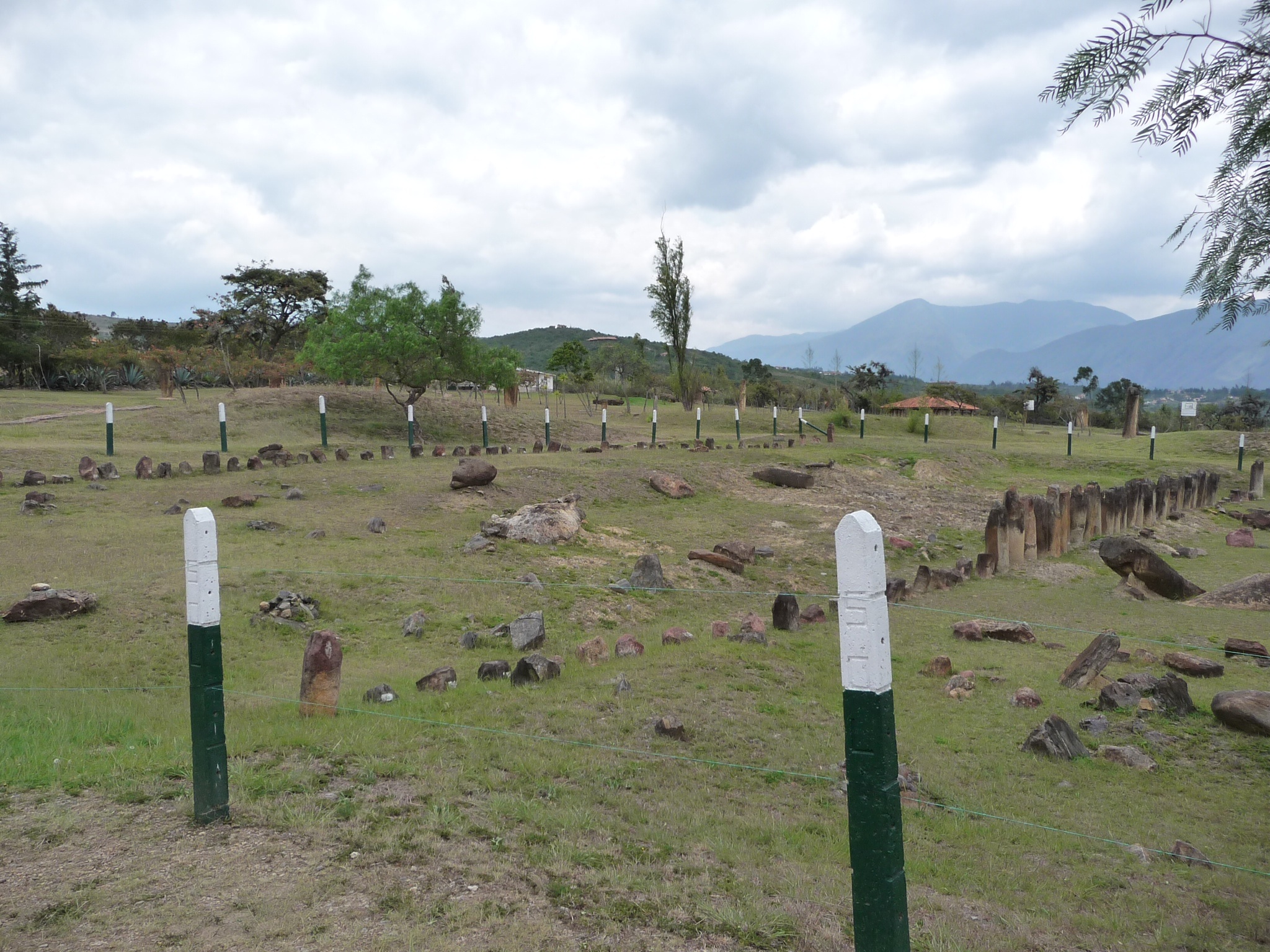
The last stop was a site of the muisca people. The site contained the muisca equivalent of Stone Henge – a series of stones placed to enable a determination of the solstice and equinox and thereby assist this agricultural group of people to determine the right times for planting and pruning, etc.
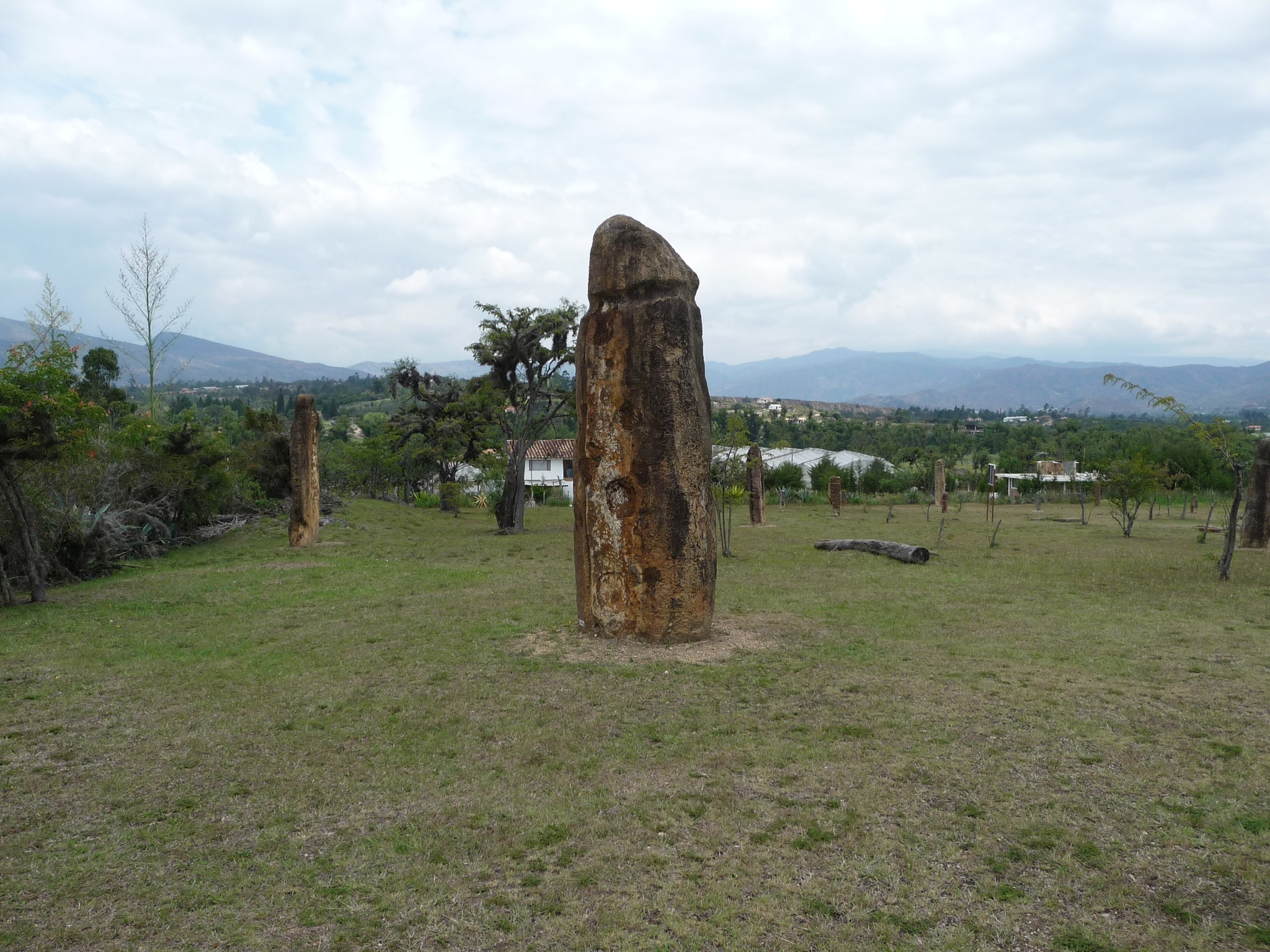
The other interesting part of the site was what the local’s candidly refer to as ‘Woman’s Paradise’ – the photos give away why. The phallic structures are estimated to be up to 5000 years old and the grooves established through a stone wet saw mechanism (this group of people are not believed to have had metal tools). There is much speculation about how these 15 metre structures were transported from their source on the other side of the mountain. This is also the case for the large slabs of stone of the tomb on the site, which is said to have contained some of the gold and urns I had seen in Bogotá along with the mummies in the national museum – the muiscas are believed to have been into a bit of human sacrifice to help the deceased’s transition to the afterlife.
The poor town has its own noxious lantana; in the form of a plant not unlike Grandfather’s Beard, which some people in Australia use to adorn tree branches. Unfortunately this variety expands all over the tree eventually strangling it. It’s so light it transports from tree to tree easily and so has been disastrous for the local growers.
Things improved on the accommodation front. The manager of the hostel informed me he believed they had made a mistake with my room and that I should have received a double. I assured him I had only booked a bed in the dorm but he insisted on the upgrade – lucky me!  He had been my horse-ride tour guide and had told me during the tour of his two years of post graduate study in Australia (mostly in Brisbane) so I think he wanted to look after this Brissie girl.
A good night’s sleep and then I had a morning to visit Casa de Antonio Nariño. Nariño was known as ‘the precursor’ to independence – for his related political activities and jail time (17 out of his 58 years – these were a committed lot).
Lastly I stopped in at the Luis Alberto Acuna Museo. Acuna is a contemporary Colombian artist (born 1904) who applied a pointalist style and this was his home. Aside from his lovely work in the gallery there were interesting sculptures in the garden and murals decorating the walls – depicting pre-Hispanic and colonial times.
My last walk across the beautiful but very awkward cobbled streets. I struggled in thongs – I don’t know how las ninas were doing it in heels!
Unfortunately the coach home wasn’t quite as comfortable but I enjoyed the company of Ellen, a sixty something Canadian woman on the last two days of a six month solo trip through north eastern South America. Ellen had reached most of her port towns by crewing on yachts (despite never having had sailing experience) – mental note on that one for my next trip (findacrew.com)!
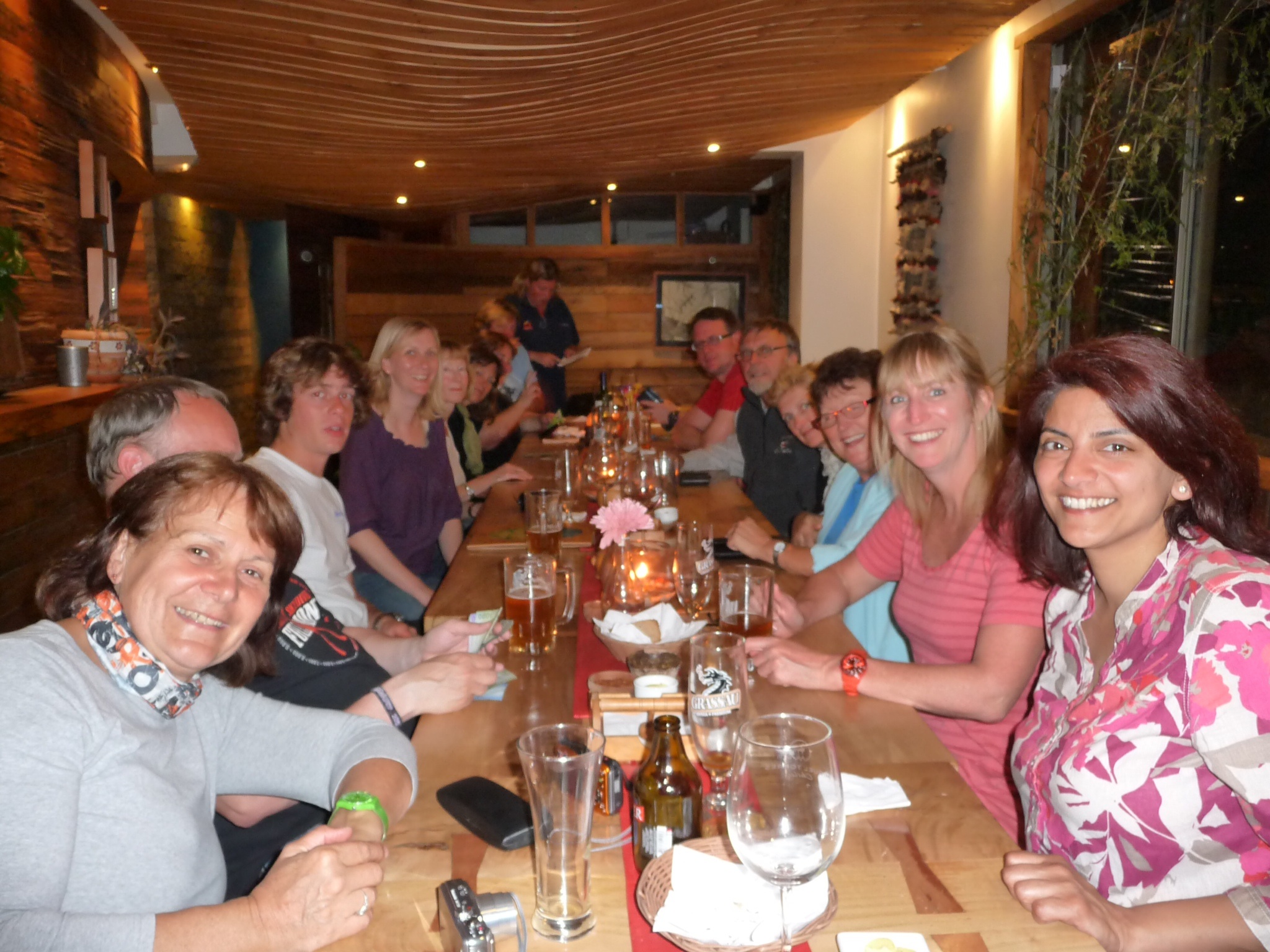
On my return to Bogotá that evening Juliana and Juan were kind enough to take me along to a lovely Italian restaurant in Usaquén; the area frequented by the university crowd. A lovely way to farewell these new friends before I head off to an eco-resort in the Caribbean.
Congress on Plaza de Bolívar

Congress on Plaza de Bolívar

Botero's take on Mona Lisa.

Botero’s take on Mona Lisa

image

What would my flower be?

What would my flower be?

Casa de Modena - the Mint.

Casa de Modena – the Mint.

Catedral de Sal

Catedral de Sal

Commemoration to the miners.

Commemoration to the miners.

Zipaquira - town of salt mine.

Zipaquira – town of salt mine.

Museo del Oro

Museo del Oro

Madonna eat your heart out!

Madonna eat your heart out!

imageimage


I guess there are no rules on adorning one's penis.

I guess there are no rules on adorning one’s penis.

National Museum

National Museum

The women sacrificed their lives for independence.

The women sacrificed their lives for independence.

image

Street vendor selling bottles of slime from slugs -apparently it's good for your skin!

Street vendor selling bottles of slime from slugs -apparently it’s good for your skin!

The controversial bull fight ring.

The controversial bull fight ring.

image

Respected street art.

Respected street art.

image

Home of Gaitan along with street car toppled in the riots proceeding his assassination.

Home of Gaitan along with street car toppled in the riots proceeding his assassination.

'Lenin Plaza' at the National University

‘Lenin Plaza’ at the National University

image

image

Street kids mixing some beats for us.

Street kids mixing some beats for us.

Planes, train and horses!

Planes, train and horses!

April 9 rally for peace.

April 9 rally for peace.

View of Bogota city from Monteserrate

View of Bogota city from Monteserrate

imageimage

Back in for the trip home!

Back in for the trip home!

image

One for you Dad - Chev used to deliver fuels to the street vendors (I think).

One for you Dad – Chev used to deliver fuels to the street vendors (I think).

Villa de Leyva desert.

Villa de Leyva desert.

Like my chaps?

Like my chaps?

Pliosaur in-situ.

Pliosaur in-situ.

Plant fossils

Plant fossils

The muisca agricultural gauge.

The muisca agricultural gauge.

Muisca tomb

Muisca tomb

They just seemed to get bigger and bigger!

They just seemed to get bigger and bigger!

image

Villa de Leyva's lovely cobblestone plaza.

Villa de Leyva’s lovely cobblestone plaza.

image

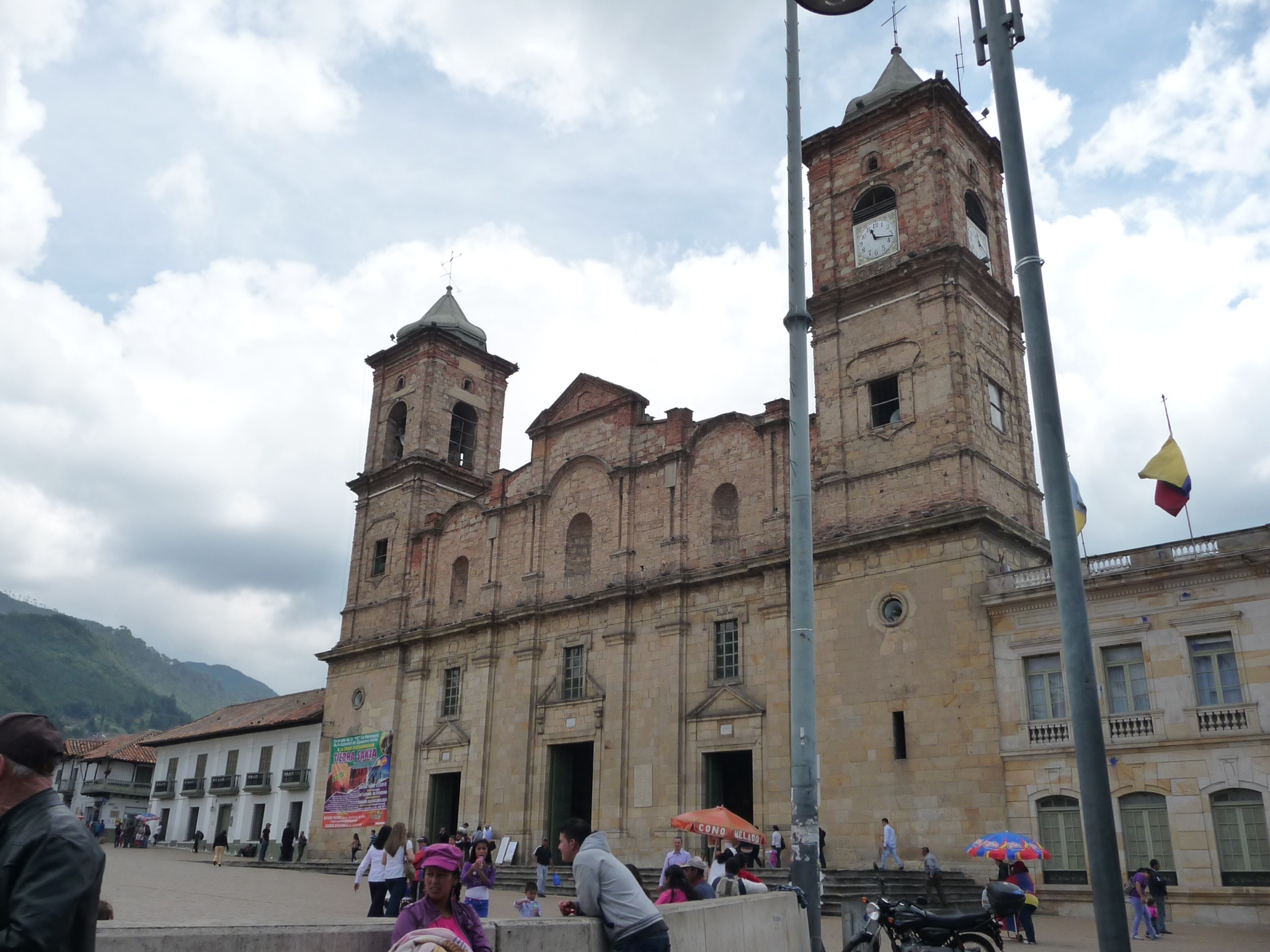
Iglesia Parroquial De Villa de Leyva

Iglesia Parroquial De Villa de Leyva

image

image

image

image

image

The walk into town.

The walk into town.

Renacer Hostal - a nice place to hang out.

Renacer Hostal – a nice place to hang out.

Views from the bus heading toward Bogotá.

Views from the bus heading toward Bogotá.

image

A lovely farewell dinner with Juliana and Juan.

A lovely farewell dinner with Juliana and Juan.

Posted in Uncategorized | 3 Comments

Onto the Magellanes region of Patagonia

Magellan is said to have described Patagonia as ‘The Land of the Giants’ – not surprising once you’ve experienced the magnitude of the landscapes.  Its southern proximity, majestic and endless mountains and vast steppe make it an isolated destination with a cold and windy climate and, lucky for me, perfect for glaciers!!!
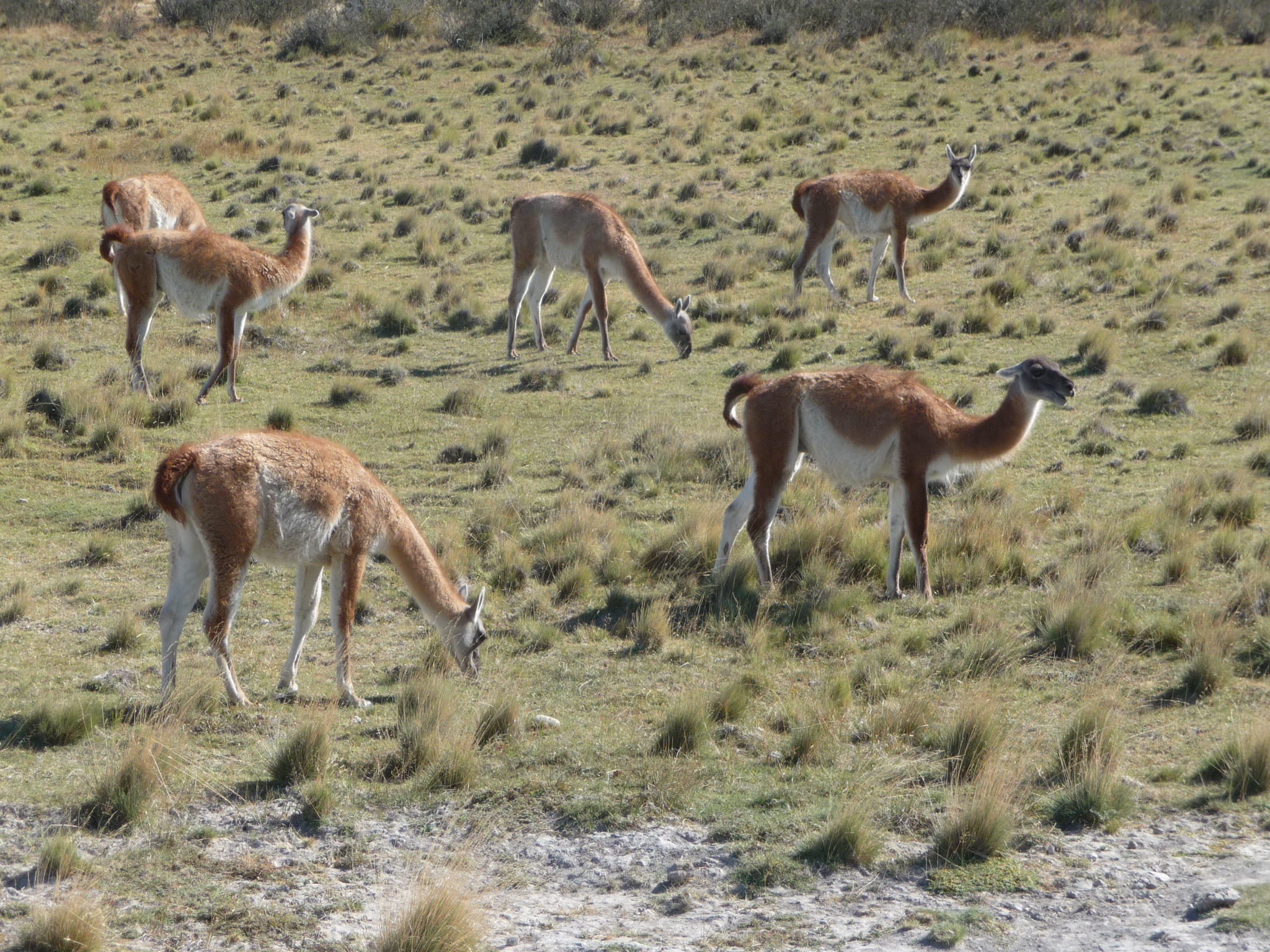
Passing the Atlantic we got our first sightings of guanacos (from the llama family) congregating by the side of the road.
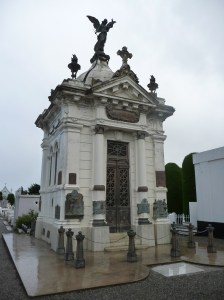
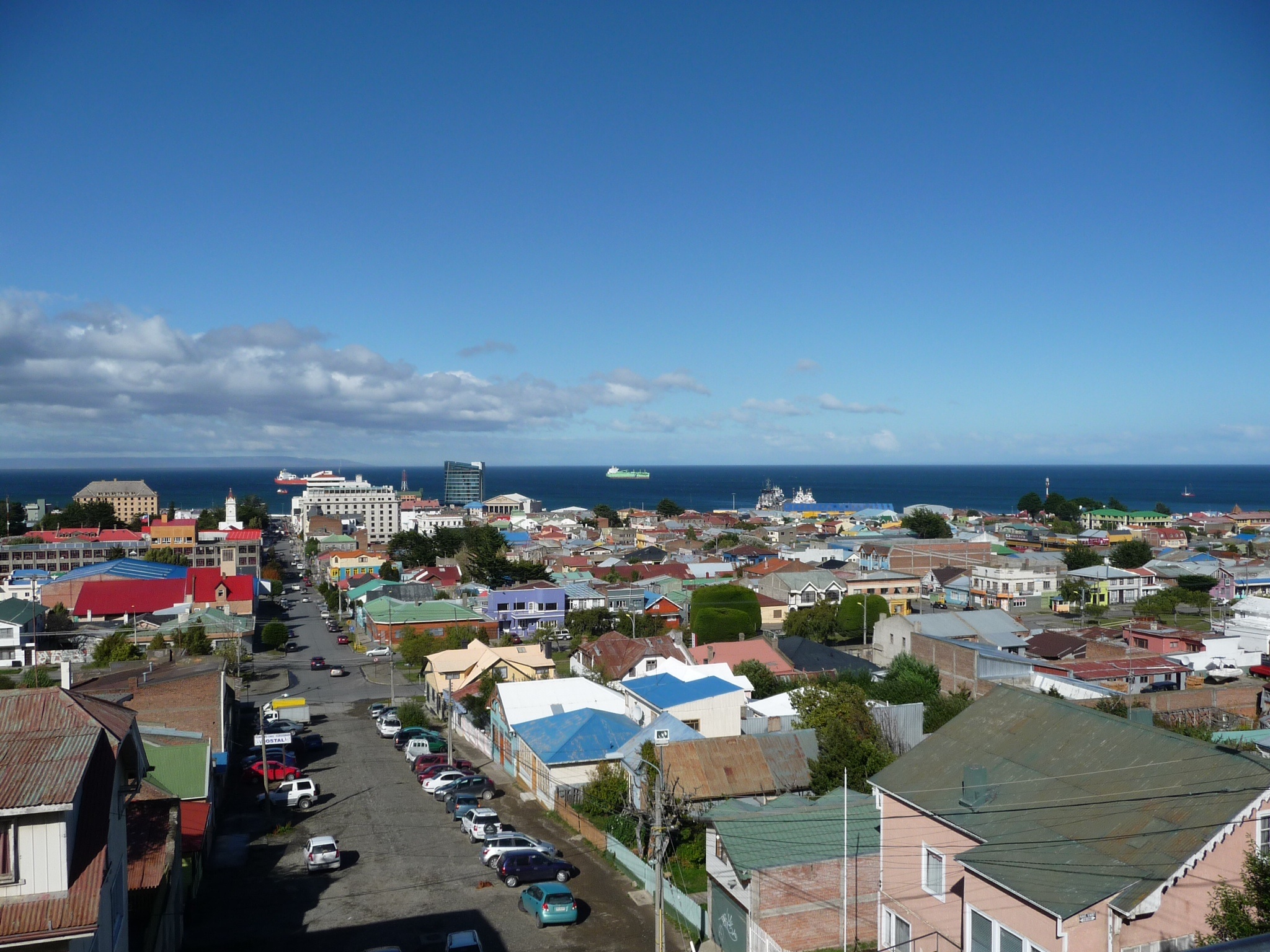
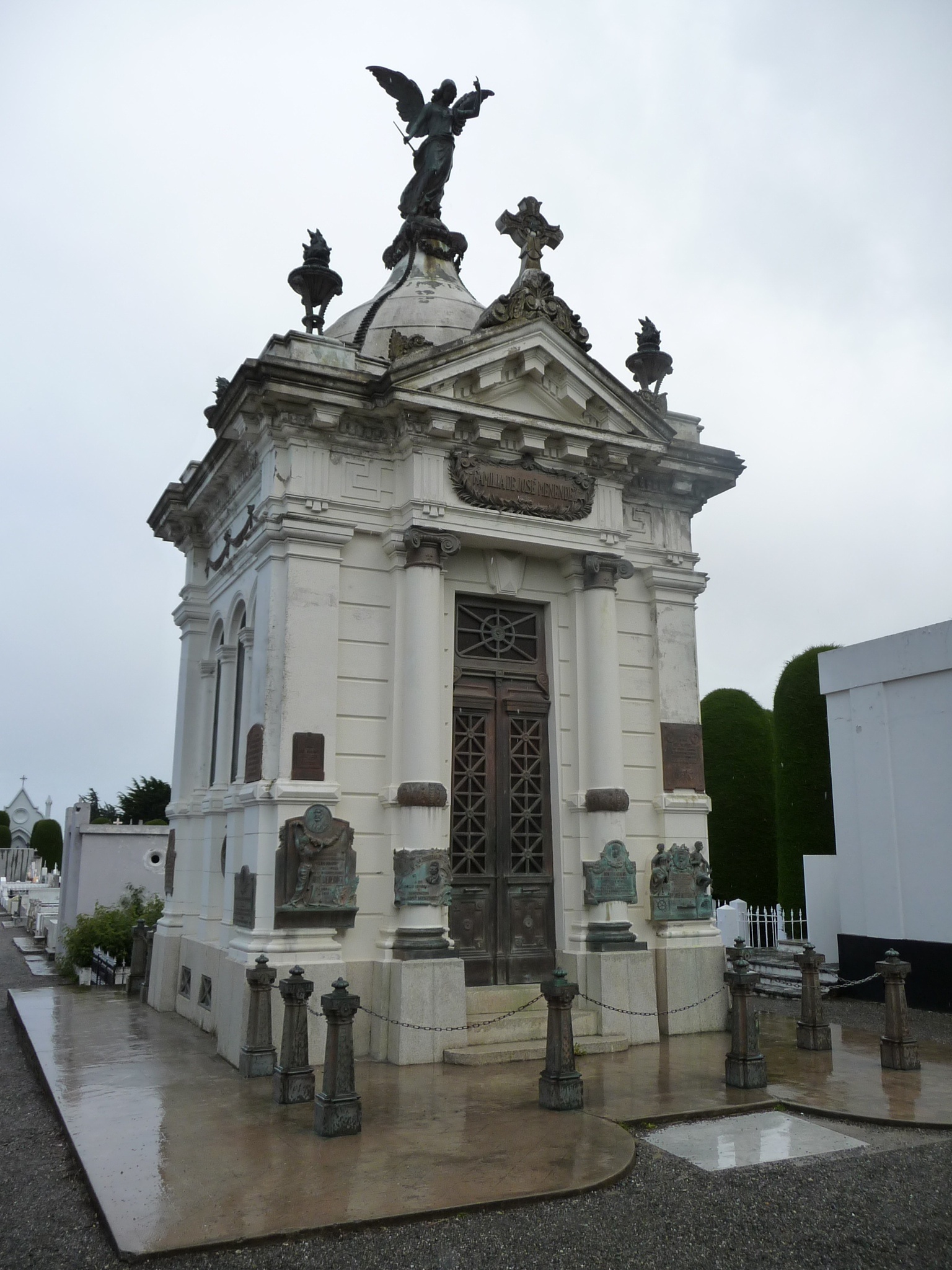
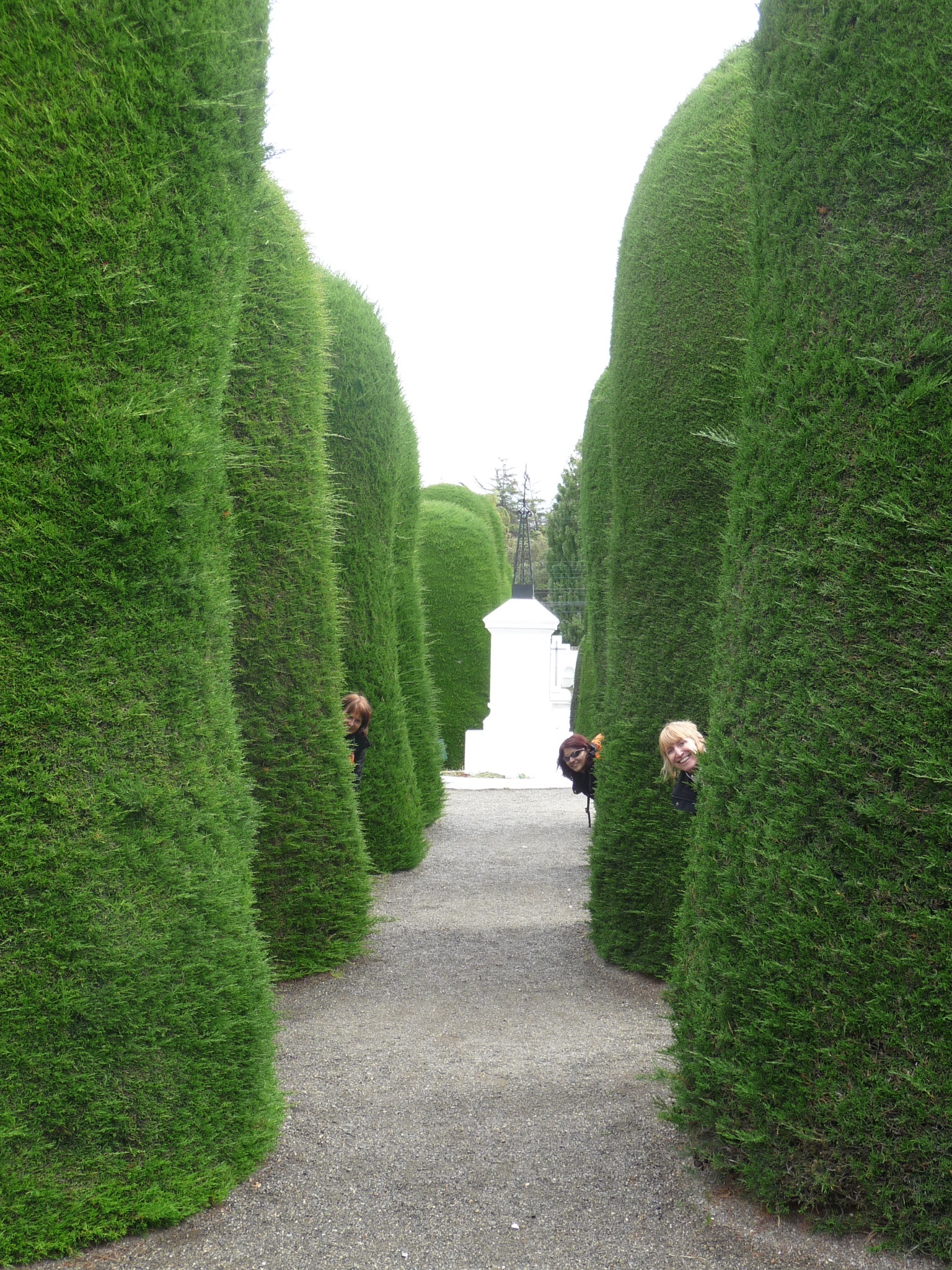
We crossed the Strait of Magellan by ferry and continued onto Punta Arenas; a very gusty town but with a few interesting spots to visit. After a spot of shopping at Zona Franca (a fenced off duty free zone created in the middle of the city to generate tourism to the area) we ventured into the cemetery. It contained some pretty interesting crypts/mausoleums; with areas dedicated to the local nurses and police as well as some areas for the British settlers to the area. It was evident that Punta Arenas was a multi-cultural society with graves and crypts for people of other nationalities including Yugoslavia and Croatia.  Family, please note that I’ve included some photos of the type of crypt I’ve envisioned you’ll erect in my honour!!!
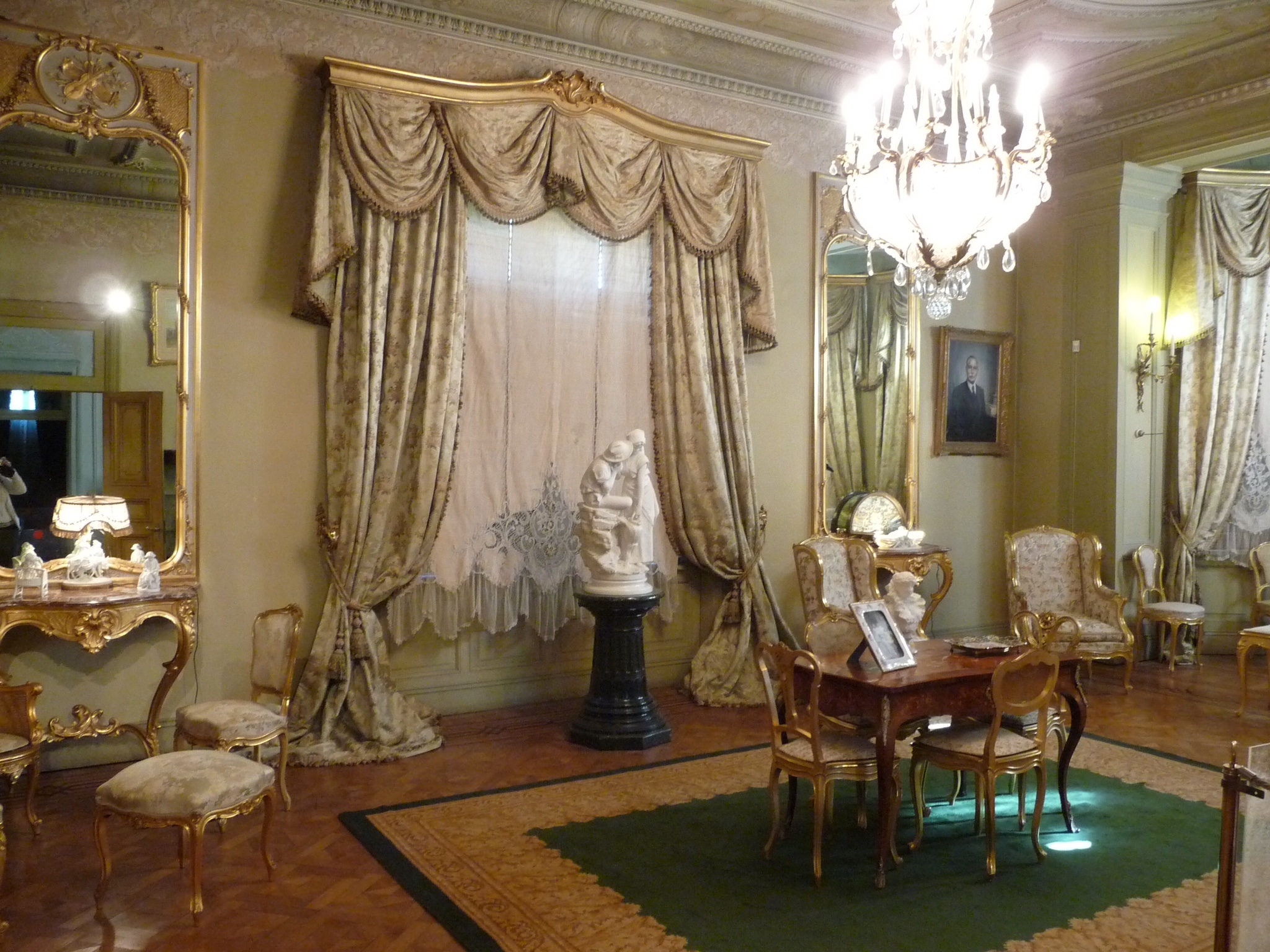
After a wander up to the lookout we visited Braun-Menendez House; a show case of the riches drawn from the Chilean sheep stations in the late 19th century.
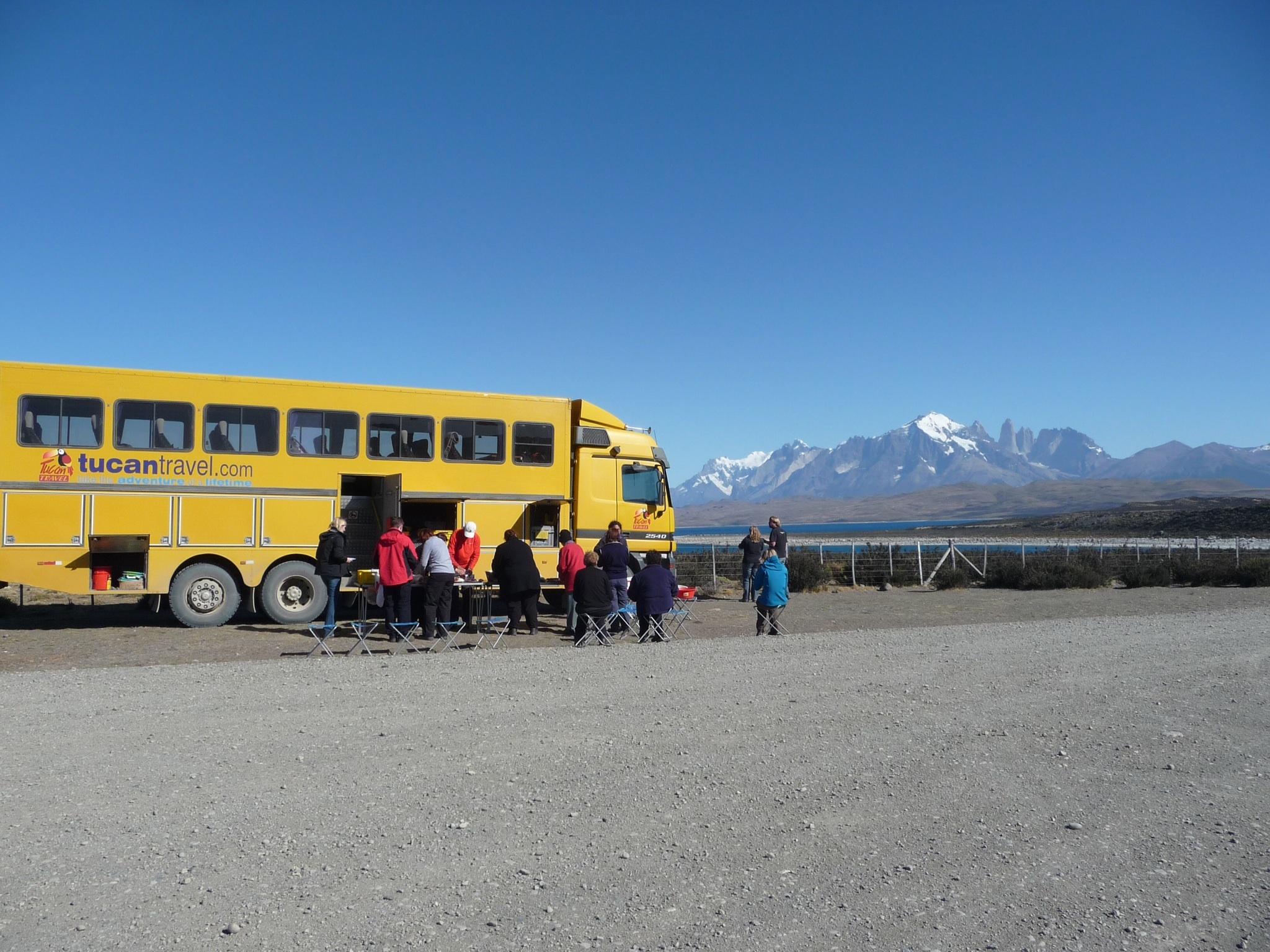
Next we were on to Puerto Natales, gateway to the famed Torres Del Paine National Park. We spotted a few gauchos (South American jackaroos for the estancias; sheep stations) along the way. All sporting the local traditional beret and colourful woven ponchos and giving us that international nod of the head.
We were now entering The Megallanic Region of Patagonia, which was first explored in 1520 but towns such as Punta Arenas and Puerto Natales weren’t founded until the mid 1800s. The former sheep and cattle farming has now been largely replaced by gas, oil and fishing industries.
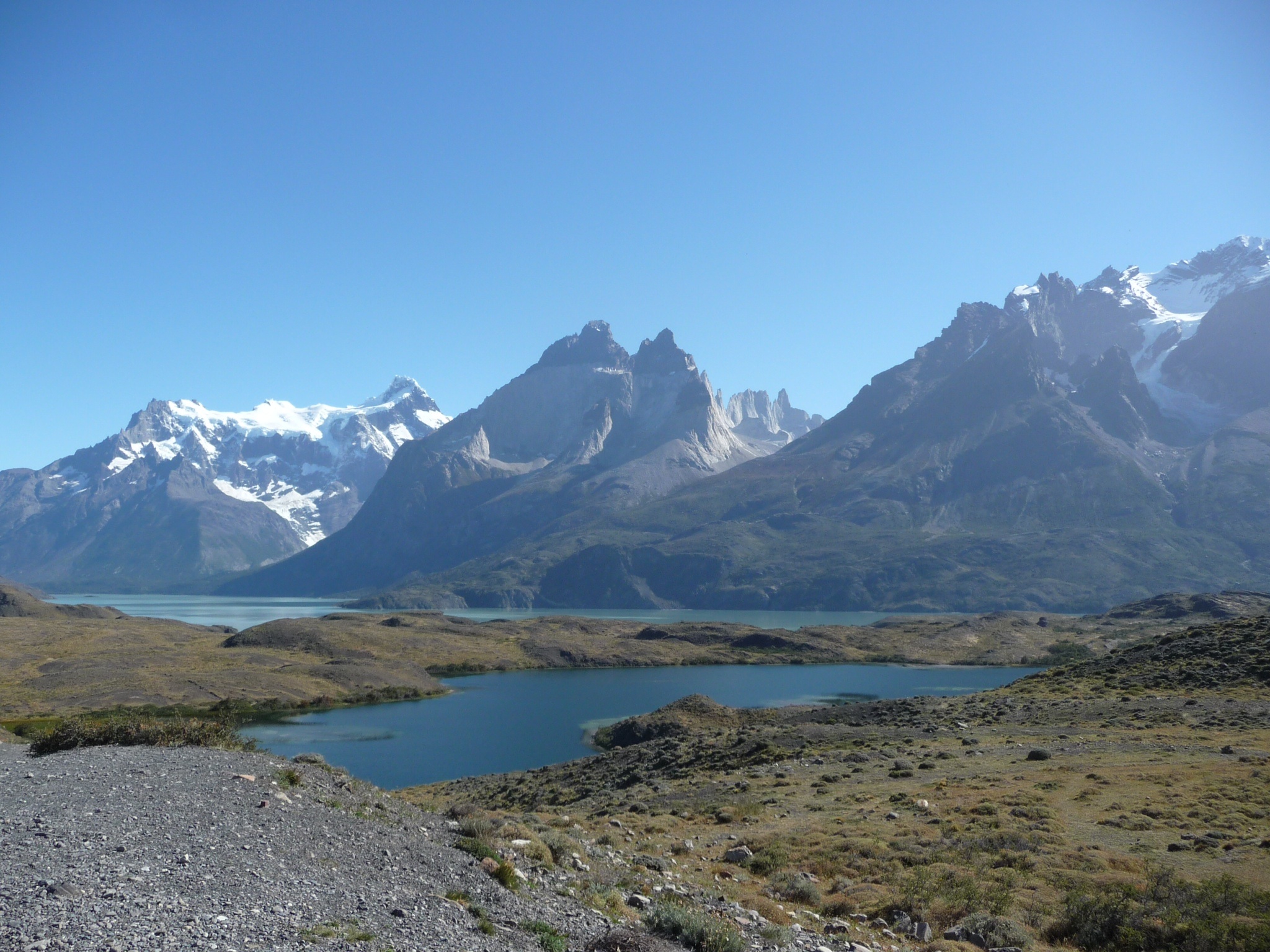
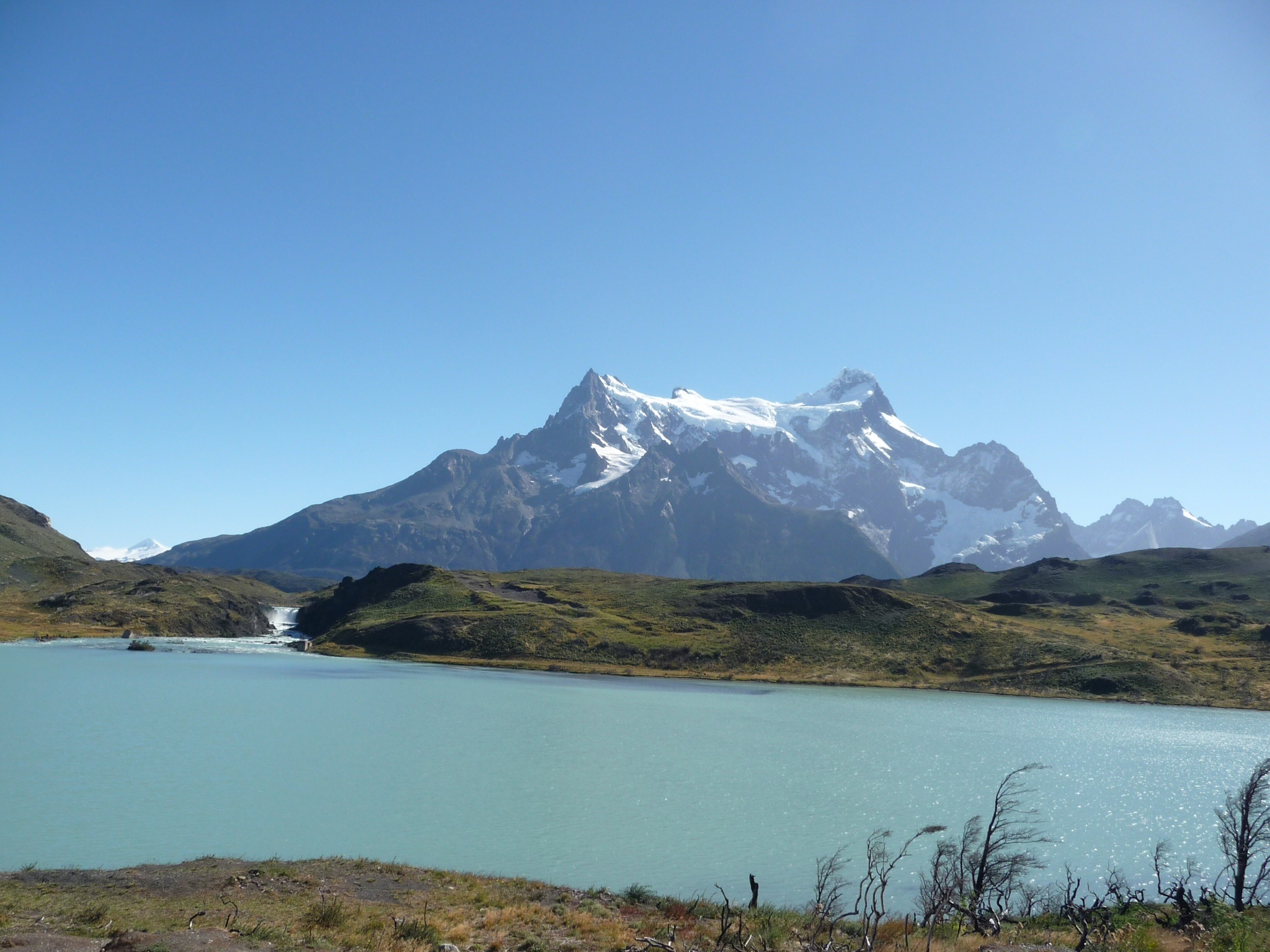
Torres Del Paine (pronounced Pie-na) is an amazing National Park – created in 1959, included in the UNESCO biosphere reserve list in 1978 and covering more than 200000 hectares. The mountains are independent of the Andes.
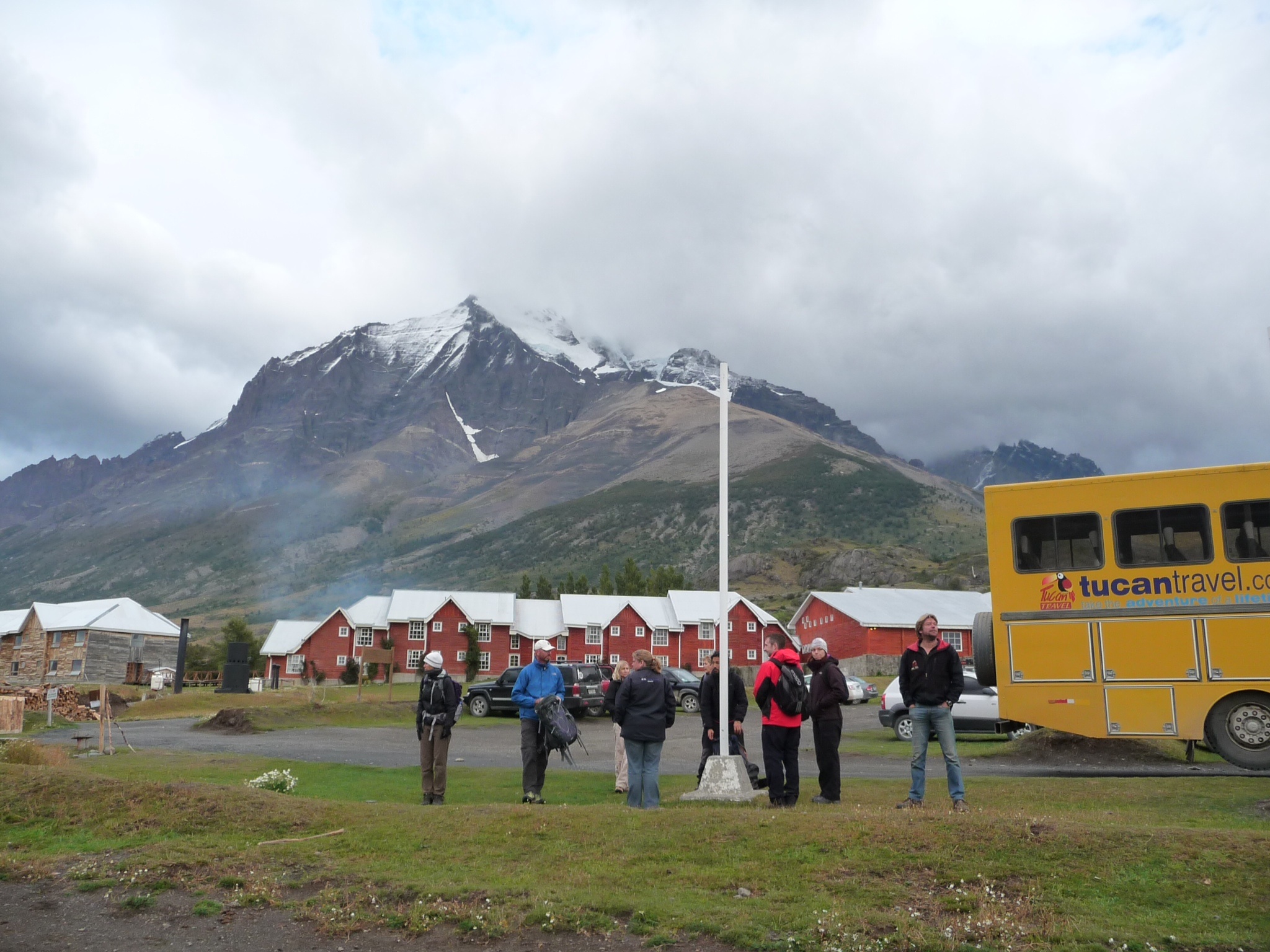
There was a lot of oohing and ahhing as we drove toward our campsite; the lakes were gorgeous – milky aqua and turquoise. Apparently the colour is created from the diluted glacier sediment. It was breathtaking.
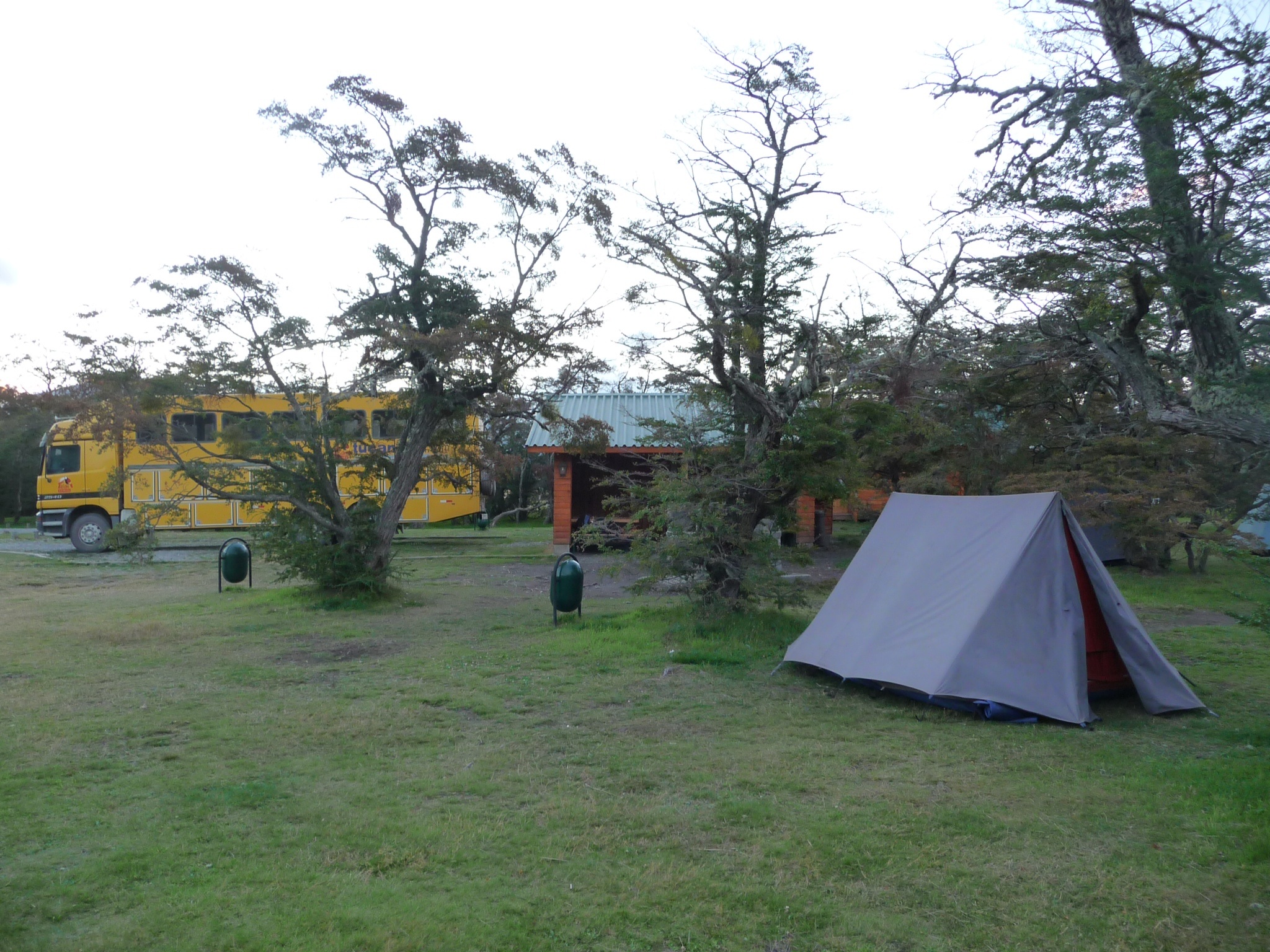
On the first night of camping it was evident that my summer grade sleeping bag wasn’t going to cut it – another piece of advice I should have heeded from the dossier (an all season grade had been recommended)!  Extra layers and some heavy breathing into the bag made it bearable.
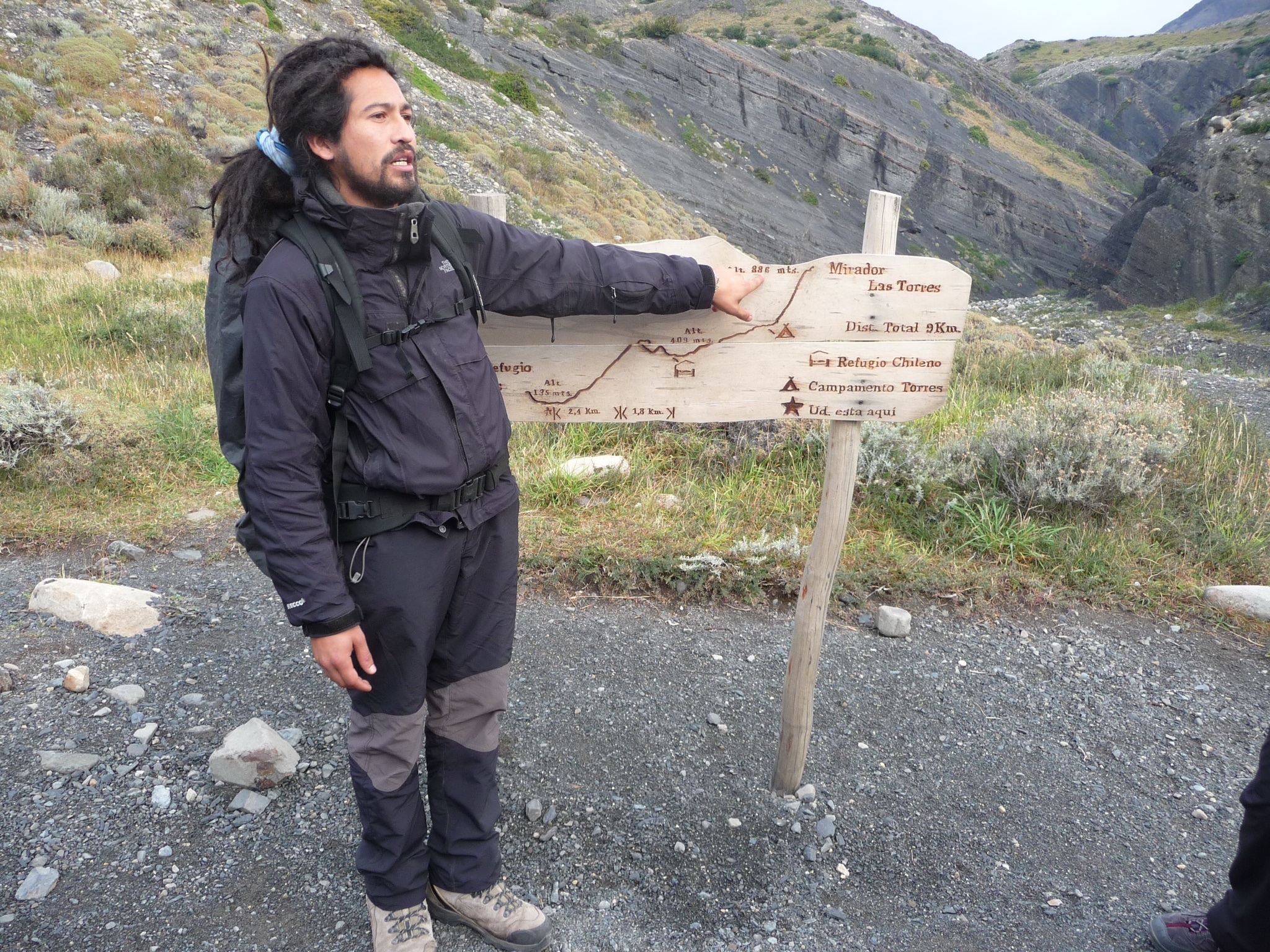
A respectable amount of sleep and we were off to hike up to see the glacier moulded granite towers (Torres). There had been rain overnight so I think we were all a little nervous about this 8hr hike (18km) that laid ahead. We’d been told there were two potential spots we could turn back but you could see the steely resolve of the 10 strong hike group (only two declining the hike) that we all wanted to make it to the top.
We ventured off hoping the clouds would hold back long enough to give us a clear view.
The hike was tougher than I had anticipated – up, down, up, down, coats off, coats on, coats off, gloves off, gloves on, gloves off, beanie on, beanie off, beanie on – it was exhausting just changing!
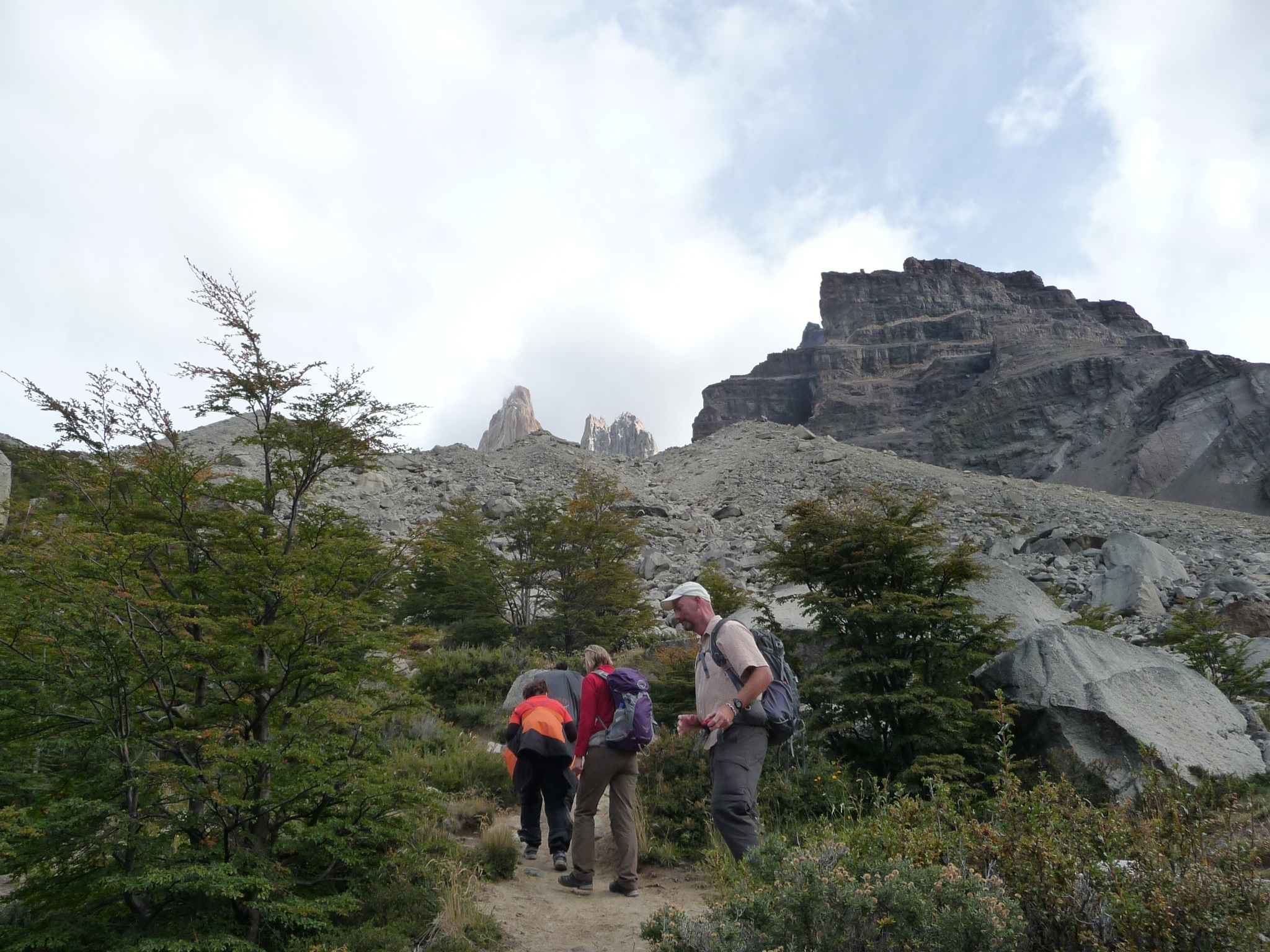
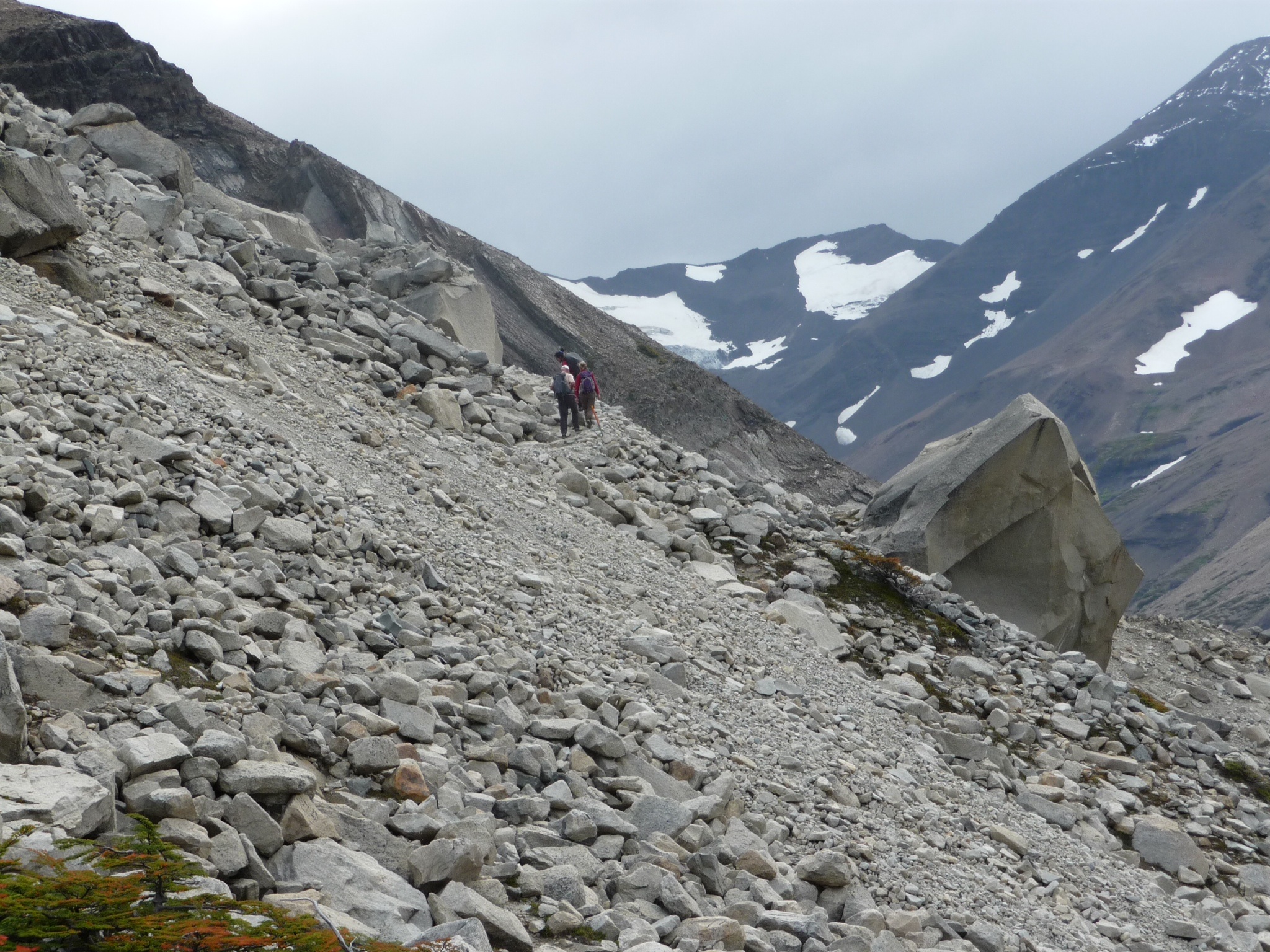
Thankfully no serious rain and so we all made it to the second checkpoint. It seemed our guide, John, was concerned that the weather might change on us on the way to view the peaks and so asked two of the slower hikers to stay back and wait for us. Then we climbed and climbed and climbed for an hour, for some part scrambling over rocks and up loose gravel.
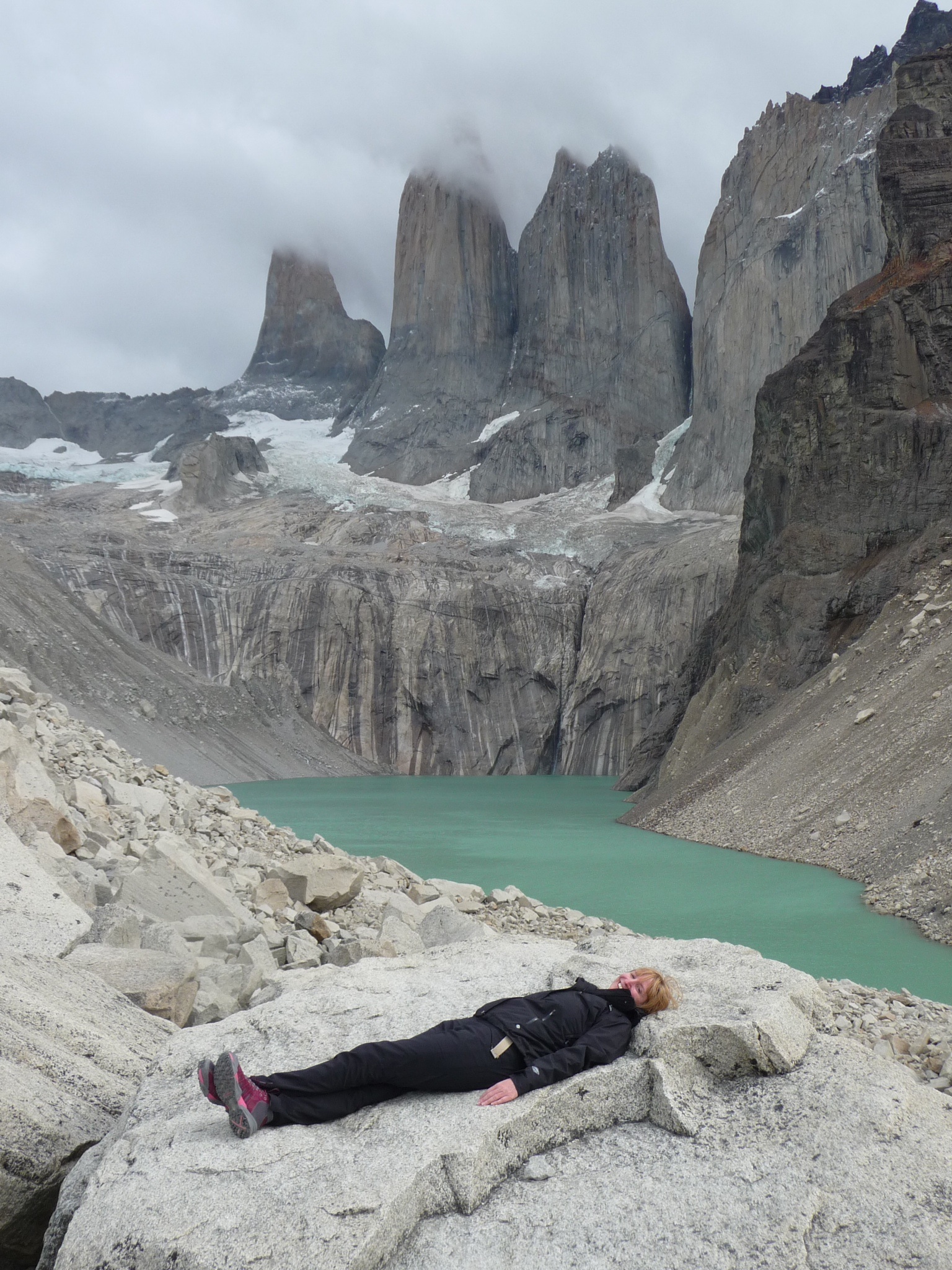
The hard work paid off. We were rewarded with the most spectacular views of the three towers, it’s glacier and aqua lake below. The wind was incredible with us hanging on for fear of being blown off the large rocks on which we had perched ourselves. Reminded me of the day Cath got blown off the boat in the Manly harbour.
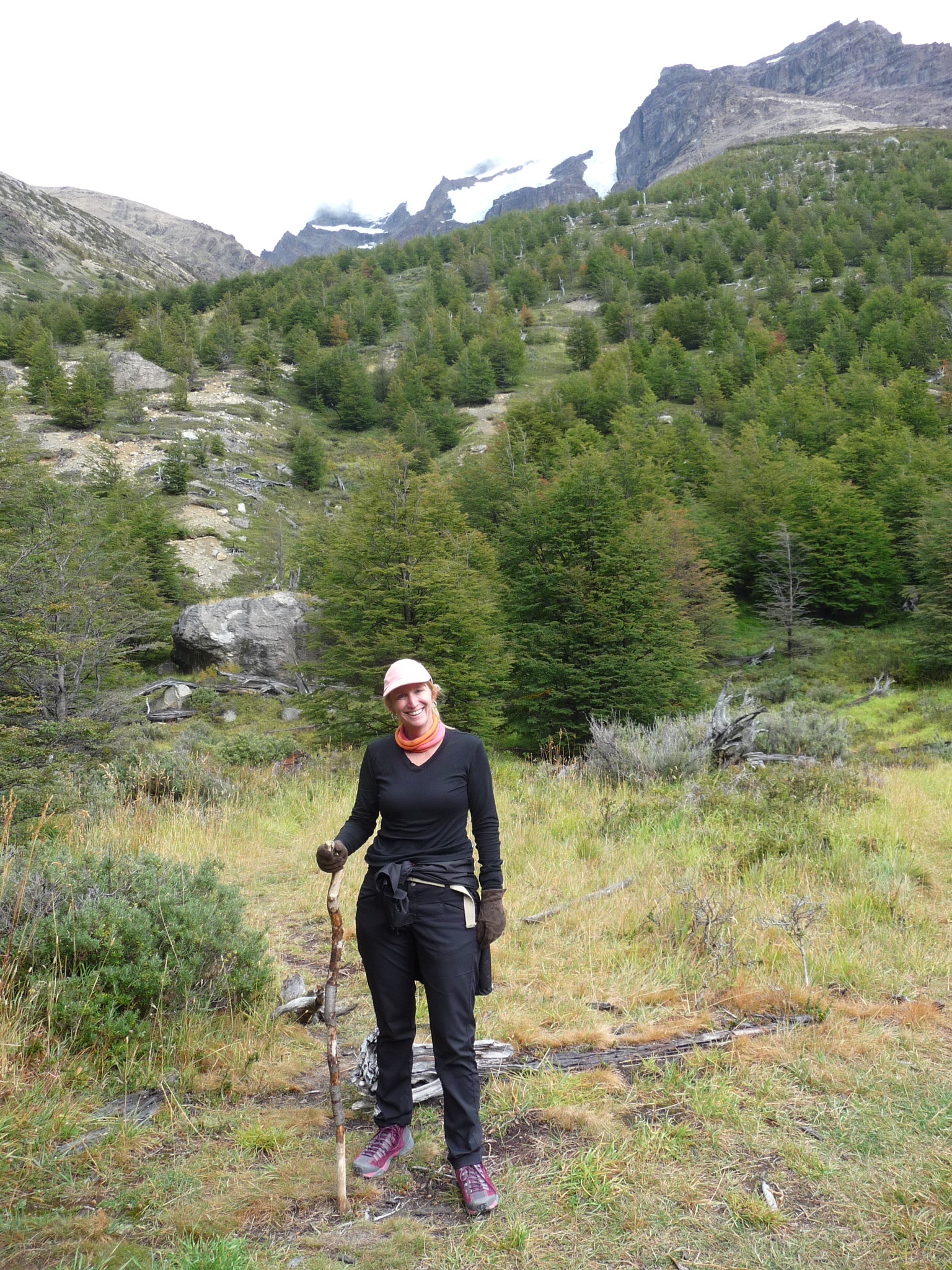
It was then down – it was then that I realised it’s true what they say about the downhill of a hike being as exhausting as the uphill; I was very grateful for my bush walking pole. No need for lunges before bed tonight – my quads, glutes and hammies didn’t know what had hit them!
Even the hour back to the campsite was great – more fantastic mountain viewing. It’s the last week before winter season starts and so we were blessed with seeing fresh fallen snow on the peaks of the mountains.
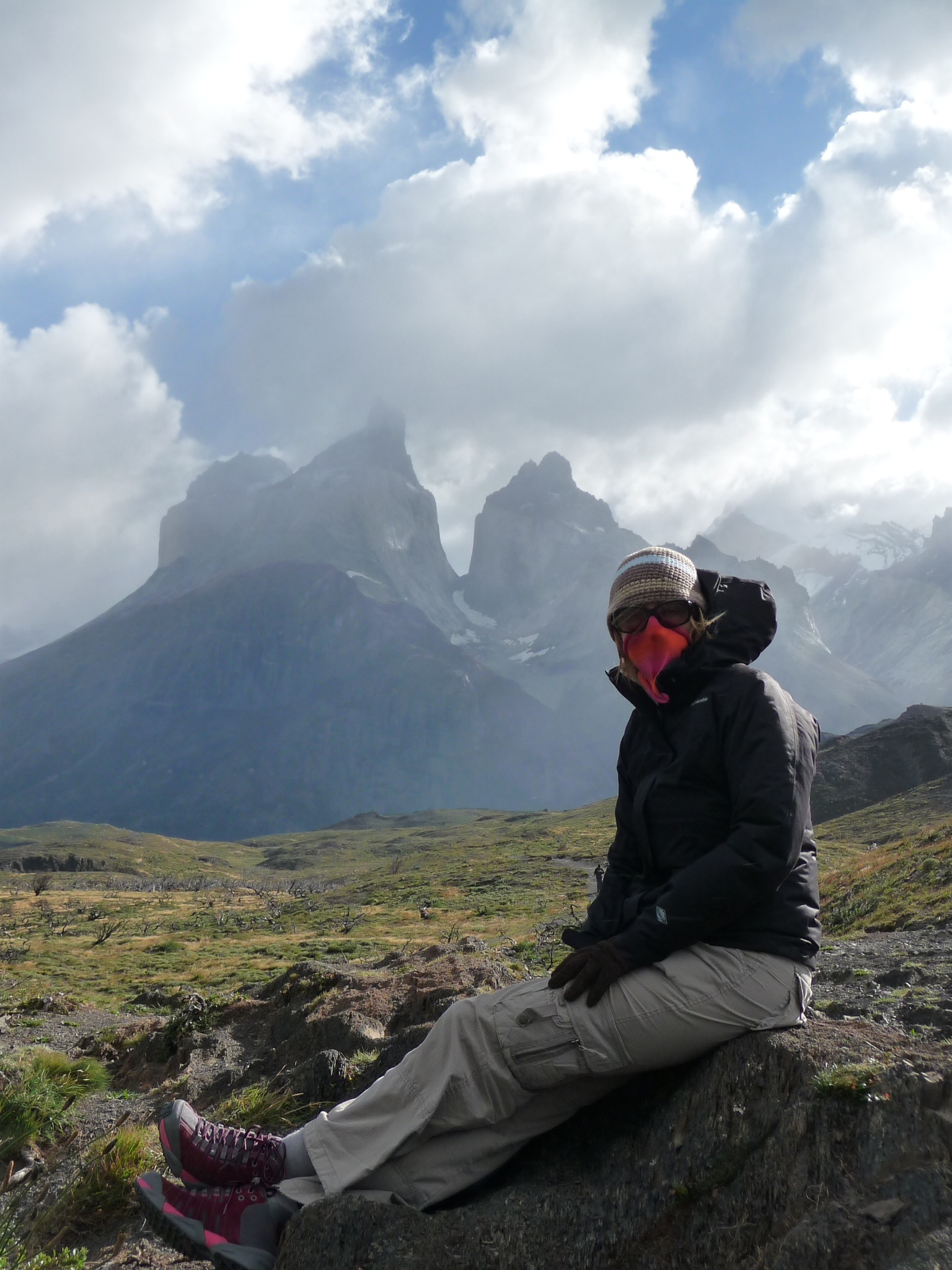
A walk the following day helped prevent the muscles seizing from the day before’s efforts and the cold weather. The wind was fierce again (not uncommon in the park where they can reach up to 170 km/hr). John gave us some instructions before commencing the walk and one was that if it got too bad he would ask us to sit!
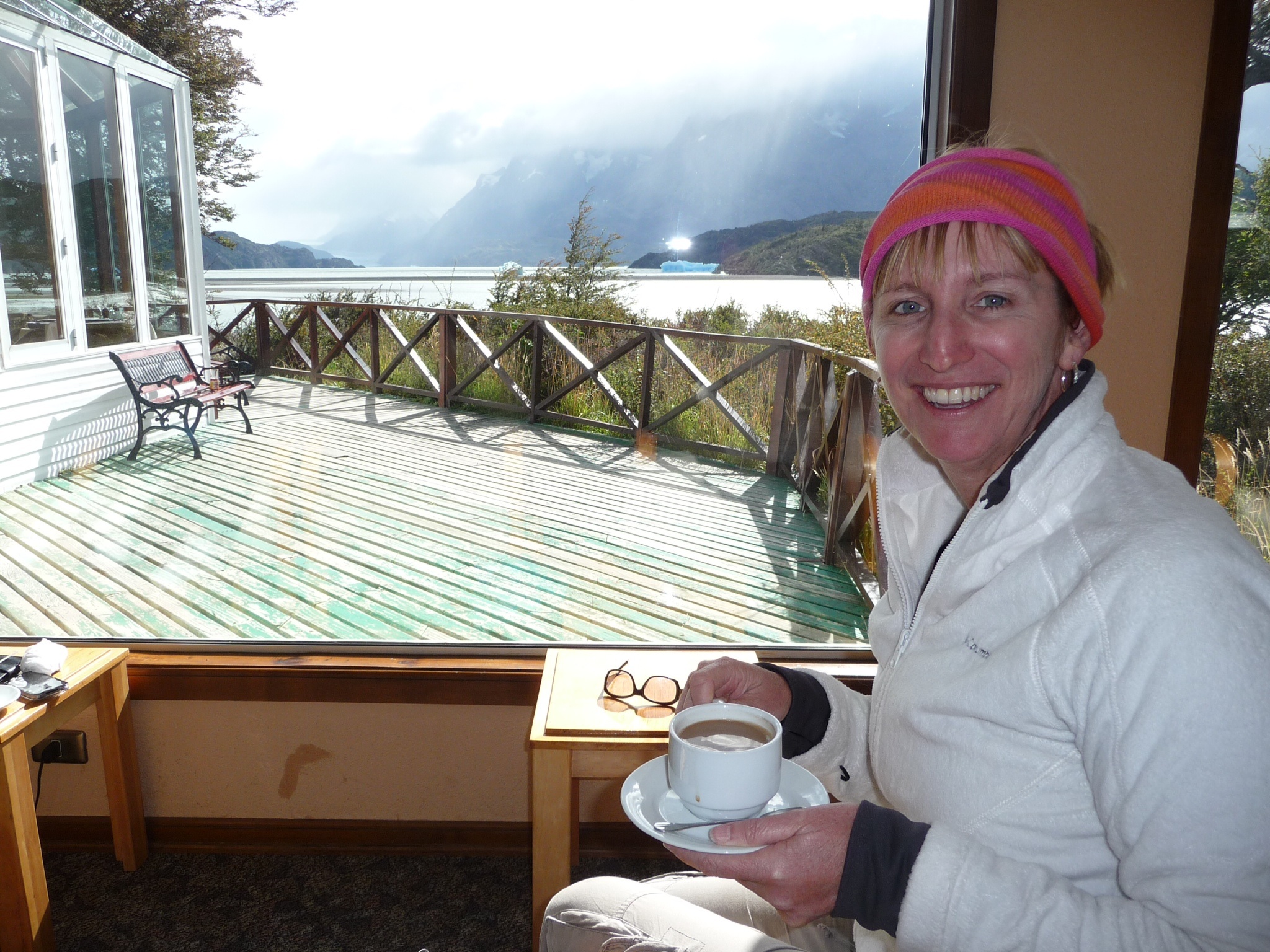
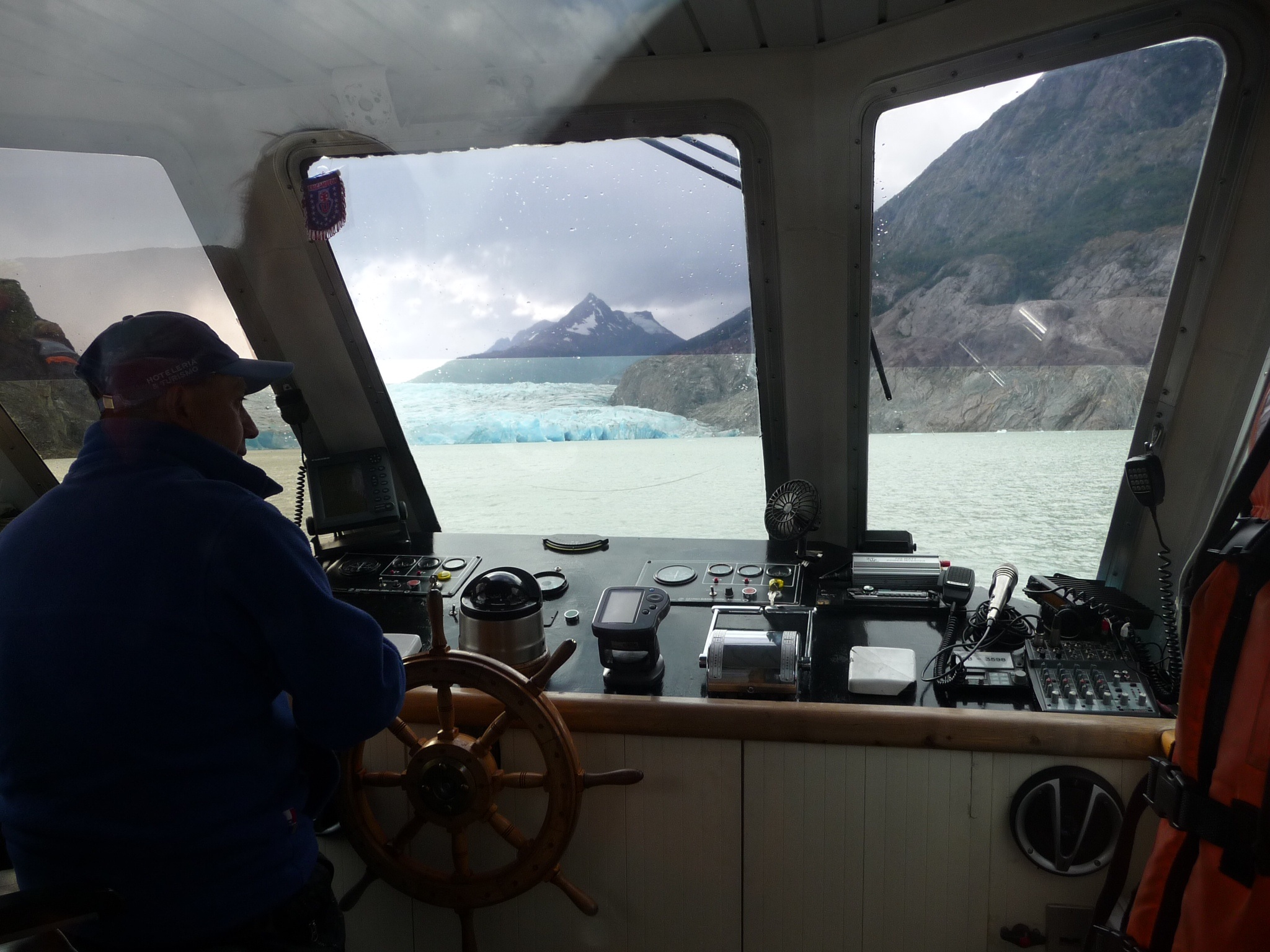
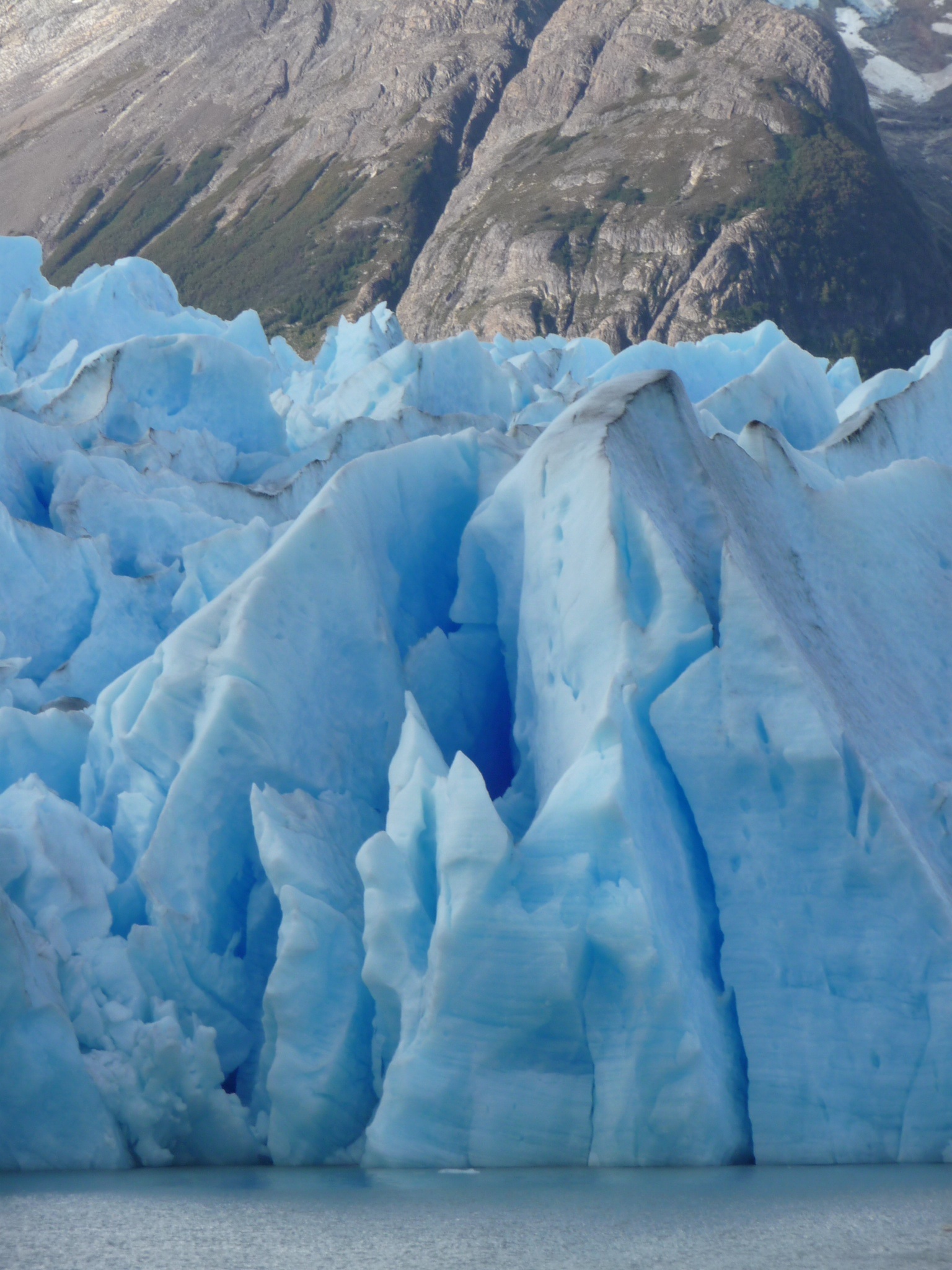
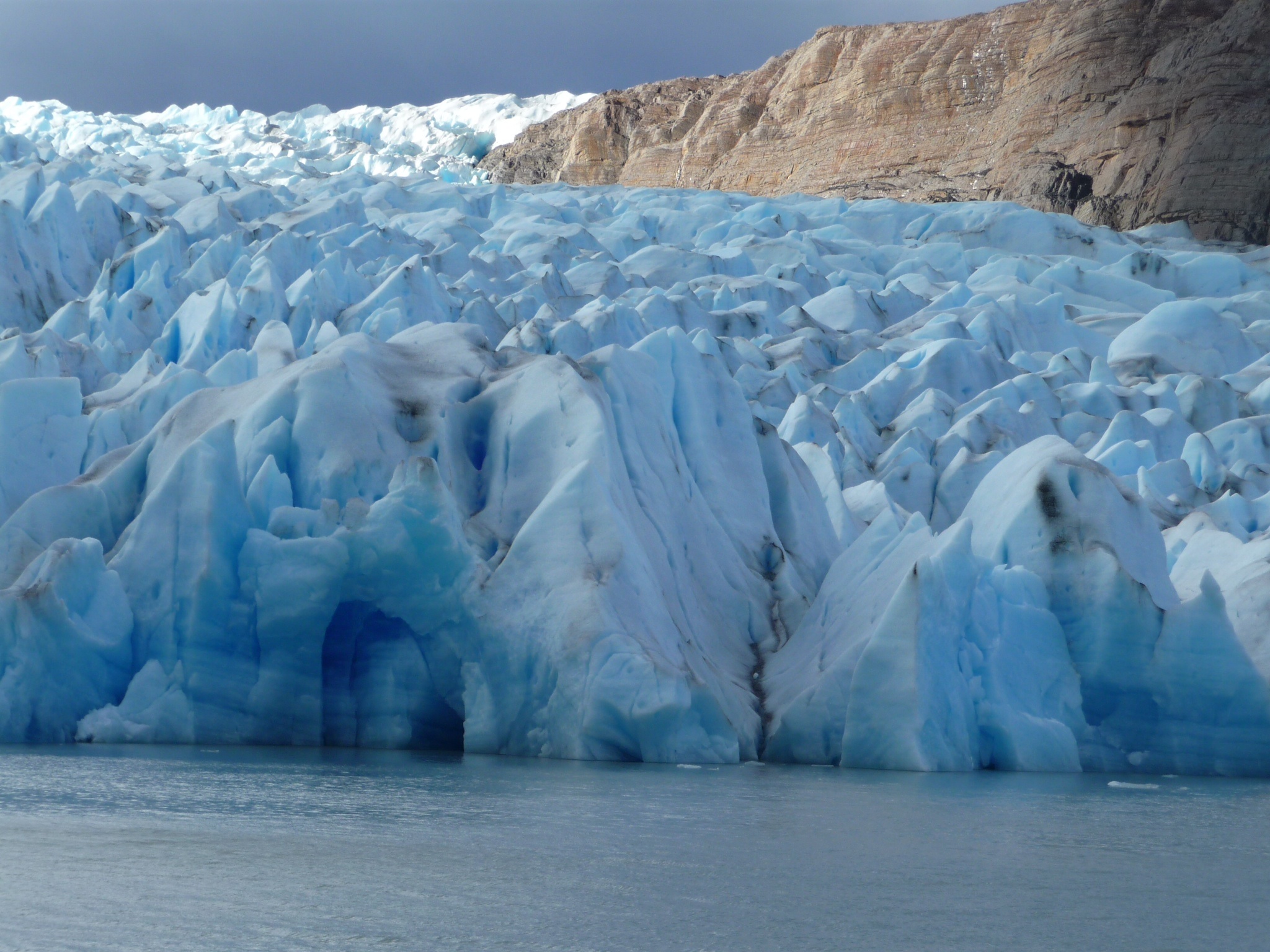
We then arrived at the hosteria from where we would start our day trip to Glaciar Grey on Lago (lake) Grey. My breath was taken away as we entered the coffee shop – we had a birds-eye view of beautiful blue icebergs that had made their way from the glacier down the lake to the shores of the hosteria. Wow- I was then very excited at the prospect of what would be seen from the boat!
It was a 17km trip out to the 27km long and 4km wide glacier. This glacier is part of a system that’s the third largest in the world. The grey colour of the lake is due to the higher concentration of sediment.
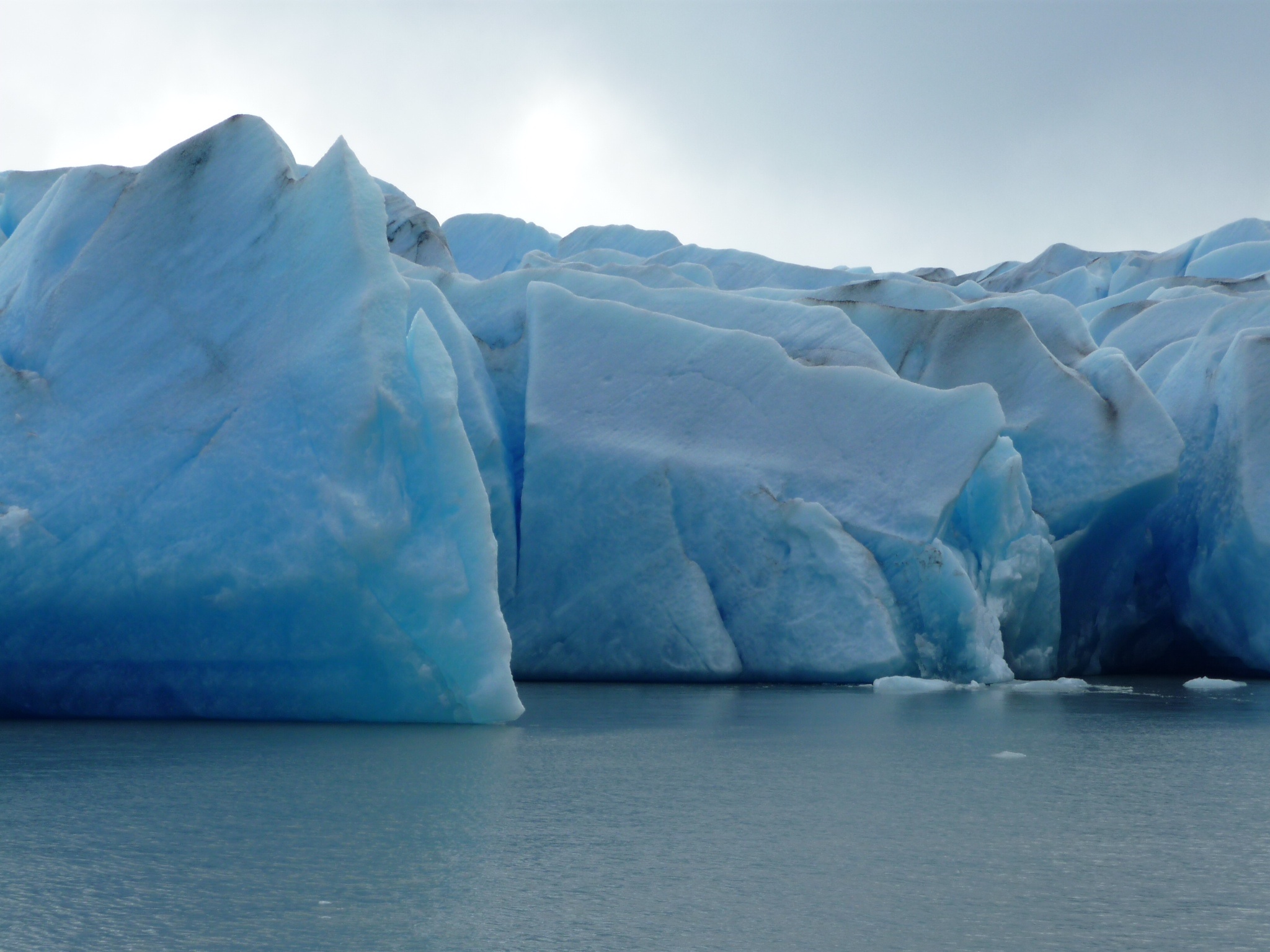
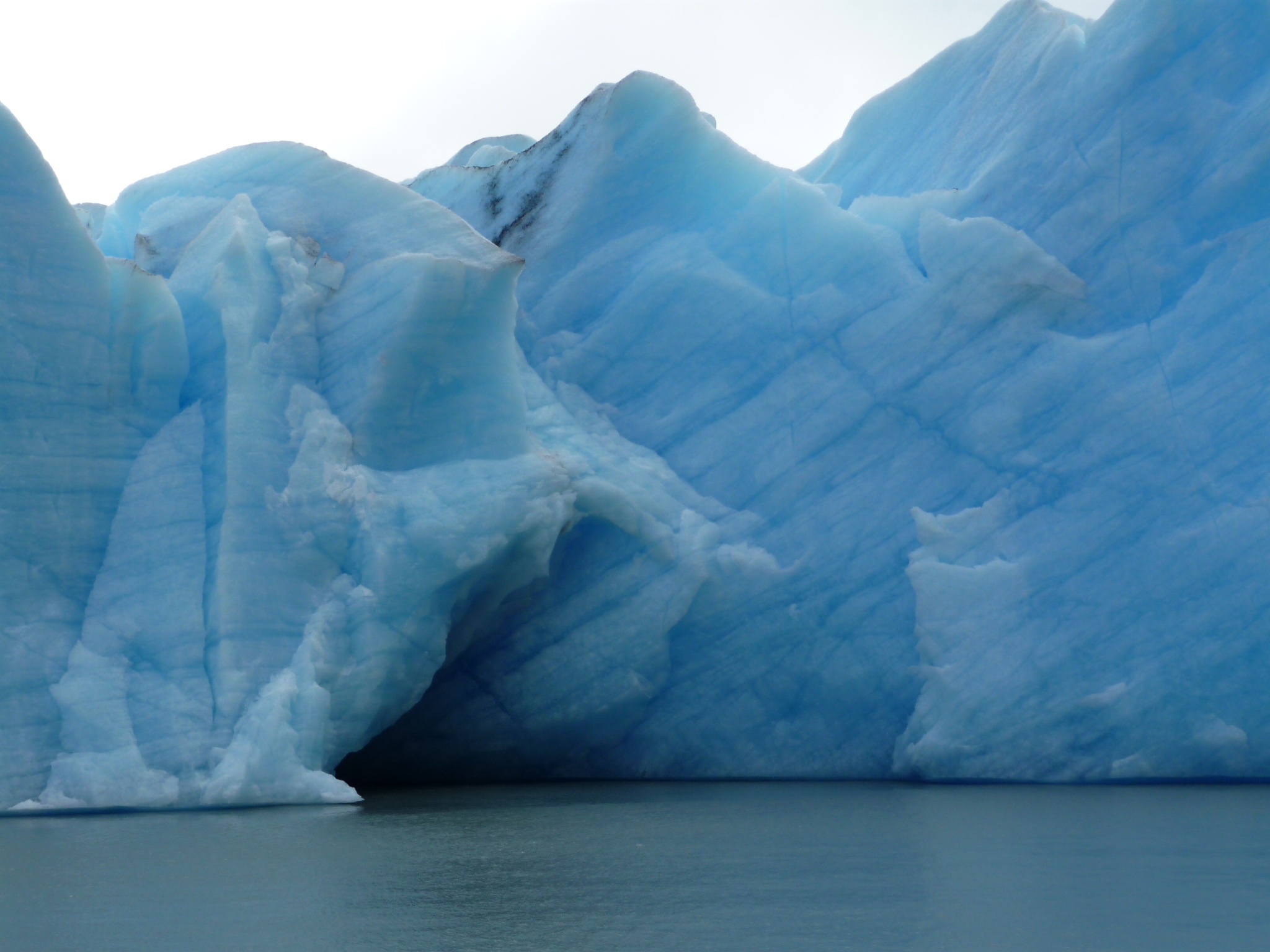
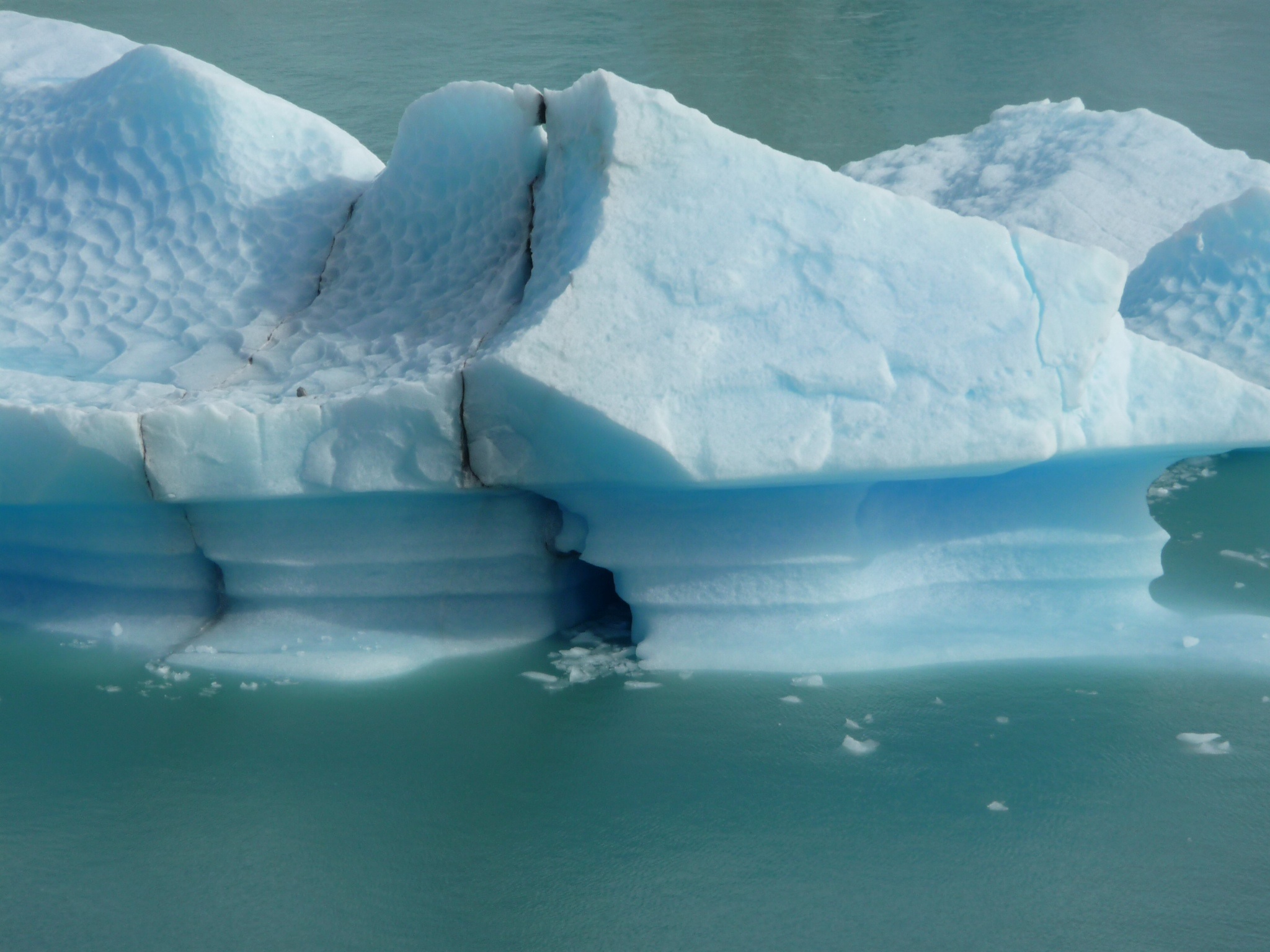
The colours of the glacier an icebergs were amazing as was the size of some of the icebergs (85% of an iceberg is under water).
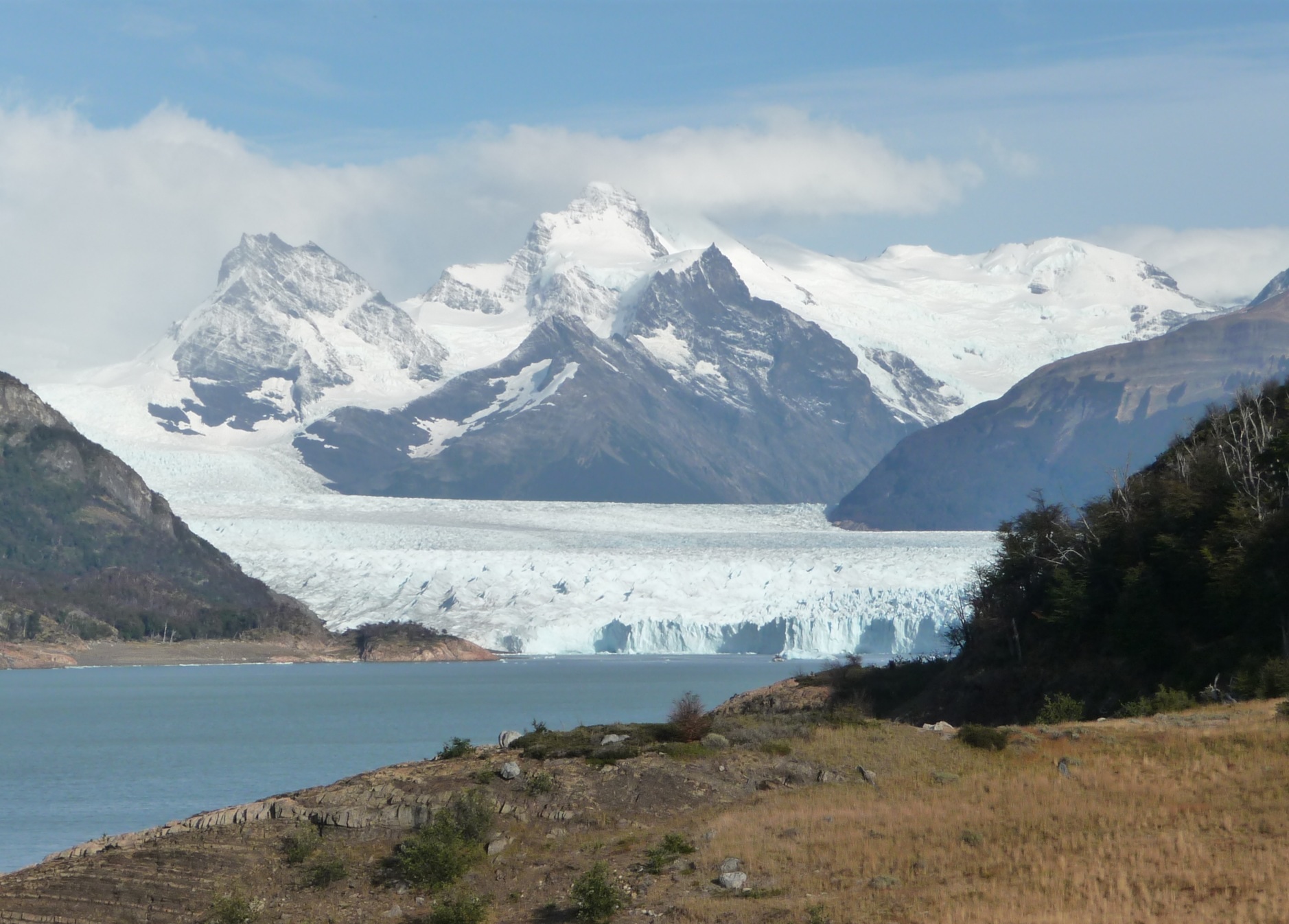
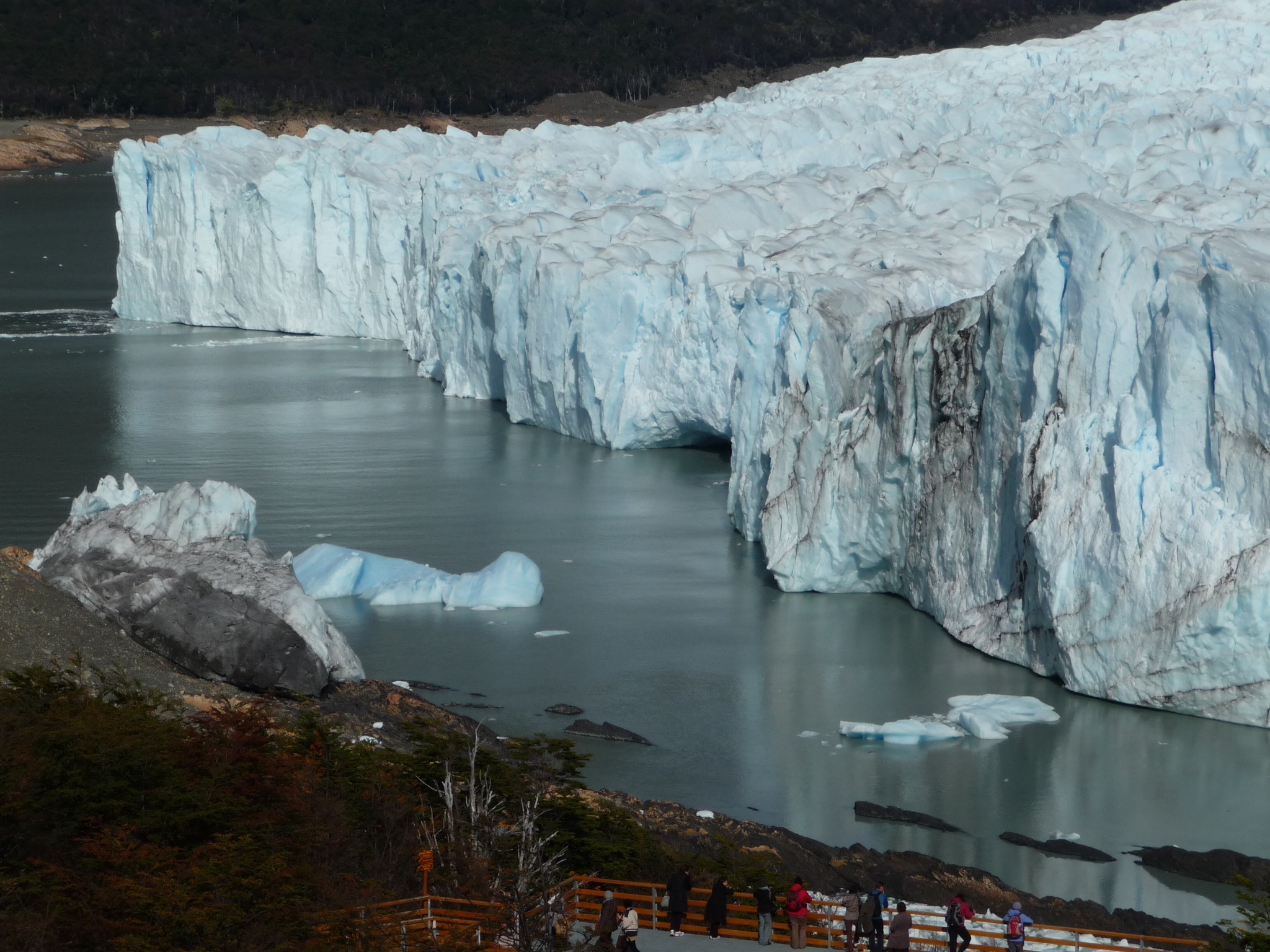
We were served up Pisco Sours with genuine glacier ice cubes – hopefully not contributing to the reduction of glaciers!  These glaciers are decreasing in size each year. The only one not (in the world) is Perito Moreno and it was yet to come!  I was convinced it couldn’t be more impressive thank Glaciar Grey.
Our last night camping – yeh!  This body isn’t geared for sleeping in such extreme conditions – I do wonder how I’ll go in Machu Picchu, which will be even colder.
We left our camp and headed back to Puerto Natales for a night before heading onto El Calafate – back into Argentina.
First ice-cream of the trip – Calafate – deep purple berry of the region. It is claimed that those who eat calafate will come back to El Calafate and those who eat a lot won’t leave!
In the wander around the streets I saw a lovely cutlery set with armadillo armour handles – knew I’d never get them through Customs even with a tale of them being plastic imitating armadillo so passed.
We collected our new tour members Canadians Ruth, Stephen, Kathryn, Rod and Grant, Dutch Peter and Swiss Jonas and headed for Parque Nacional Los Glaciares and the famed Perito Moreno Glacier. We scooted alongside Lago Argentina most of the way. Half an hour into the trip and the bus won’t start after our photo shop; a push from us all and we’re away again – buzzards and eagles flying above us.
Our tour guide for the trip informs us that most of the estancias are now closing or turning to ecotourism. Seems the guanaco would be a much better grazing option if it wasn’t for the fact they spit and buck when being sheared and clear the fences with no trouble at all.
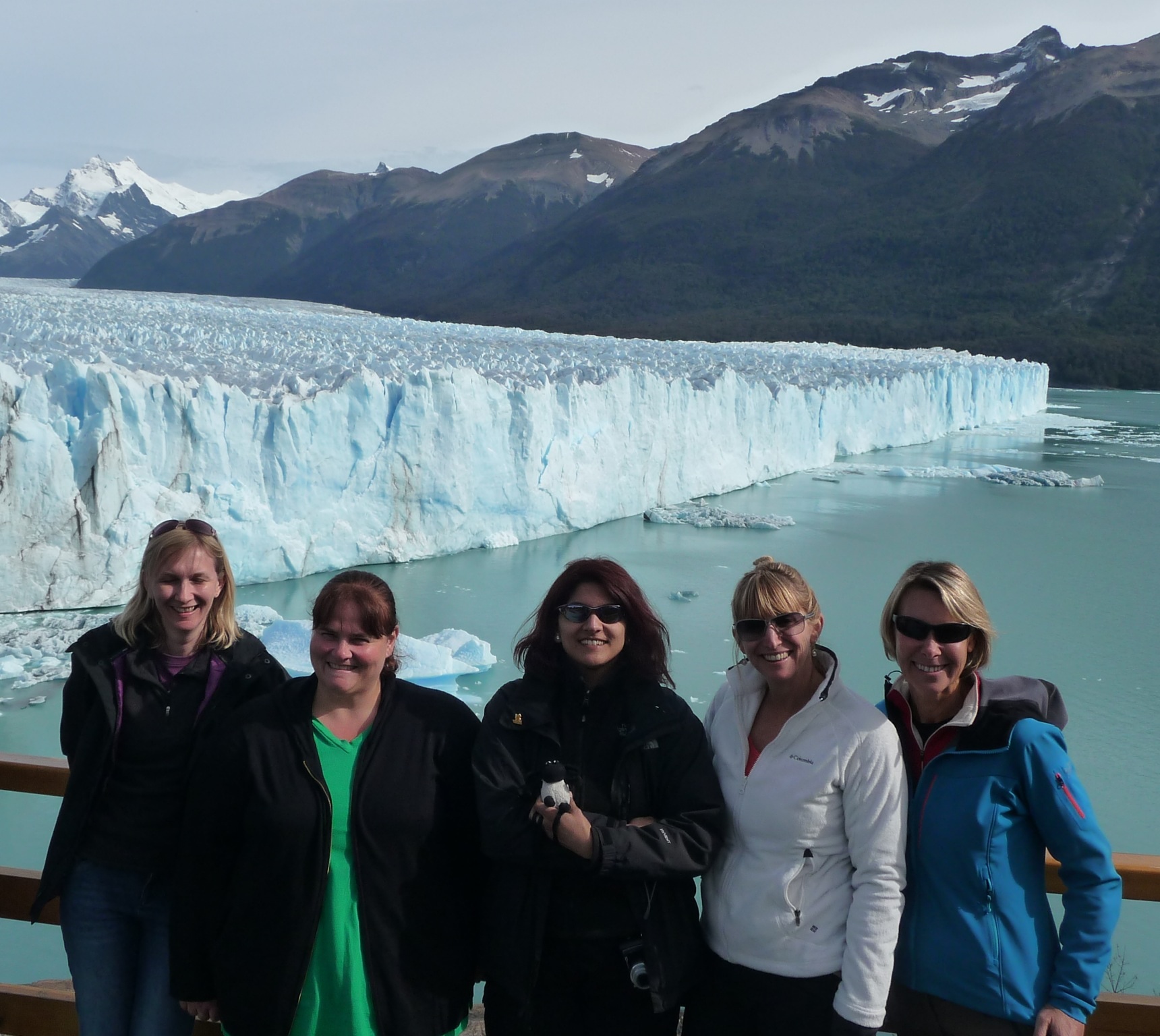
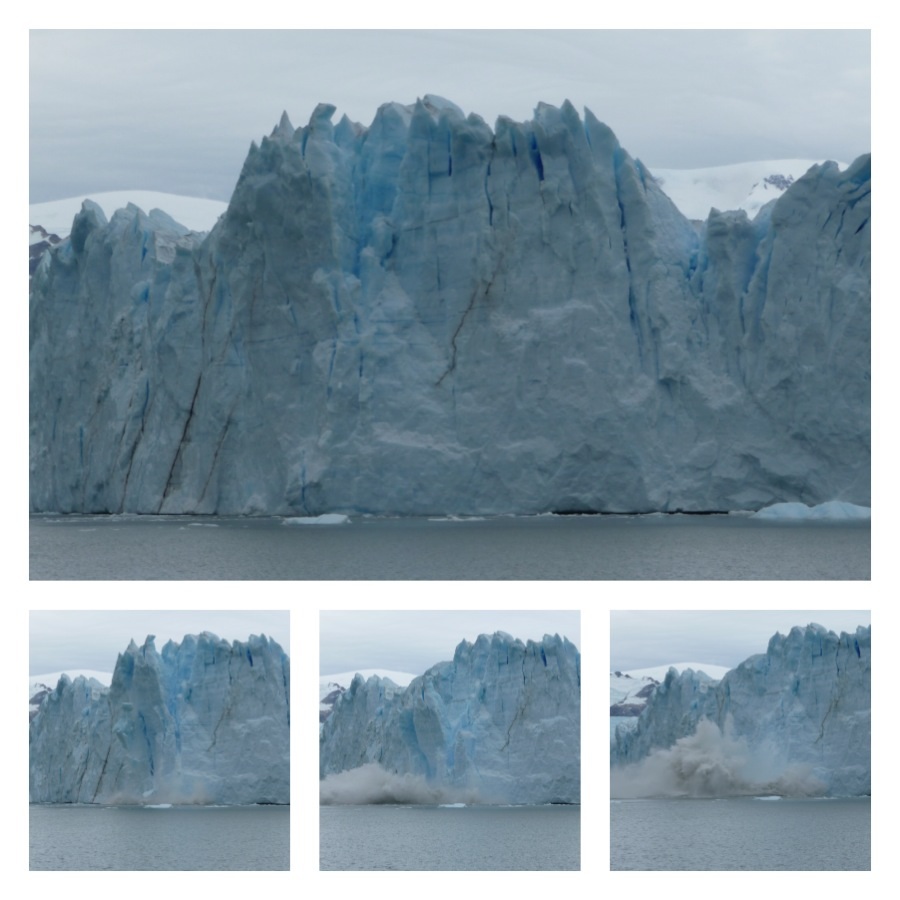
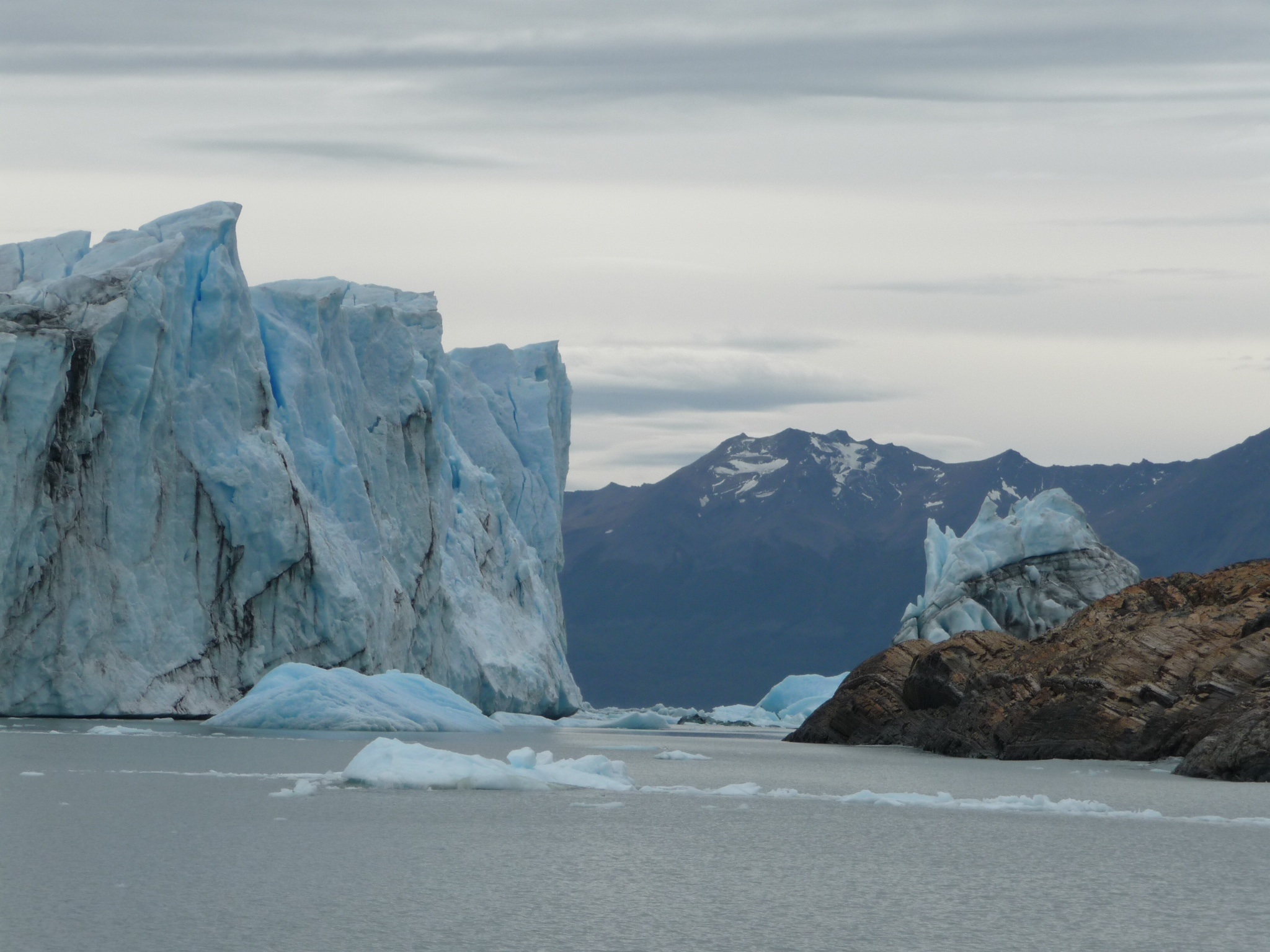
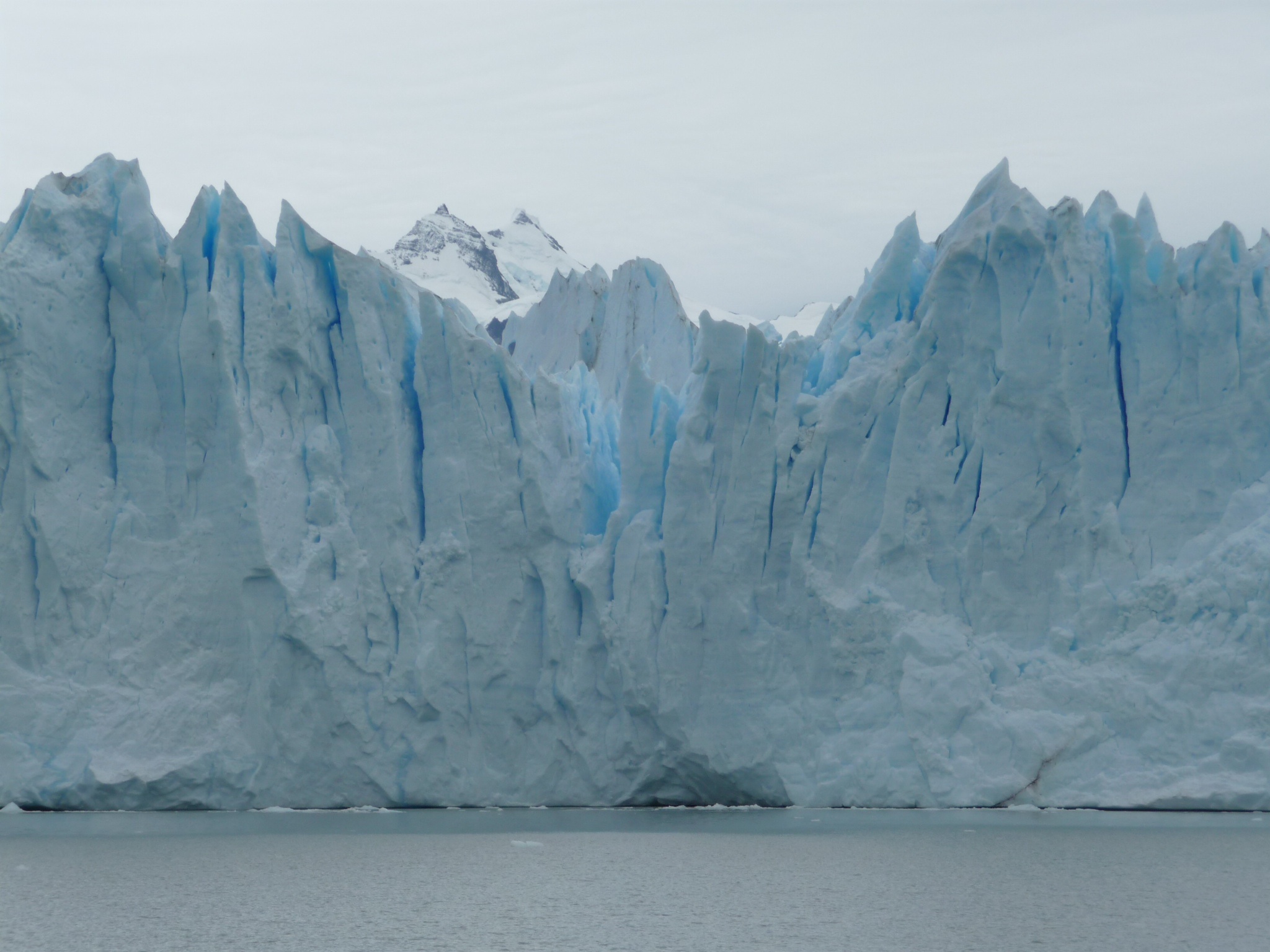
We were teased with views of the Glacier as we approached it but that didn’t prepare me for the beauty of this glacier. It has a five kilometre front, which rises 60 metres above the water. It is viewed from ‘balconies’ and a boat. We enjoyed it for hours just sitting and listening out for the next mass of ice to crash into the lake with resonating roars – the crashes were spectacular, particularly from the boat where you were only ten metres from it. The colours were amazing – hues of blue, grey and white.  Images locked in my memory for ever.
On the way back into town a few of us got dropped off at the Glaciarium for a bit more education on glaciers… oh and there might have been an ice bar there – bizarre to drink from glasses made of ice while sitting on seats made of ice!
Farewelled El Calafate and moved onto El Chalten. Thoroughly enjoying reading In Patagonia (thanks Don and Jim), imagining the extremes suffered through the revolutionary times of Argentina. The anarchists had a red hot go (emphasis on the red) at forcing the estancias to secede land and belongings to their compatriots. The Trotskyites failing again.
I try and imagine the attempts of Butch Cassidy, The Sundance Kid and Etta Tiffany to hide out in Patagonia all the while robbing the estancias and setting up their next big heist – generally the ‘local’ bank. We even had a coffee stop in a roadhouse once visited by the gang – only known after the authorities came looking for them.
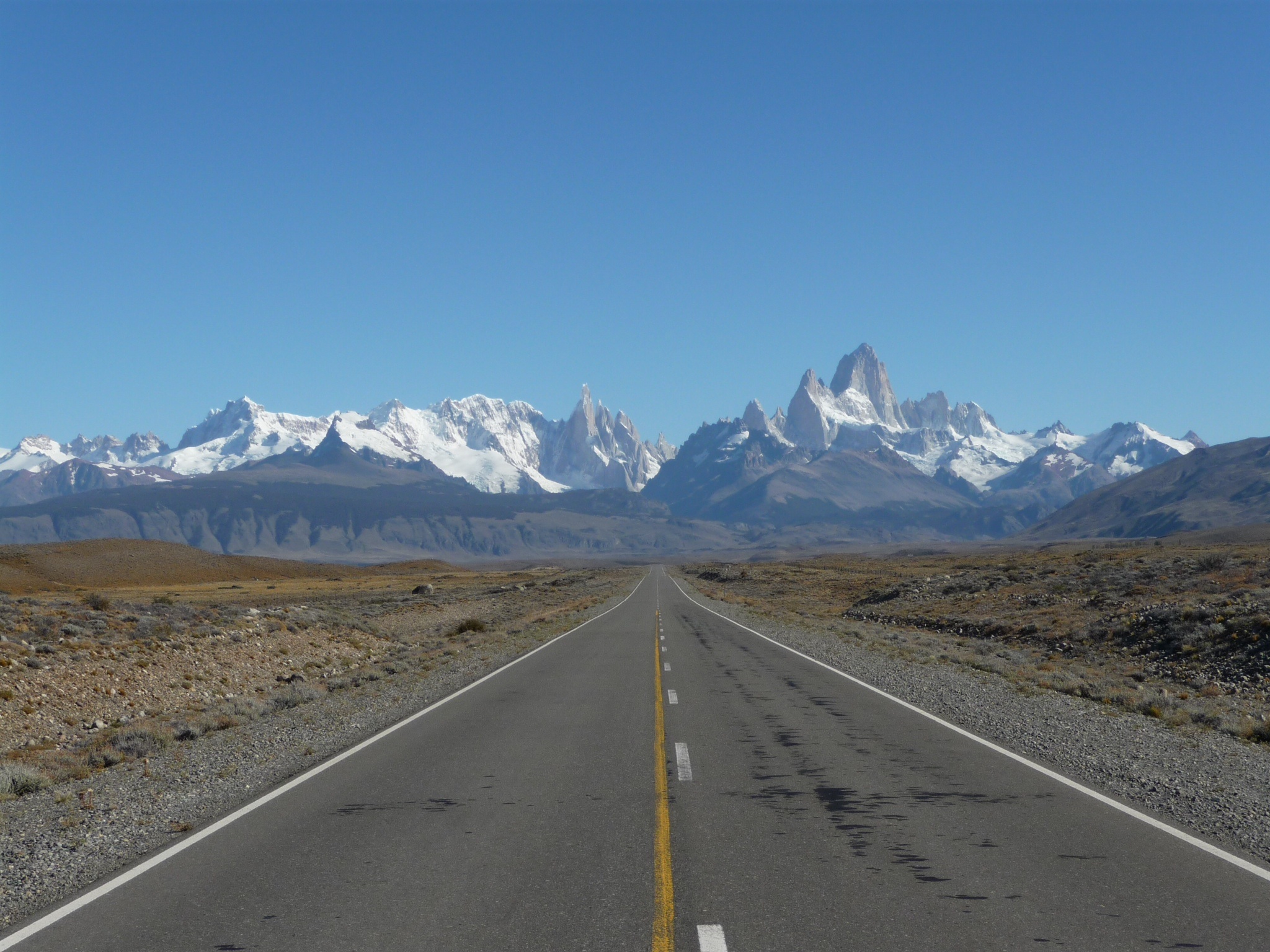
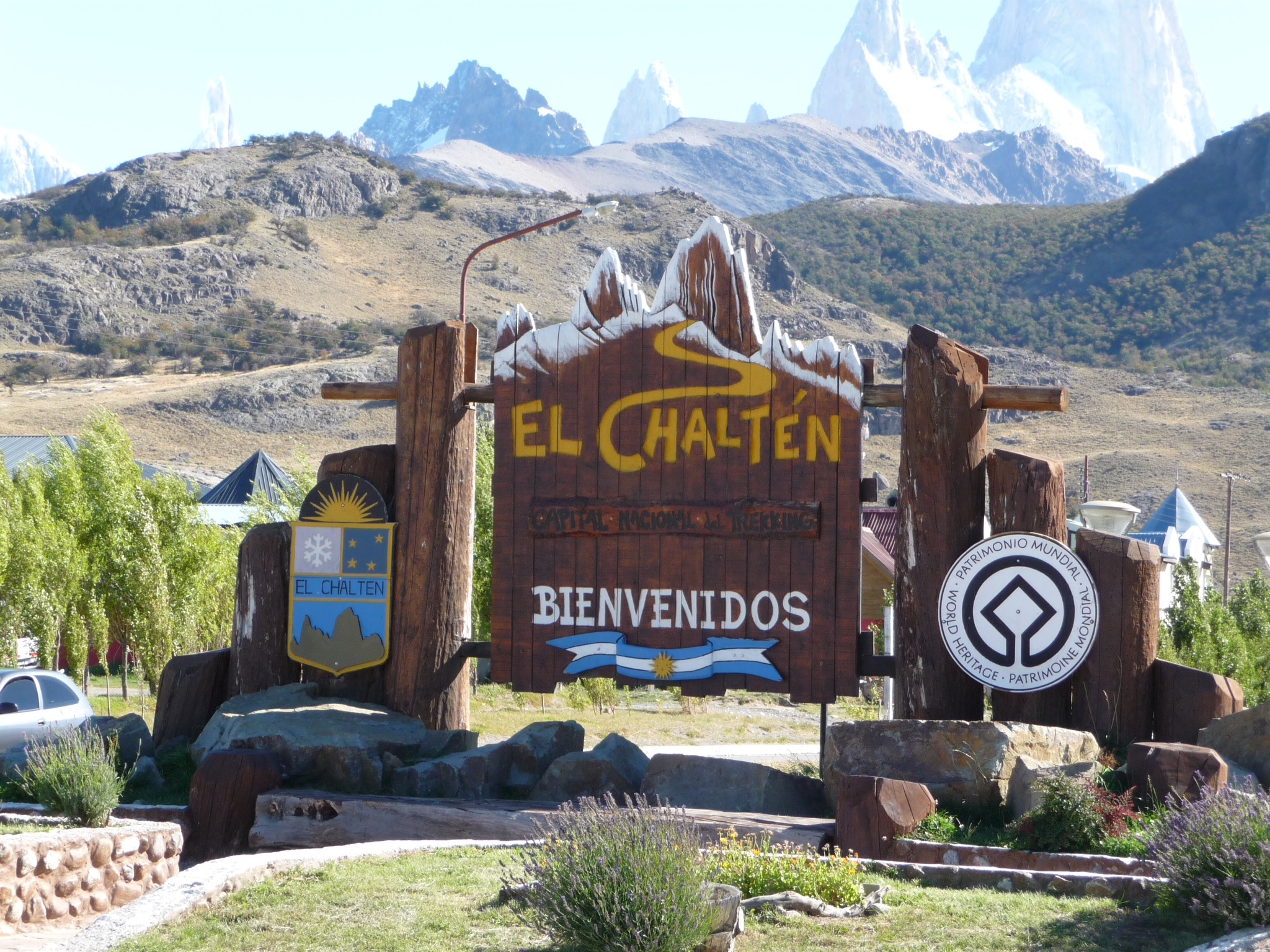
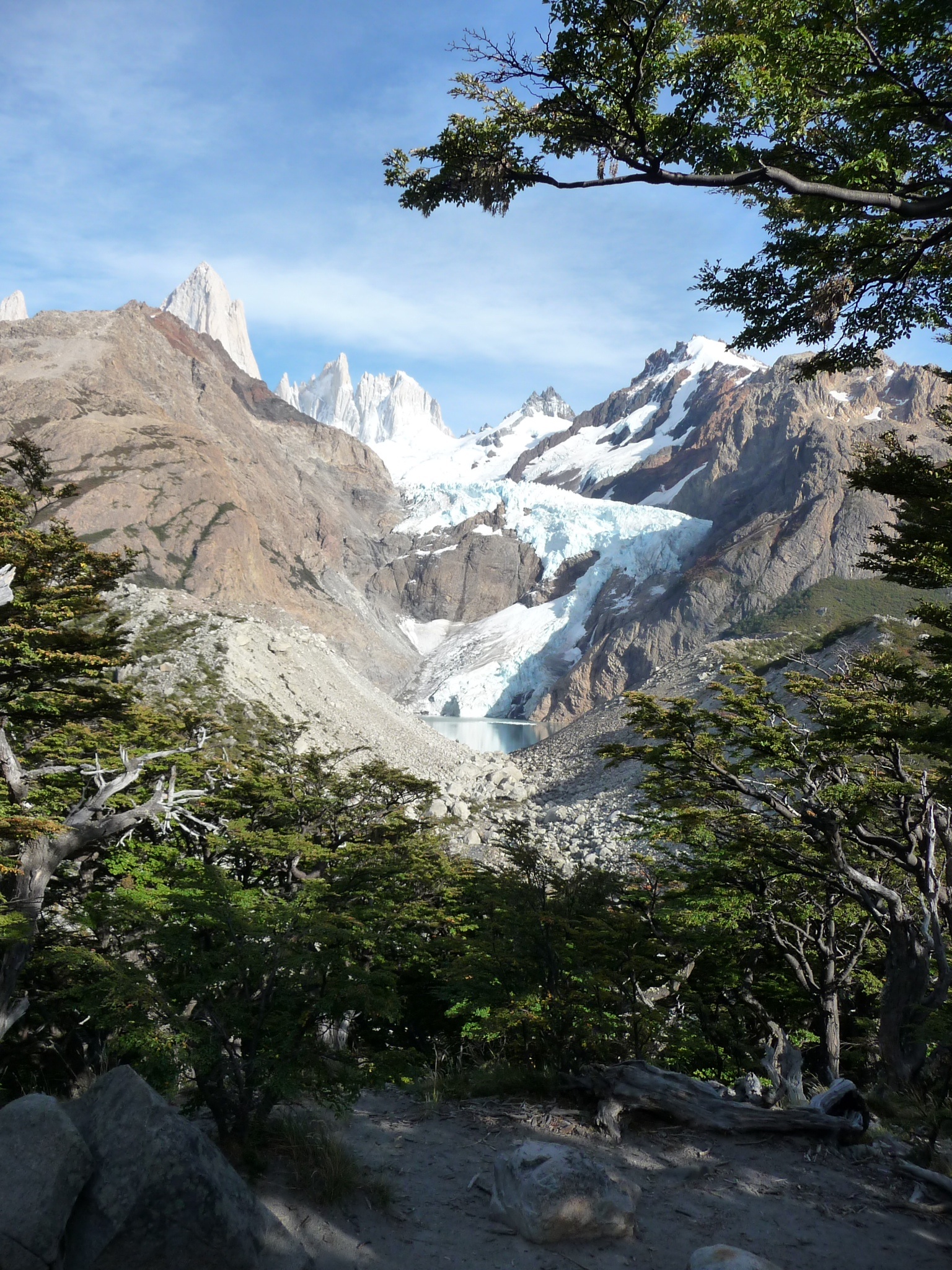
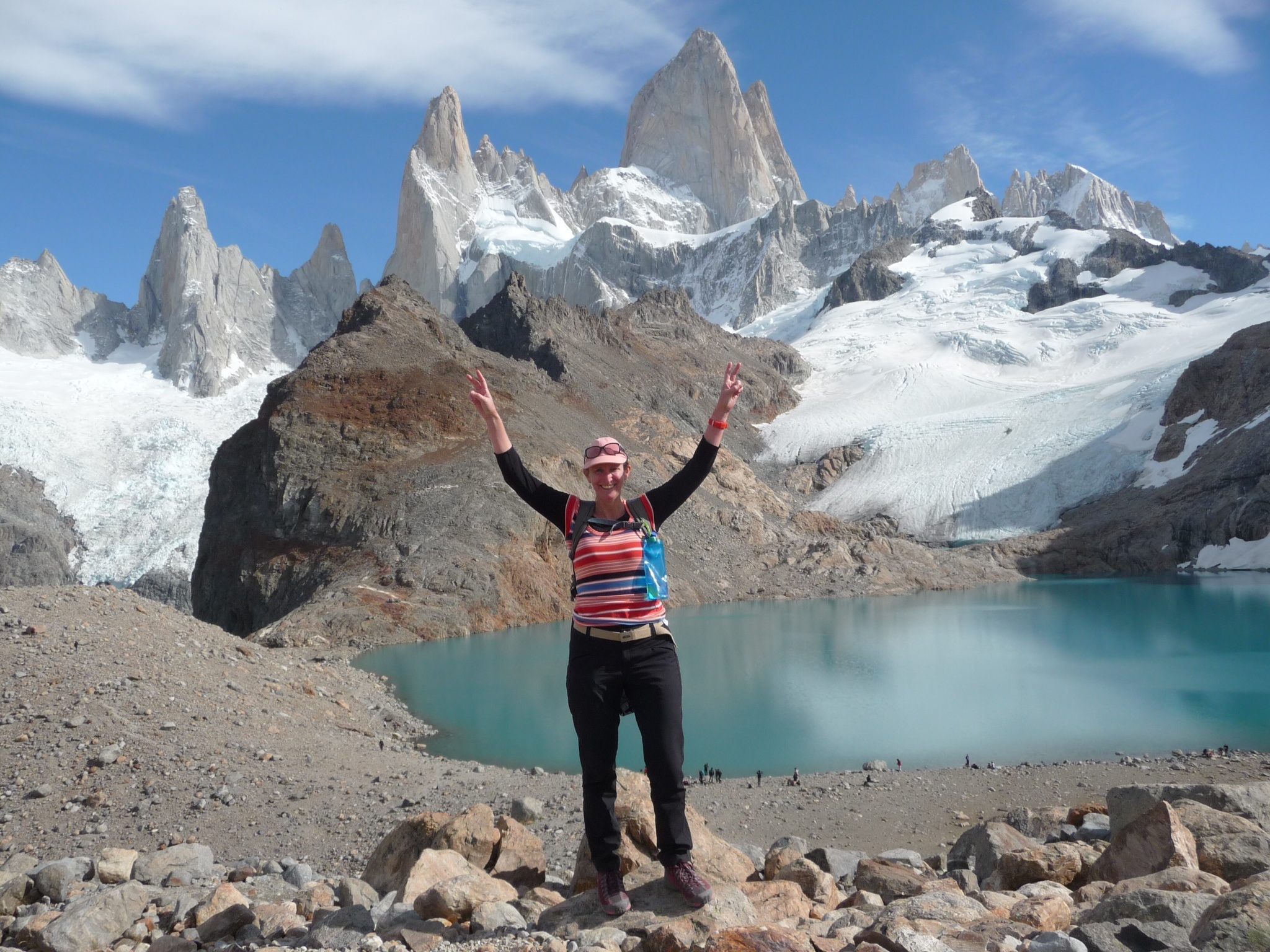
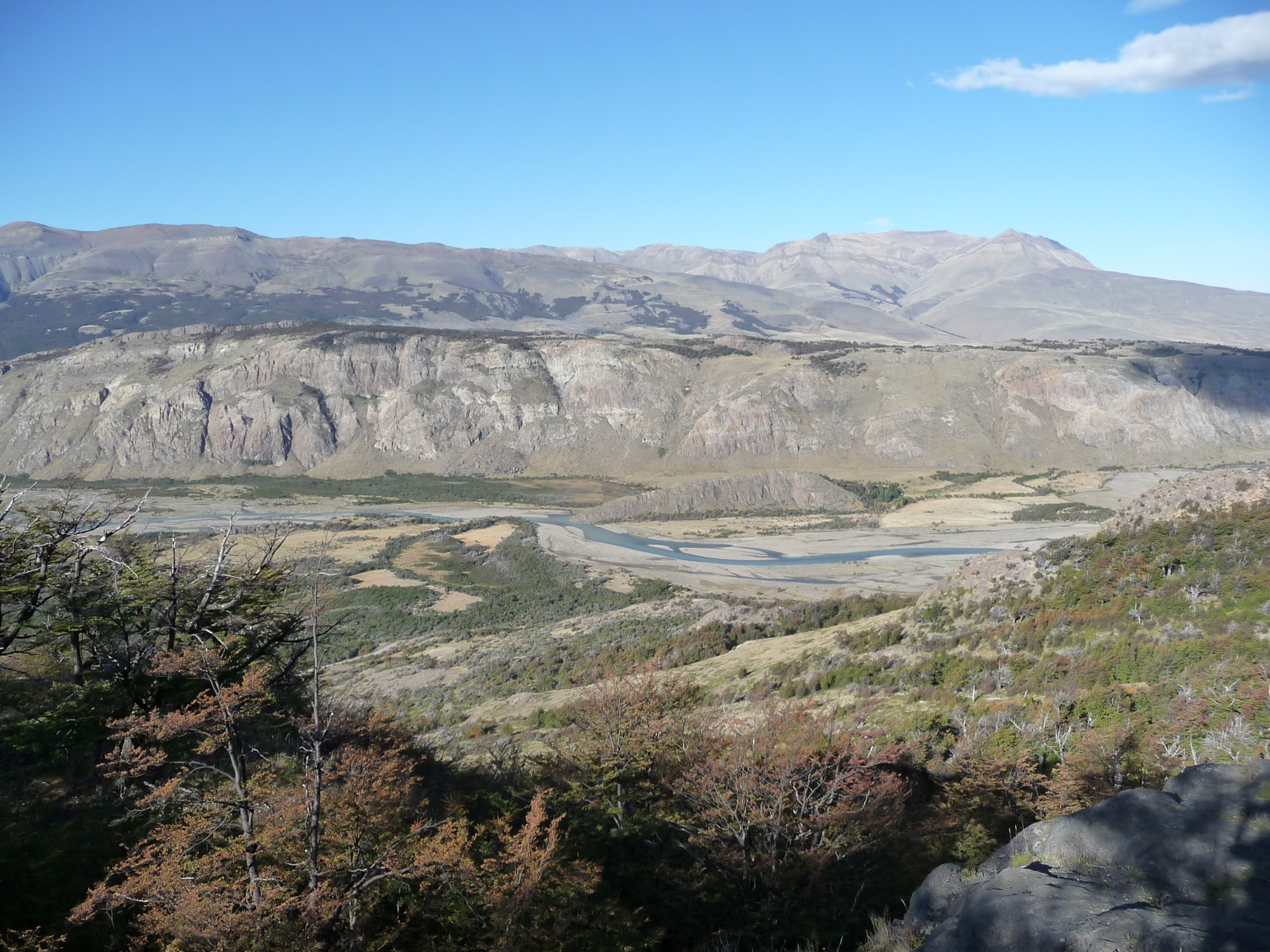
As with so many other towns in South America that are associated with national parks, we were presented with a gorgeous vista of the glacier in the distance one way (this time Viedma) and the imposing FitzRoy granite spires of Los Glaciares National Park….another hike.
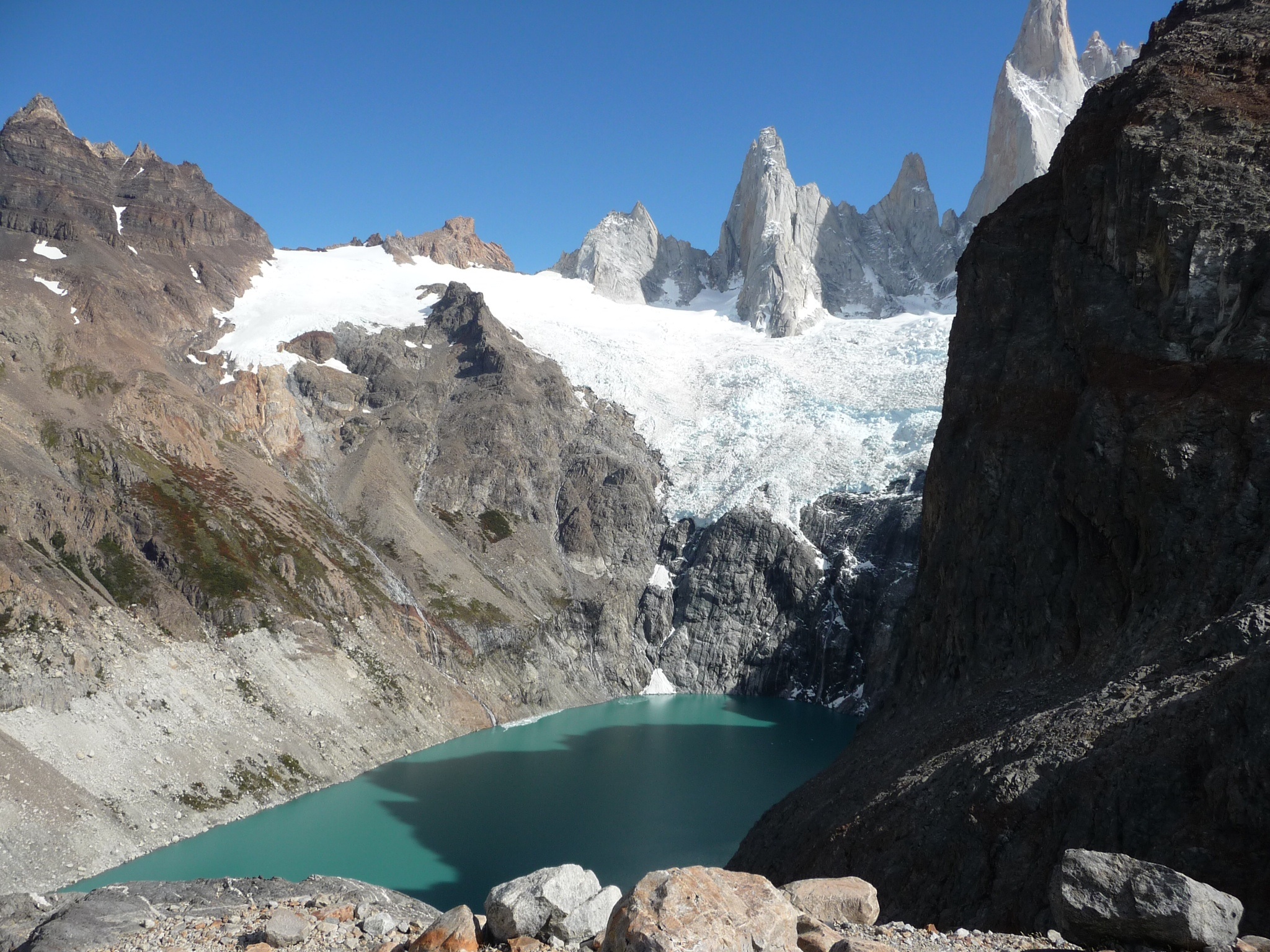
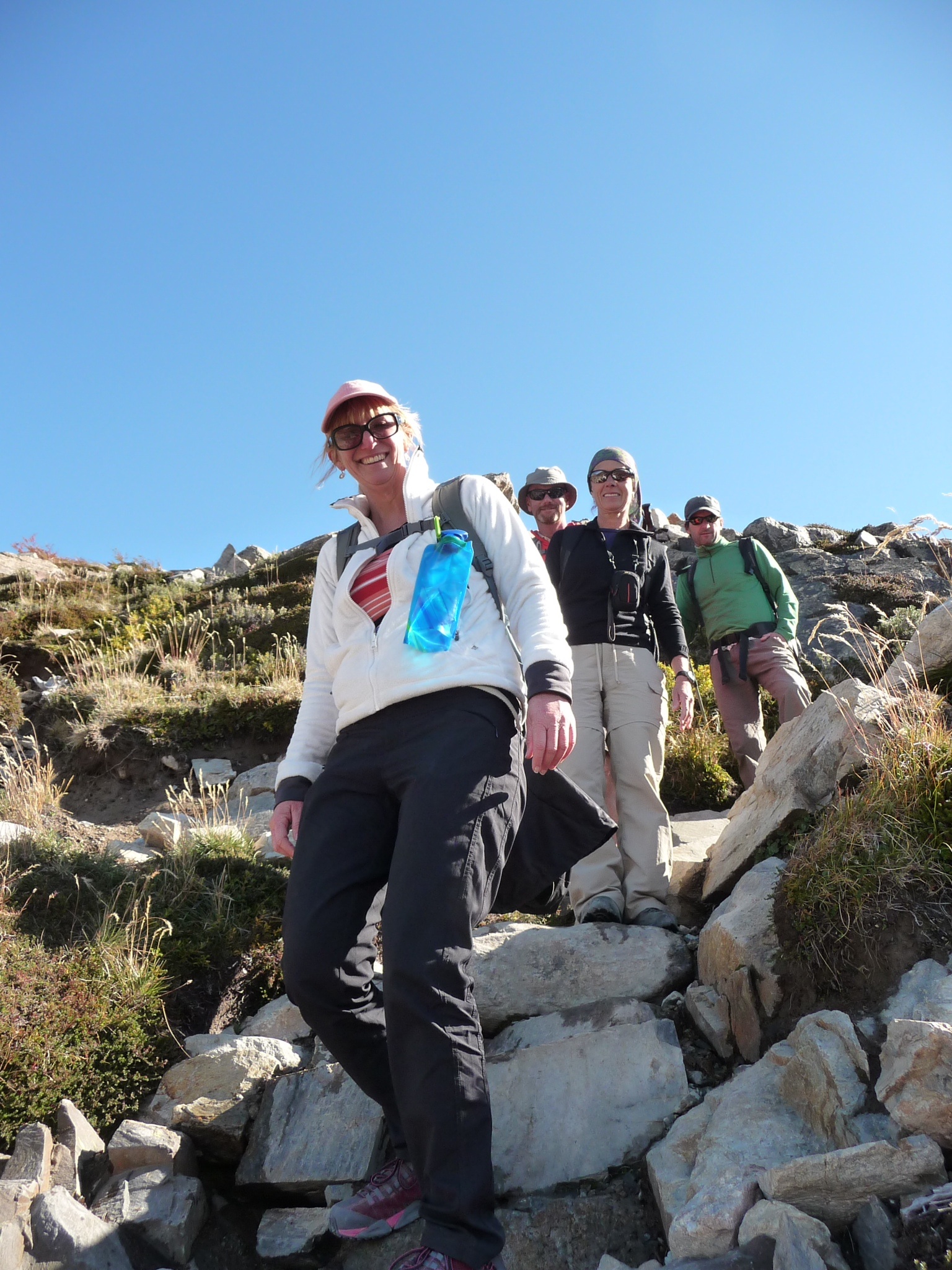
At the commencement of our 10 hour hike it was minus two degrees. Three hours of reasonable hiking (with the sound of avalanches from the glaciers) and then it was an hour and a half of up, up, up. Again the pain was rewarded. Another stunning lake below the majestic granite spires. For those who know the locations it was like Kings Canyon (NT) on steroids with the emerald lakes of Plitvice National Park below!  Stunning. We spotted two groups of mountaineers (like ants) who appeared to be heading up for the spires – good luck to them!
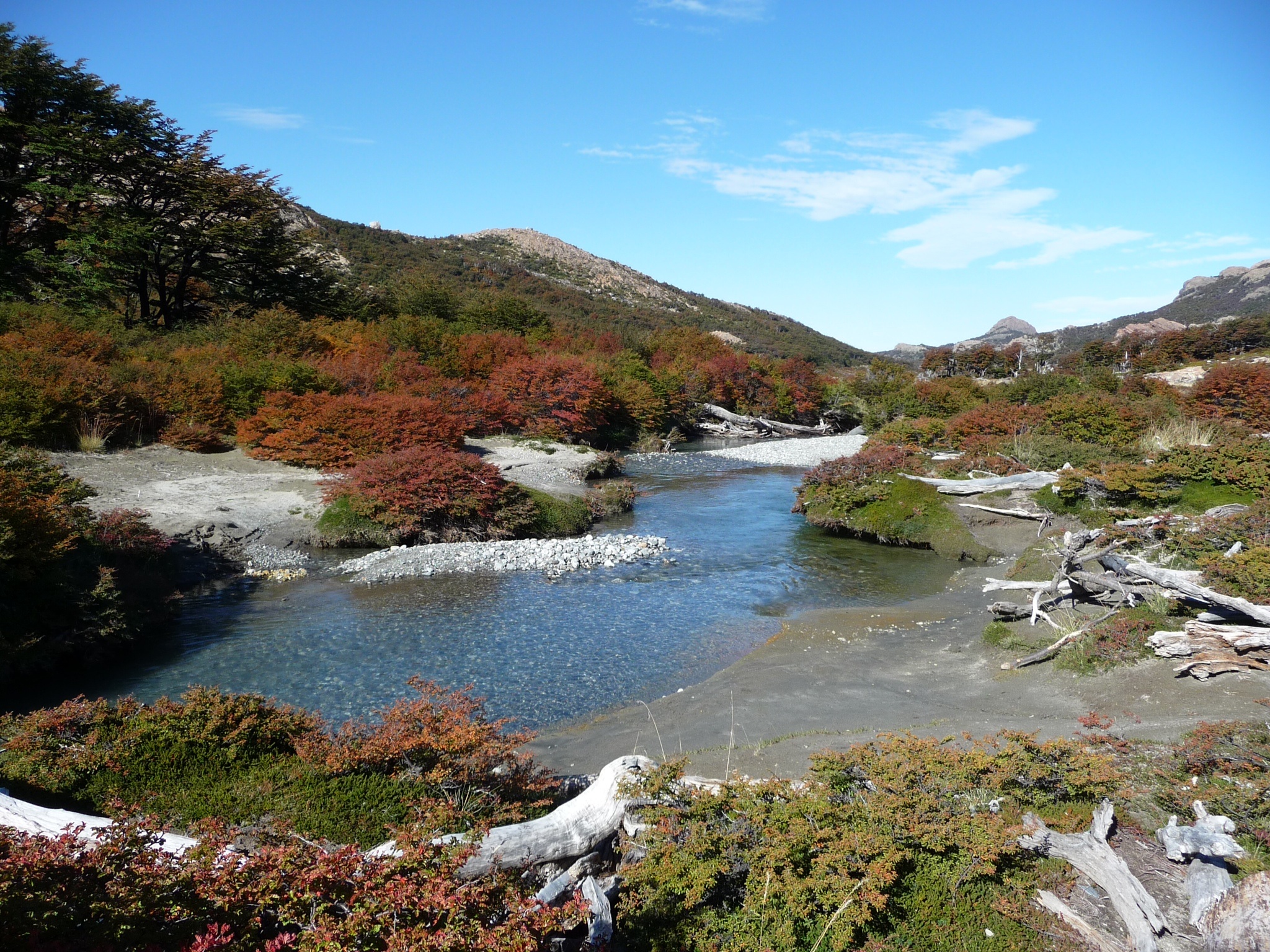
The hike back presented some lovely scenery along with the noise of the funny little woodpeckers.  Interesting to find out they have a large tongue that wraps around the inside of their head to protect them while chipping away.
Left El Chalten with the most beautiful sunrise ahead of our long drive to the town of Perito Moreno.
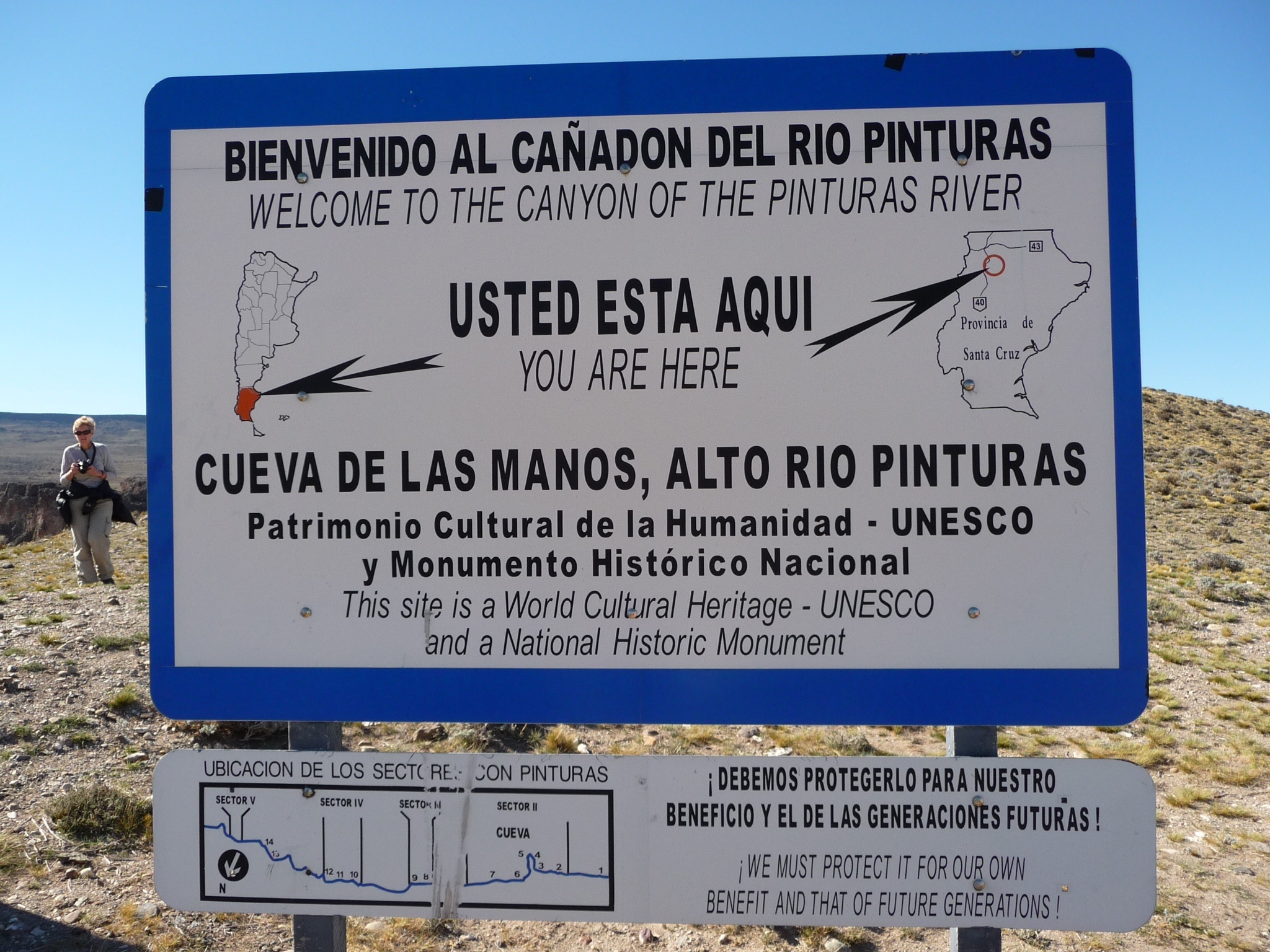
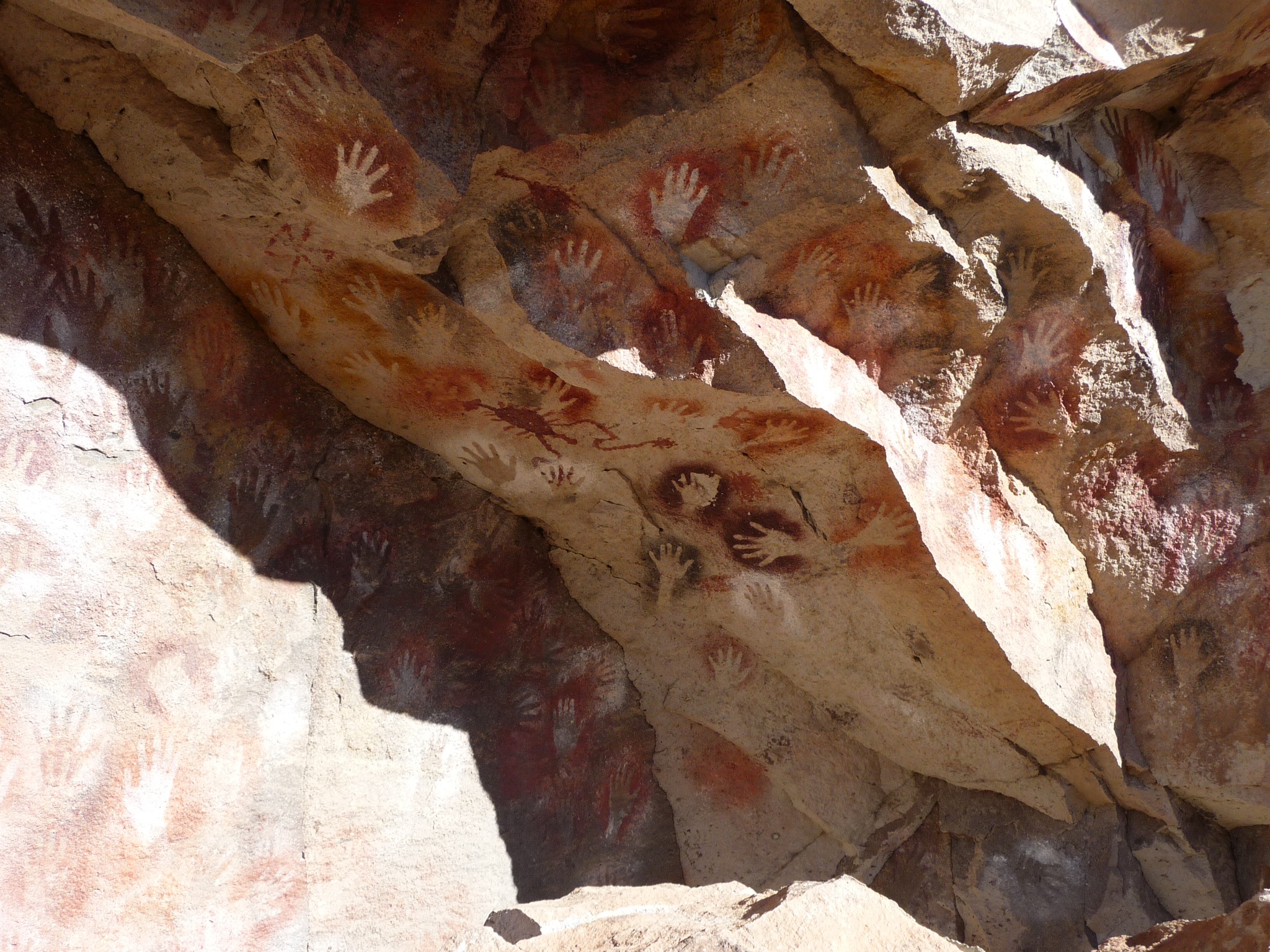
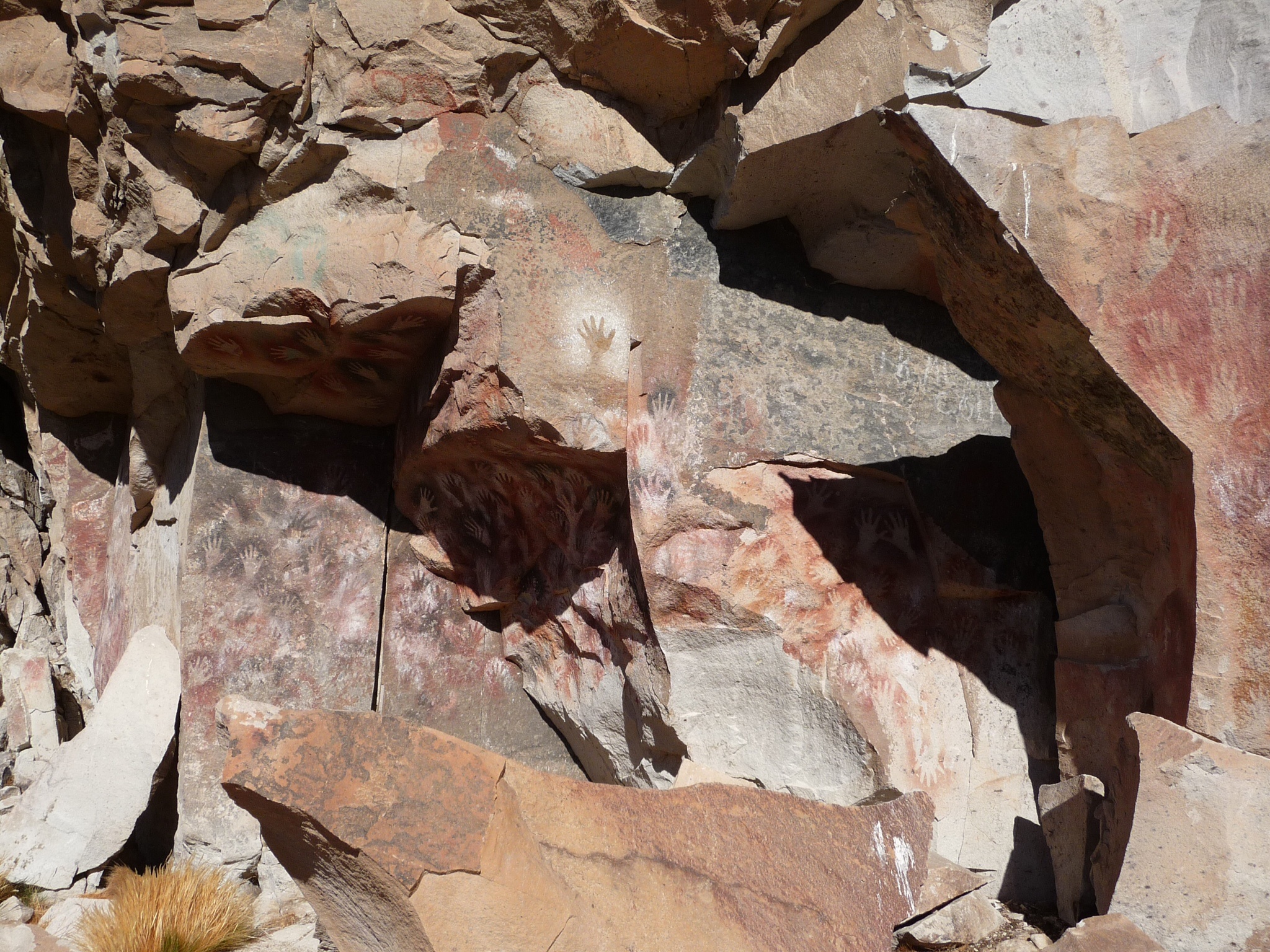
I was a little disappointed that we wouldn’t be taking the opportunity to stop at the Unesco listed Cueva de Los Manos (indigenous rock art) on our way by – our tour guide informed us it wasn’t on the published itinerary and we wouldn’t have enough time.
Ruta 40 – the South American route 68!  Unfortunately this one is blessed with awful dirt roads. We had no end of truck trouble for the journey. First a flat tyre and then a fan belt issue – the sacrificed tights let us hobble slowly toward a town and from there we piled into a mini bus and 4WD utes to get to our destination.
Not great news on the truck or transfer bus – seemed no one was interested in working Easter Sunday. We celebrated Jo’s birthday with cake and got the good news we’d now be able to visit the rock art given a departure before 9pm was unlikely.
The rock art was amazing – Unesco listed because of its significant preservation despite its age – carbon dating suggests some is up to 9500 years old.  We got some great guanaco, rheo (like emus) and armadillo viewing along the way also. Seems Leo and Lee had taken to naming the dead ones – they were up to Frank by the time we realised.
Funnily enough there was a Queensland plated trail/road bike loaded with travel gear at the stop. I couldn’t resist leaving him a good wishes note from us Queenslanders on the trip. I had just started reading Lois on the run; autobiography of a BBC reporter who throws in her job to ride from Alaska to Ushuaia. My motorcycling friends you need to consider this adventure for your bucket list!
Our Tucan leader was so impressed with the rock art she’s considering how she can now weave it into the itinerary.  Everything happens for a reason I guess.
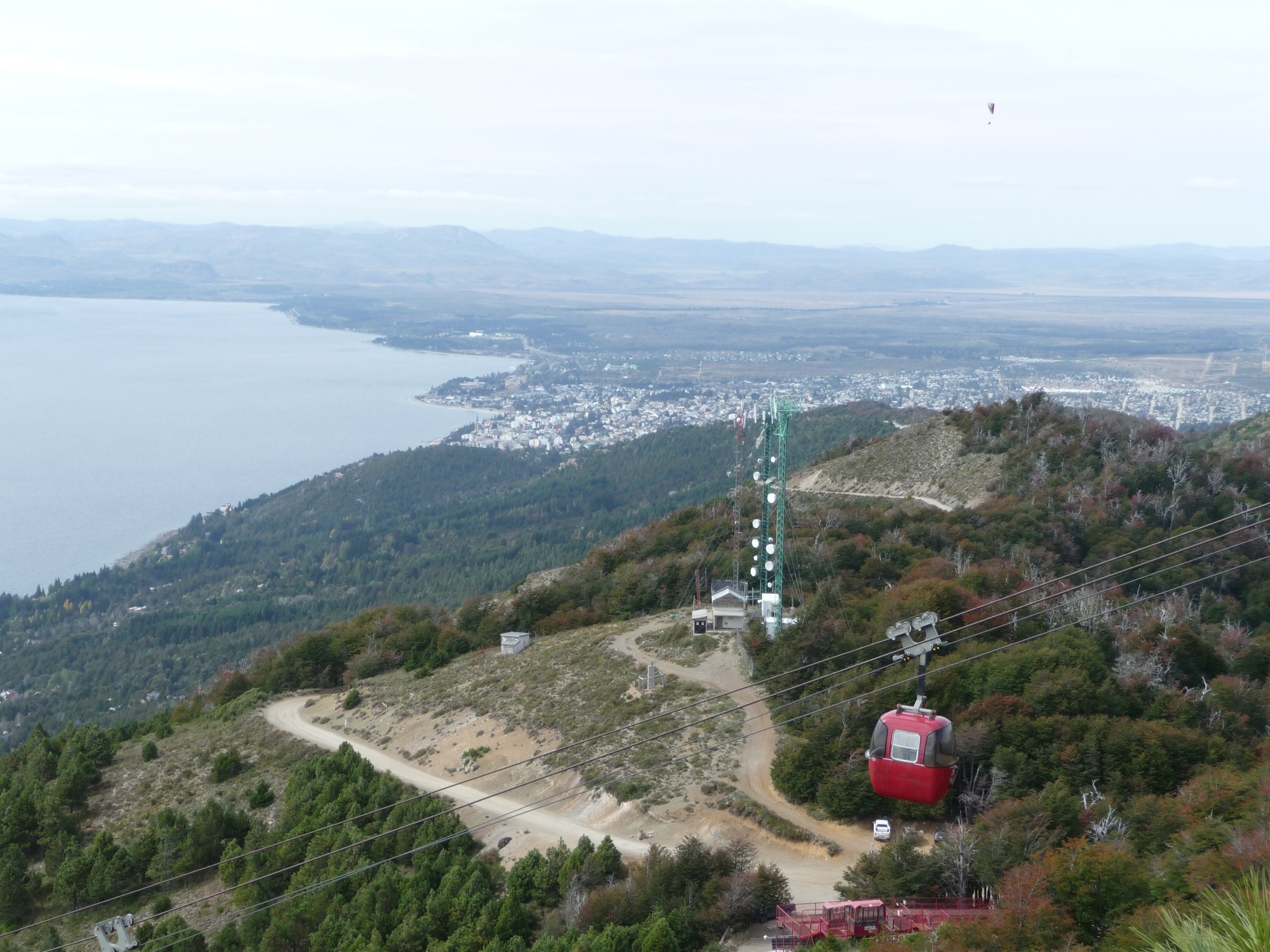
Our bus arrived at midnight for our journey to San Carlos de Bariloche.  As expected we were all quite shattered from the overnight drive but a few of us managed to head up in the cable car to Cerro Otto for some views of the town and surrounding parks.
Bariloche was a bit of a disappointment in that its very touristy and probably best enjoyed during ski season. The abundance of chocolate shops and our great fondue meal made up for it somewhat!  A nice surprise was to stumble on an Isla Malvinas (Falklands Island) commemoration in the square on our way home at midnight. It was a very sombre affair with members of the armed forces playing national songs and the large Argentinian gathering singing along. The Brits among us understandably held their tongue while in earshot of the gathering.
Farewelled Sharon, Paul and April and then there were 15….Jonas didn’t wake for the departure after a big night out with Peter so was left behind. I felt it was a little harsh given all the dramas with the truck he’d tolerated and helping with the repairs but the Tucan guides were insistent we would not be waiting more than 30 minutes.
This was certainly a zig zag trip. We ventured across the Andes for re-entry into Chile and our last stop of Pucon, in the Lakes District, before Santiago.
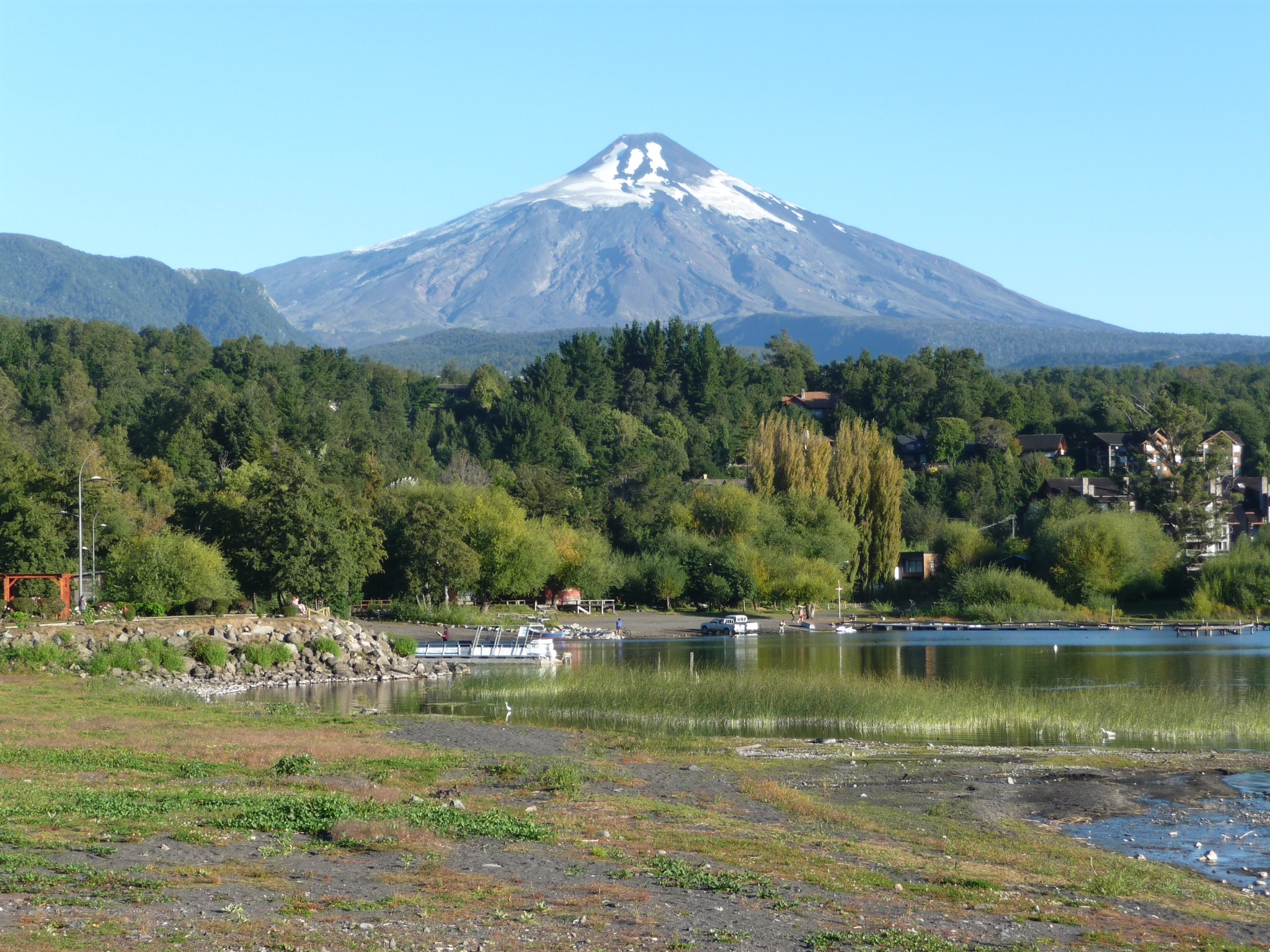
Lovely scenery as we approached Pucon, the imposing Volcan Villaricca in full view. Some on the tour were still undecided on whether they’d climb it given the deaths on it last year and the high prevalence of being turned back half way because of the weather changing. No decision needed here – my mind had been made up on the Torres Del Paine towers walk!
Jo and I were allocated an apartment with a large terrace facing Villaricca – immediately designated the happy hour terrace.
Pucon is a beautiful town; lovely national parks and lakes surrounding it and ….. thermal springs!
Whike four of our group went up to tackle Villaricca, Ruth, Jo and I ventured up to Huerquehue National Park for a stroll around the lakes or at least that was what we thought. Another one that’s just up, up, up!  I practically ran back down in a bid to catch the next bus (it only ran every three hours) but was informed by two Melbourne guys about to hike up that I’d missed it by two minutes. Of course the park ranger had a mate who could give us a lift back to town for US$50. It was an hours drive and at that stage I was prepared to pay anything.
And then there were 16…. Jonas managed to get over the border and take a combination of taxi, hitch hiking and bus to reach us in Pucon. He had missed our departure by 10 minutes and took a different border crossing otherwise would have caught us en-route.
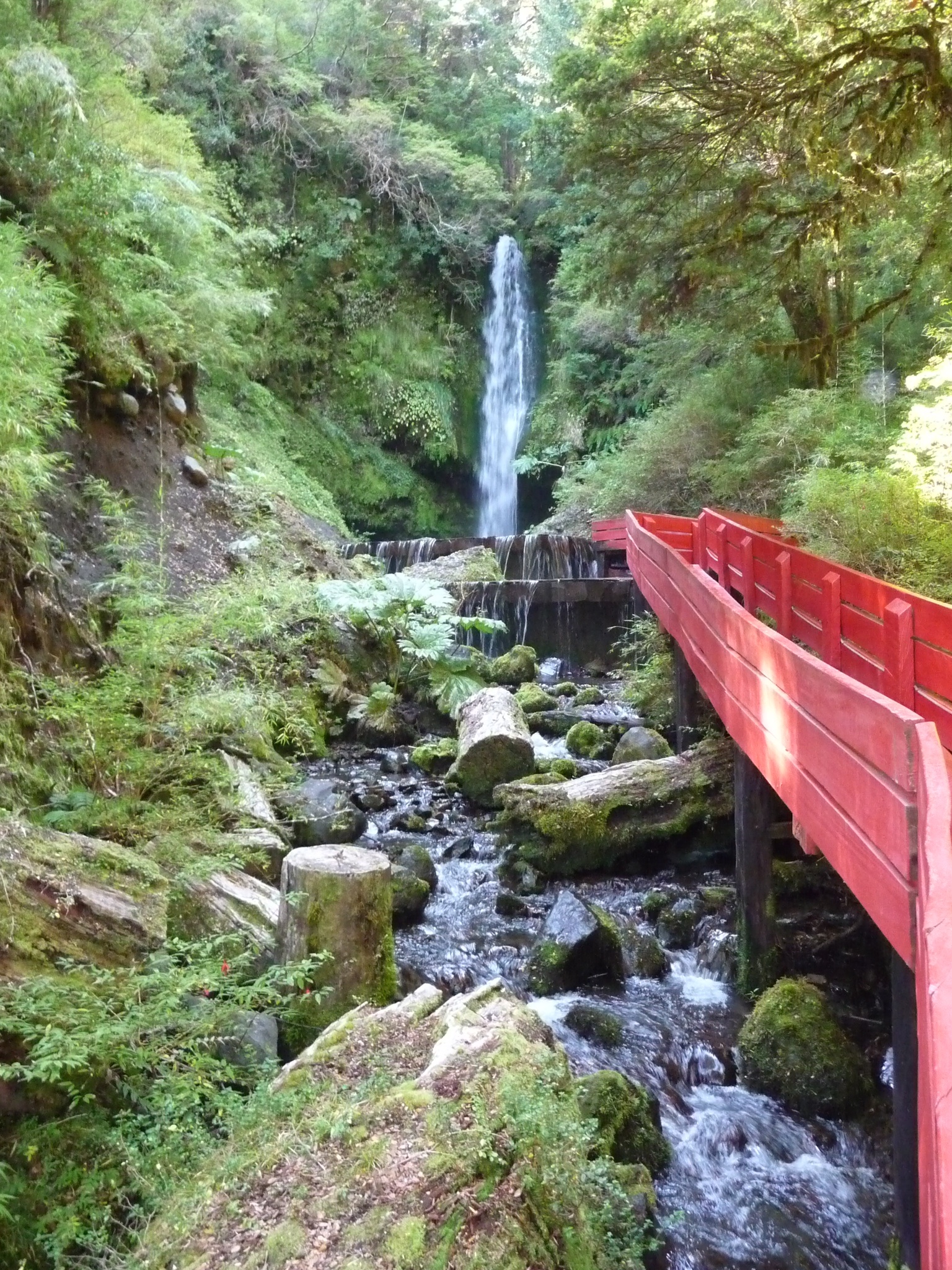
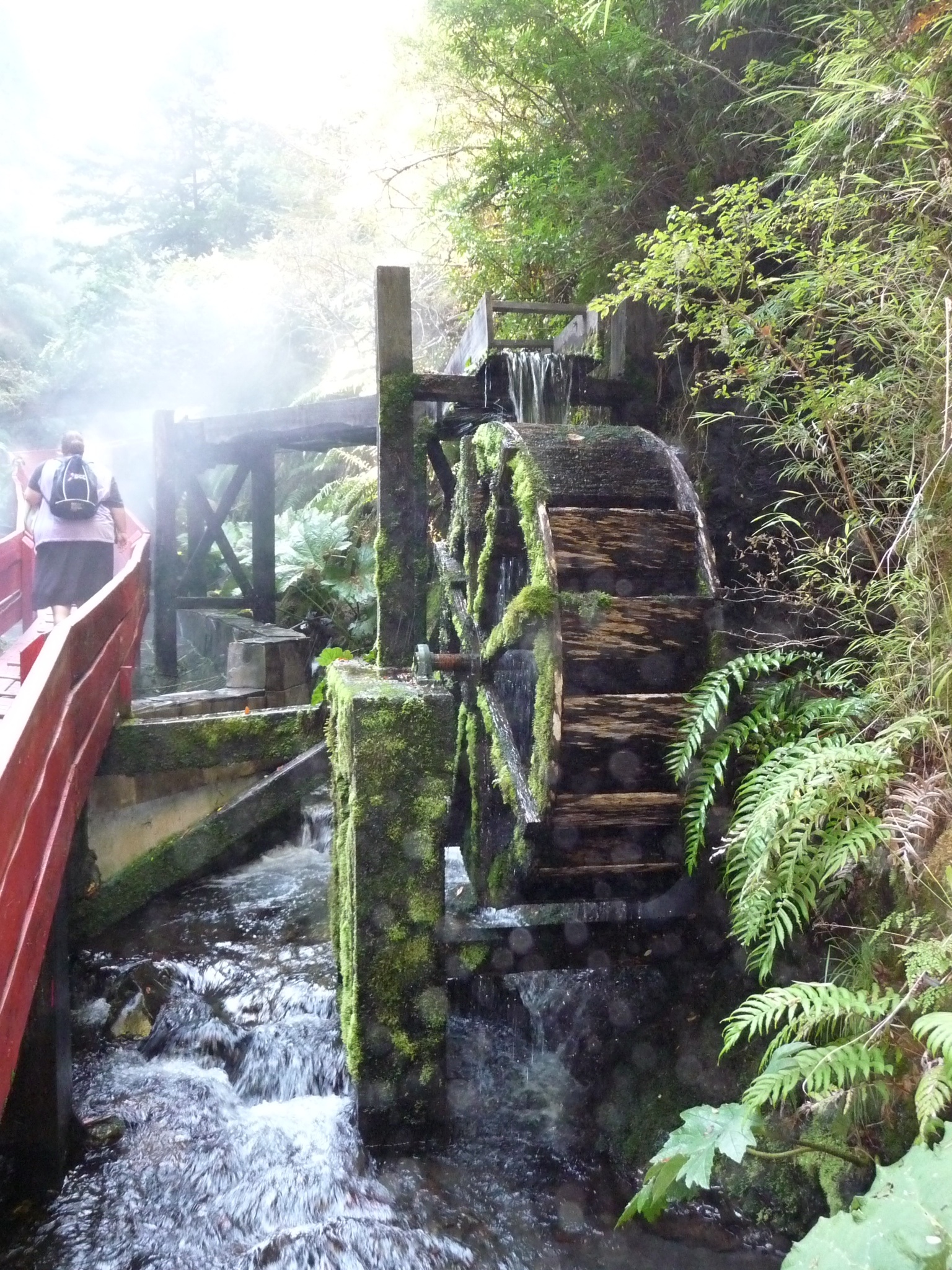
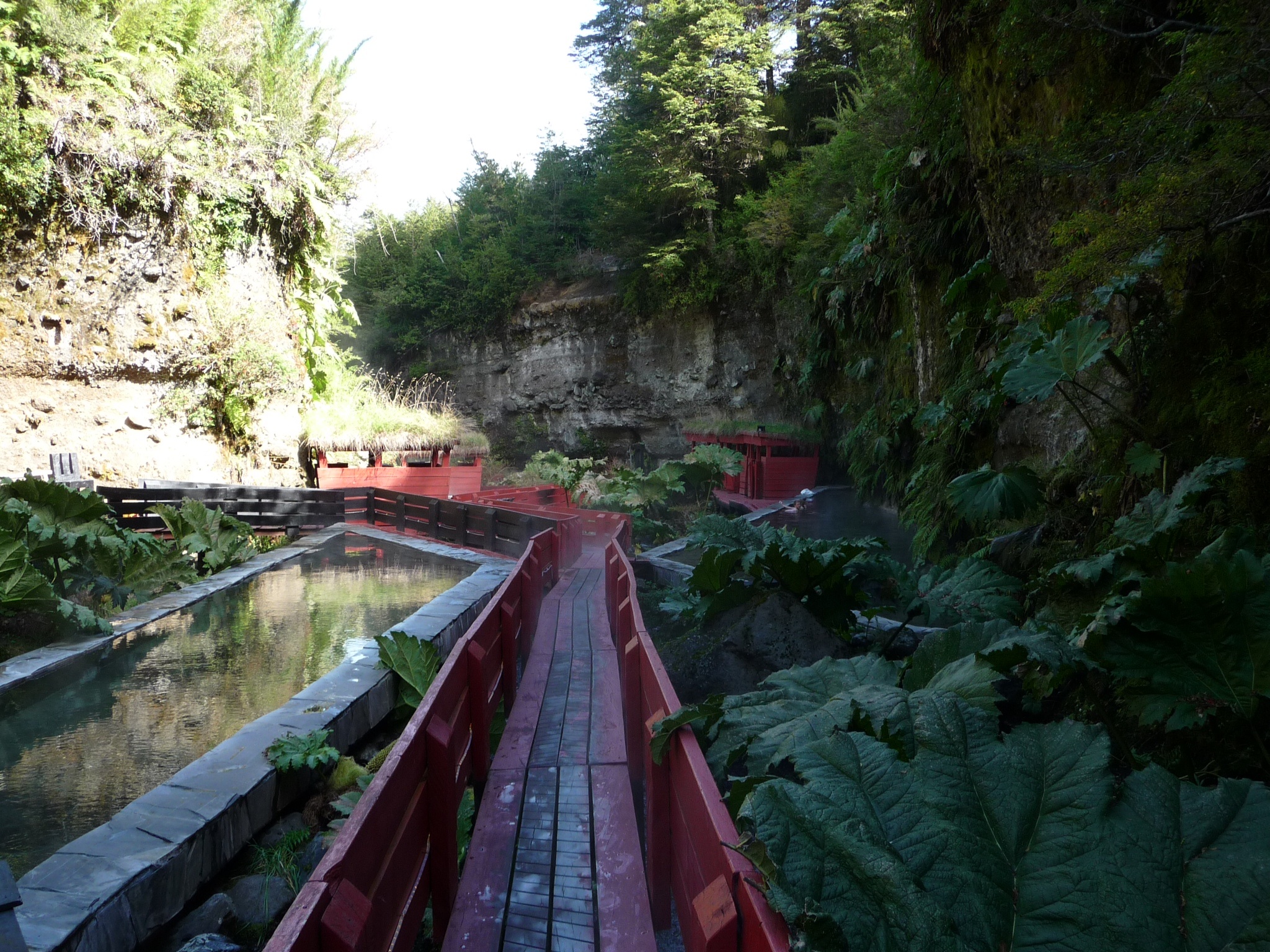
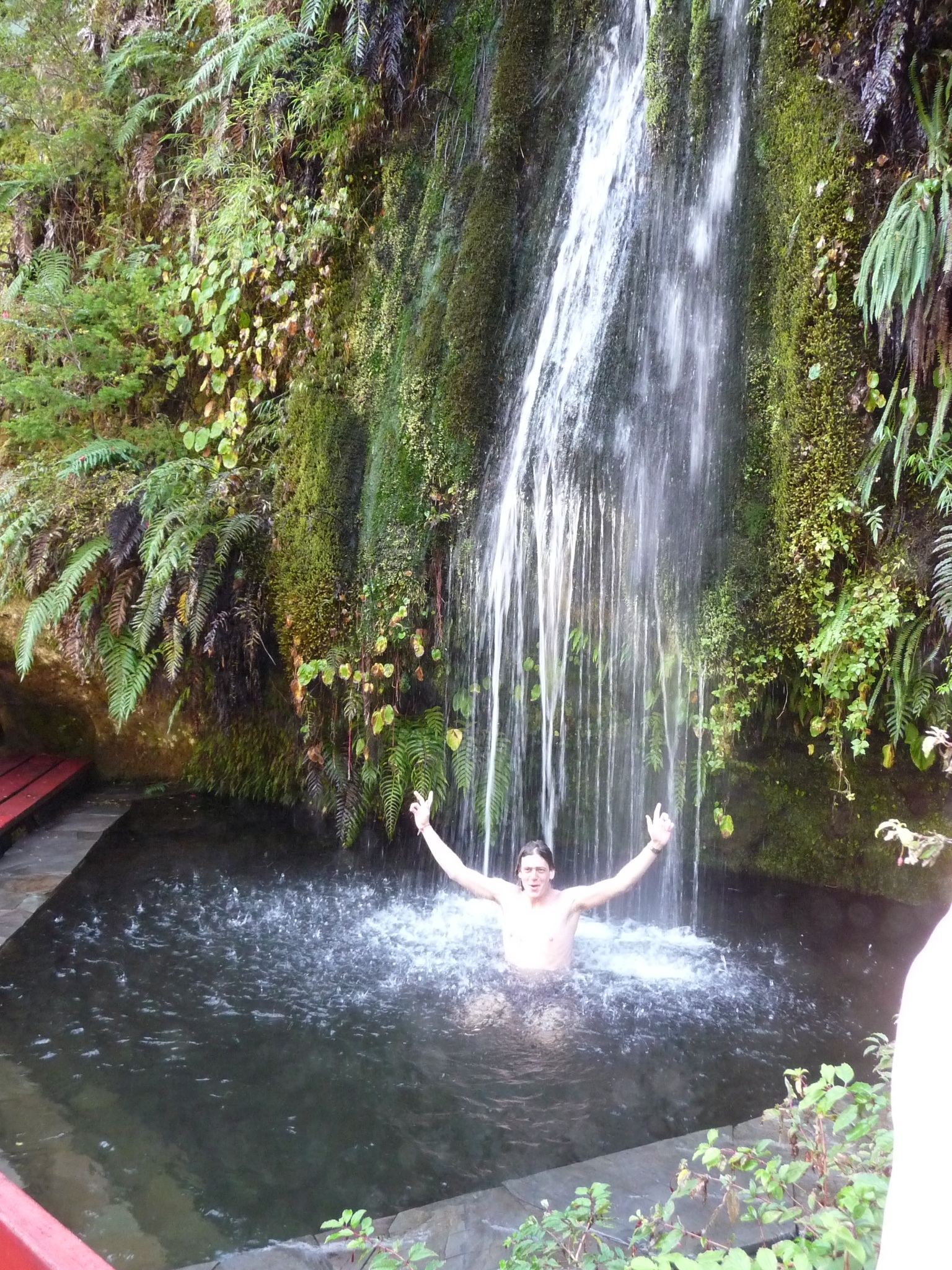
During a fun night on the terrace some of decided we were deserving of some pampering at what’s claimed to be “the best thermal springs in Chile” and so decided to venture off the next morning. I’m sure they do live up to the claim.  Termas Geometricas – I’ve never experienced anything like it. There were a series of slate lined pools of varying temperatures poised above mossy rock, bubbling creeks, some with waterfalls flowing into them. They were accessed by cute suspended timber walkways. Humming birds flitted between the flowering and prehistoric looking plants. Changing cabanas with grassed roofs dotted between the pools. I kept thinking of you Lea and how we could do something similar in Bali!  An absolutely wonderful way to spend my last free day on the trip – well worth the hour and a half drive from town.
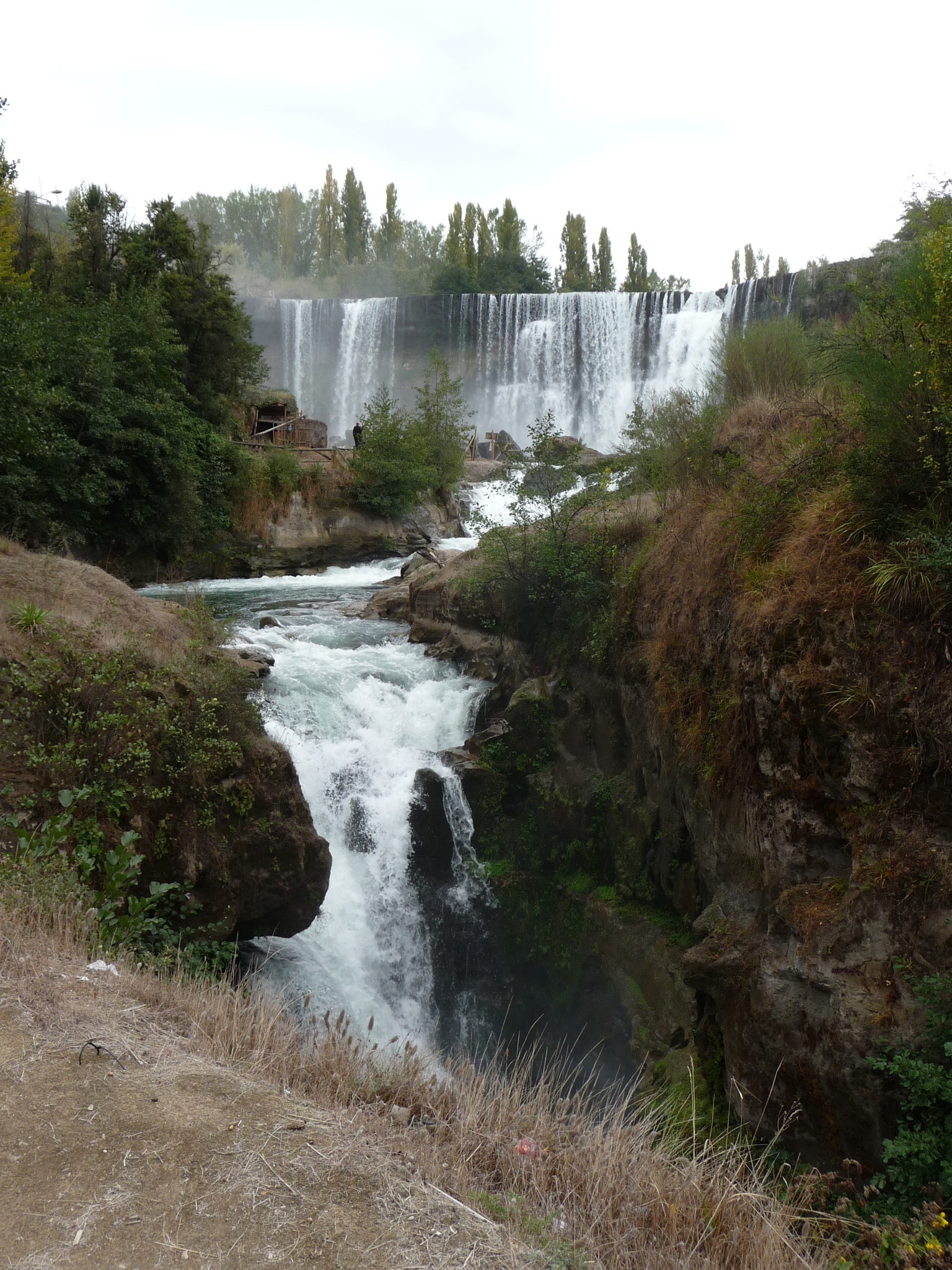
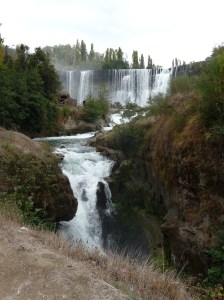
Left Pucon early for the long drive back to Santiago with a lunch stop at the Salto del Laja waterfall.  We were all amazed at the fabulous weather we had been blessed with during the tour – “we don’t do rain” could have been our catch cry.
It has been a wonderful leg of my trip; so much more than I had anticipated. I’m now glad I went on the tour in this direction as it just seemed that the sites and activities got better and better (I originally planned for the reverse but it was sold out).
I’ve met some wonderful people who I truly hope to stay in contact with –  Facebook friending frenzy on the last night in Pucon!  I know I’ll be remembered as “that very talkative Australian”!!!
It was lovely to farewell some of my tour buddies with plans of potential catchups as our travels over the coming months interconnect.
I feel very strong and fit after all the hikes but now looking forward to a bit of S & S in Colombia – salsa y sol me voy!
Puntas Arenas - the Windy City!

Puntas Arenas – the Windy City!

Punta Arenas Cemetery
Punta Arenas Cemetery

image
Casa Menedez-Braun

Casa Menedez-Braun

Views of Torres Del Paine over lunch.

Views of Torres Del Paine over lunch.

The elusive guanacos

The elusive guanacos

image

image

A view of our destination - the towers.

A view of our destination – the towers.

John should have just said it's up, up, up.

John should have just said it’s up, up, up.

image

image

image

image

A tad cold and windy!

A tad cold and windy!

Lago Grey for a bit of iceberg spotting.

Lago Grey for a bit of iceberg spotting.

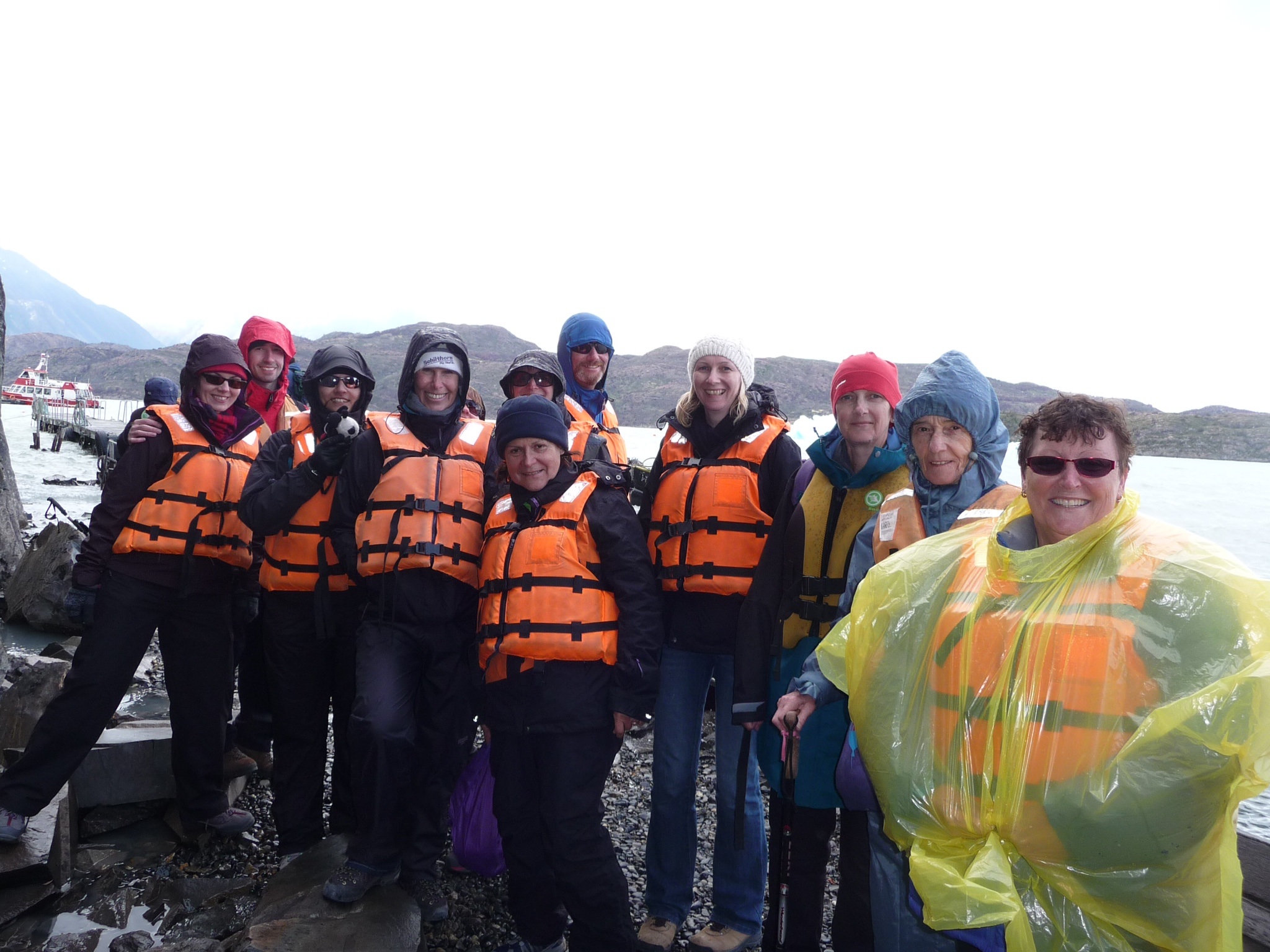
Motley Crew waiting for our boat to Glaciar Grey.

Motley Crew waiting for our boat to Glaciar Grey.


Glacier Grey in sight.

Glacier Grey in sight.

Glacier Grey

Glacier Grey

imageimageimageimage

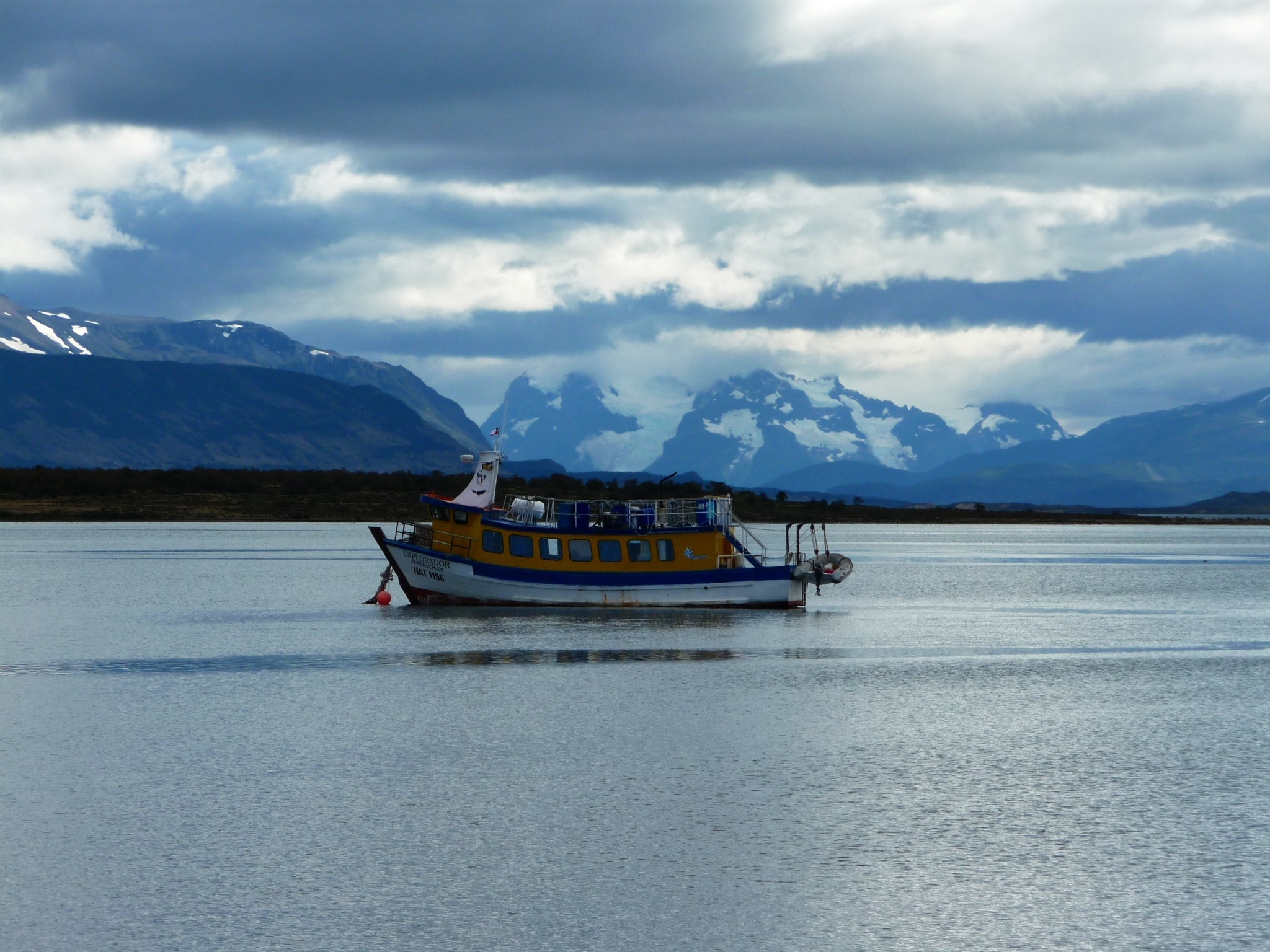
Puerto Natales

Puerto Natales

Perito Moreno

Perito Moreno

imageimageimage

Creak, craw, crash!

Creak, craw, crash!

imageimage

Ruta 40 into El Chalten

Ruta 40 into El Chalten

imageimage

Destination FizRoy - well not quite to the top!

Destination FizRoy – well not quite to the top!

imageimageimageimageimageimageimageimage

A nice spot to chill.

A nice spot to chill.

image

Bariloche from Cerro Otto

Bariloche from Cerro Otto

On route to Pucon.

On route to Pucon.

Los Lagos for lunch.

Los Lagos for lunch.

image

Volcan Villaricca

Volcan Villaricca

Termas Geotermicas

Termas Geotermicas

image

image

Jonas cooling down in degrees!

Jonas cooling down in degrees!

image

Salto del Laga Cascada

Salto del Laga Cascada
Posted in Uncategorized | 2 Comments

Where there’s smoke there’s fire. Tierra Del Fuego
After wearing thongs up and down the slippery slopes of Easter Island I was pleased to be in my hiking boots!
The trip from Buenos Aires was really pleasant. The long wait in the queue passed quickly as I chatted to a nuclear scientist ahead of me who was returning to Patagonia after a conference in the States. It was great to talk to him about the merits or otherwise of nuclear power; particularly given his knowledgable of the Lucas Heights Nuclear Reactor. Despite his attempts at persuading me on the safety of this power generation method and waste disposal options I walked away unconvinced!
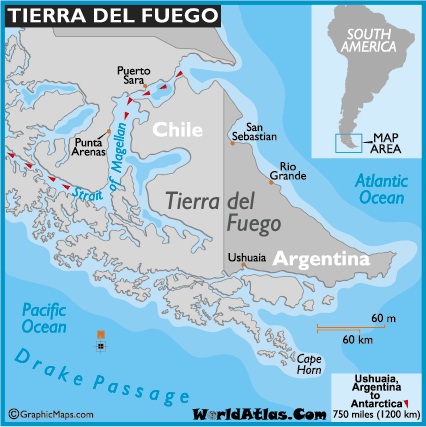
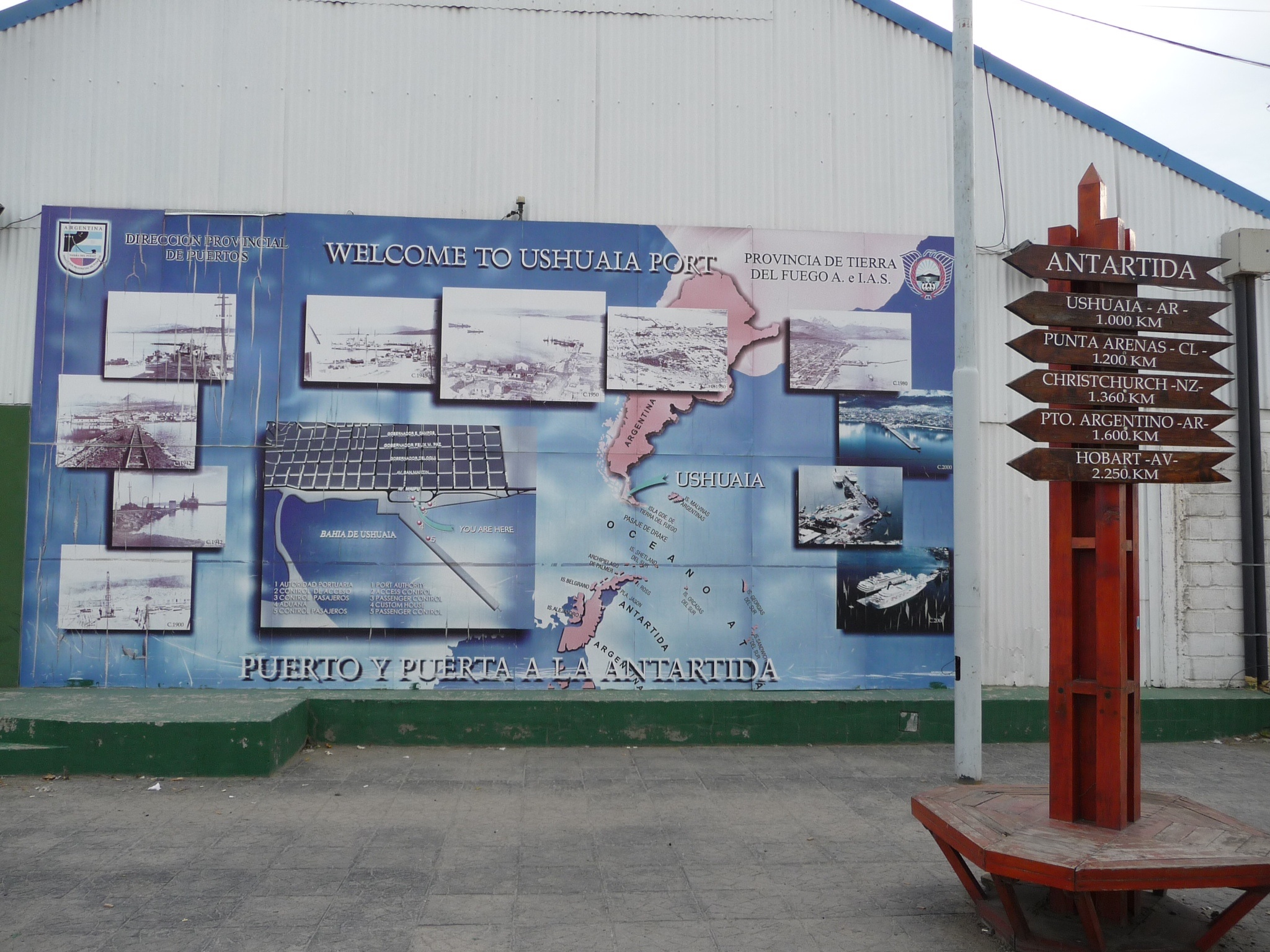
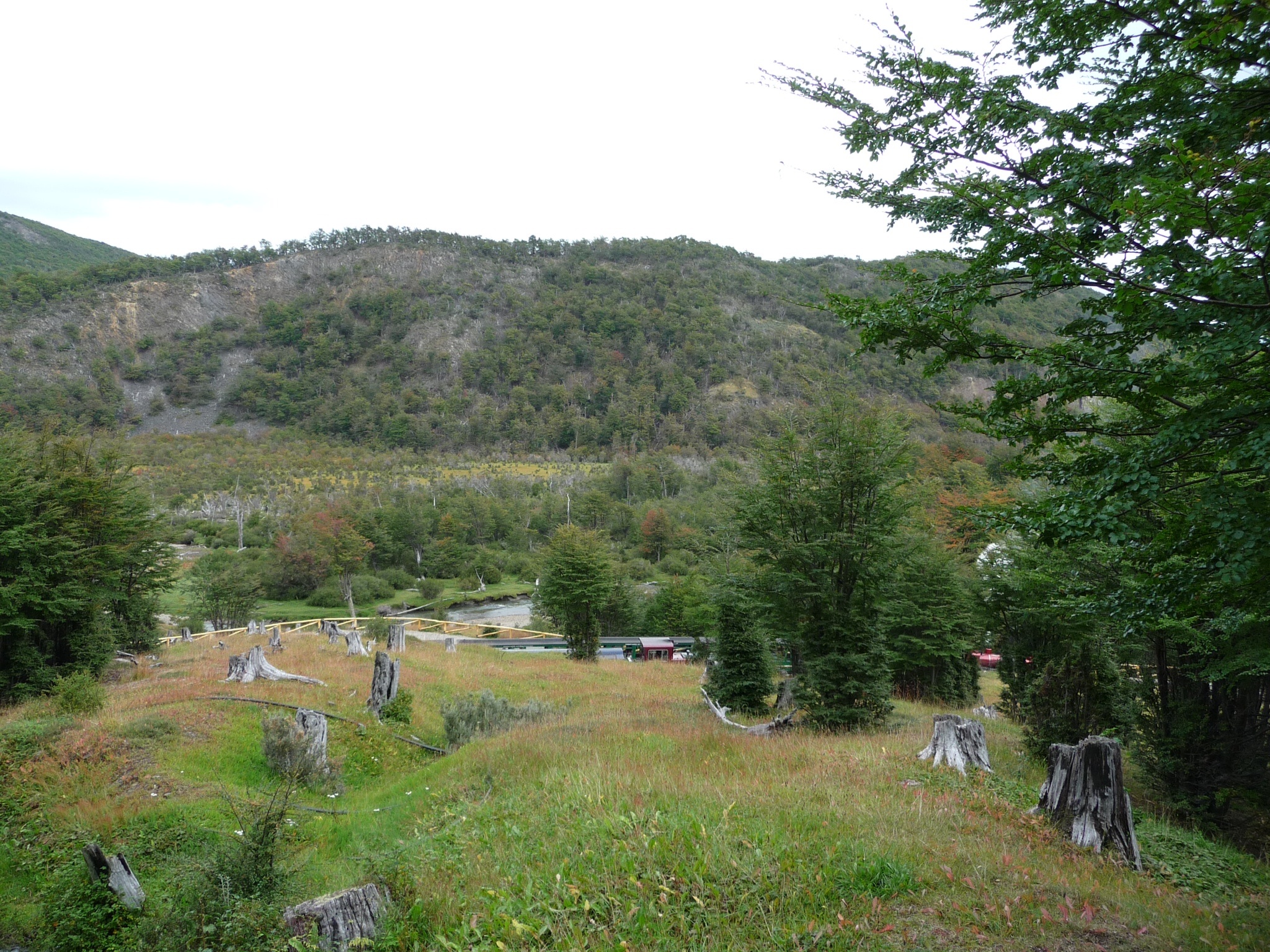
I digress – Tierra del Fuego, land of fires – named so by Ferdinand Magellan after  he saw the smoke of the Yamana natives coming from the trees while he was sailing into what is now Ushuaia.
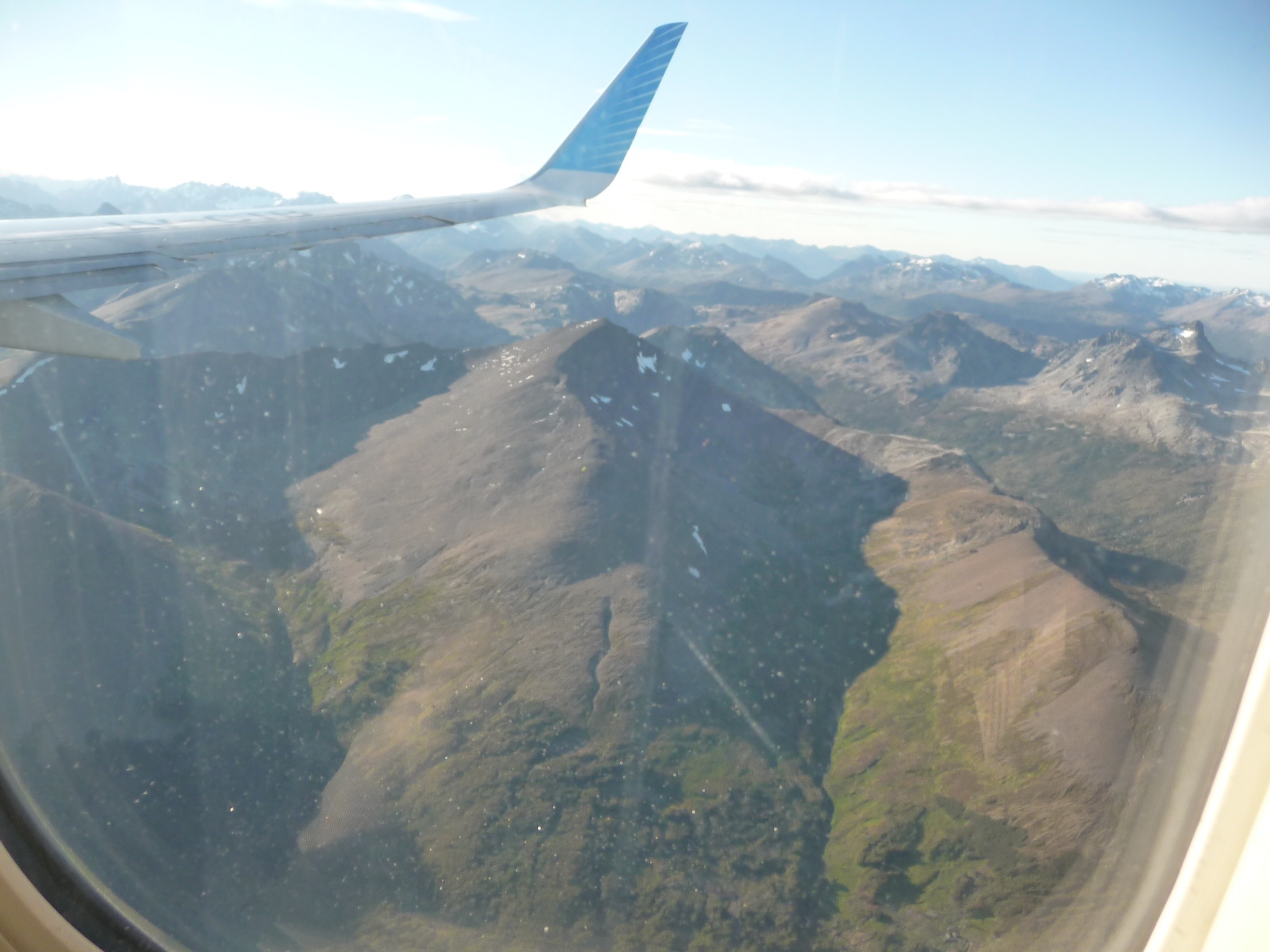
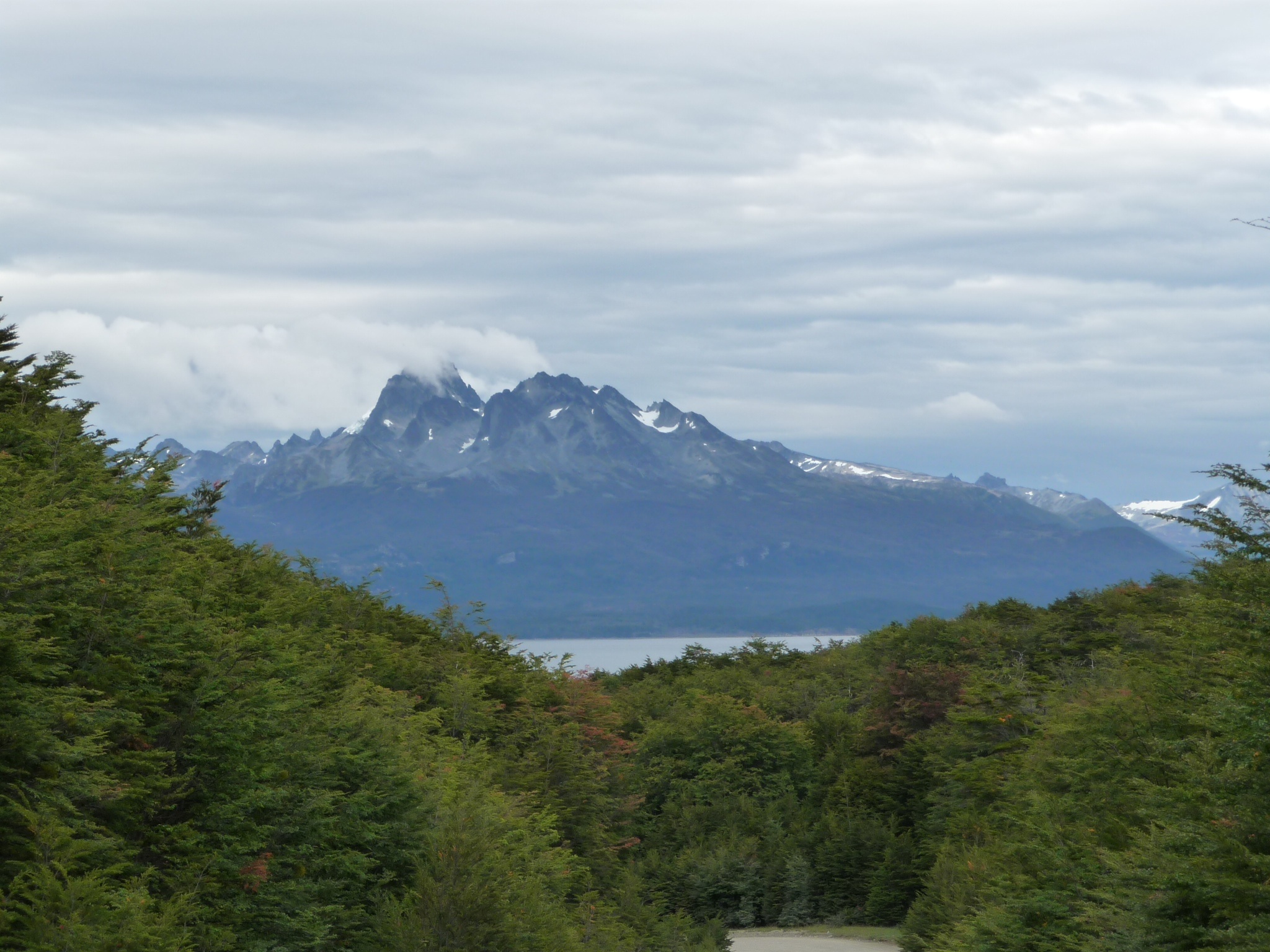
I managed to wake just in time for the stunning views of the Andes from the plane. This time ice-capped mountains surrounding us as we swooped into Ushuaia, the most southern town in the world. Quite amazing when you see on a map its latitude compared to that of the southern most part of Australia!
The start of a new leg of the trip. Lovely group on my tour – Shea, Nancy, Margrit and Leo from Australia; Claudine, Jo, April, Sharon and Paul from Britain and Australian expats living in London – Lee and Mia. We had a Dutch couple, Marcia and Marten, as our guide and driver respectively.
My Spanish was improving by day two in Argentina – managed to pour myself a glass of hot water – I will forever know that caliente is hot – and more importantly a wine glass is el copa!
Ushuaia is an interesting (and very cold) town. It’s the launchpad for cruises to the Antarctica. It has substantial similarities with Sydney (putting aside Sydney’s lovely beaches, fab food and bars) in that it was a penal colony (modelled on that of Australia more than a century later) – the prison opened in 1906.  This approach was taken to address the severe overcrowding of the prisons in Buenos Aires.
In similar style to Australia, a substantial number of the indigenous people managed to be wiped out during the settlement although it appears it wasn’t intended. The settlers were perplexed by the scant clothing of the Yamanas and so in a charitable gesture offered to clothe them. Unfortunately, after living such a pure existence, the Yamanas had insufficient immunity to ward off the disease carried in the clothing and blankets and the tribes slowly died out to the extent that some are now extinct and some only having a few representatives today.
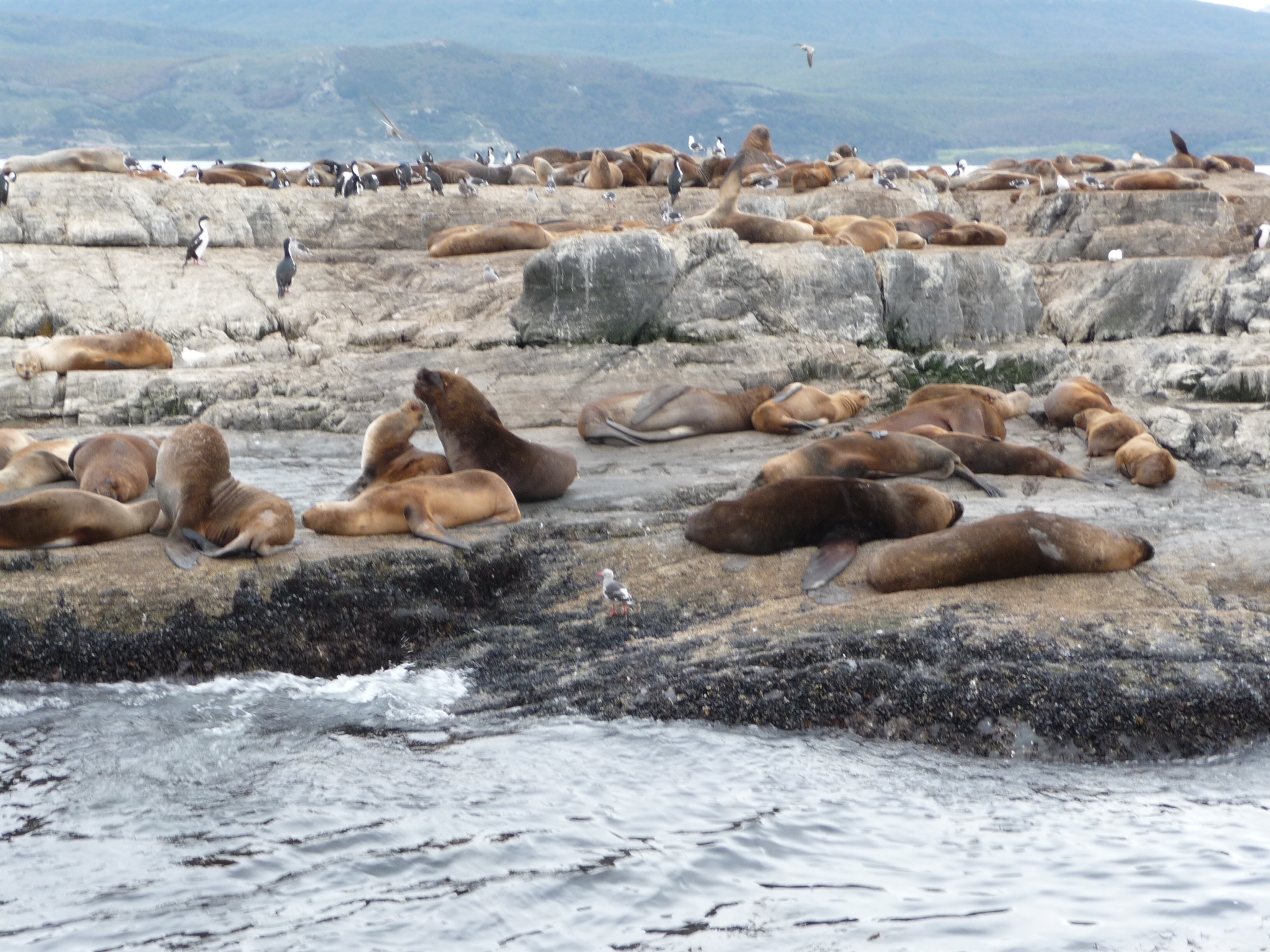
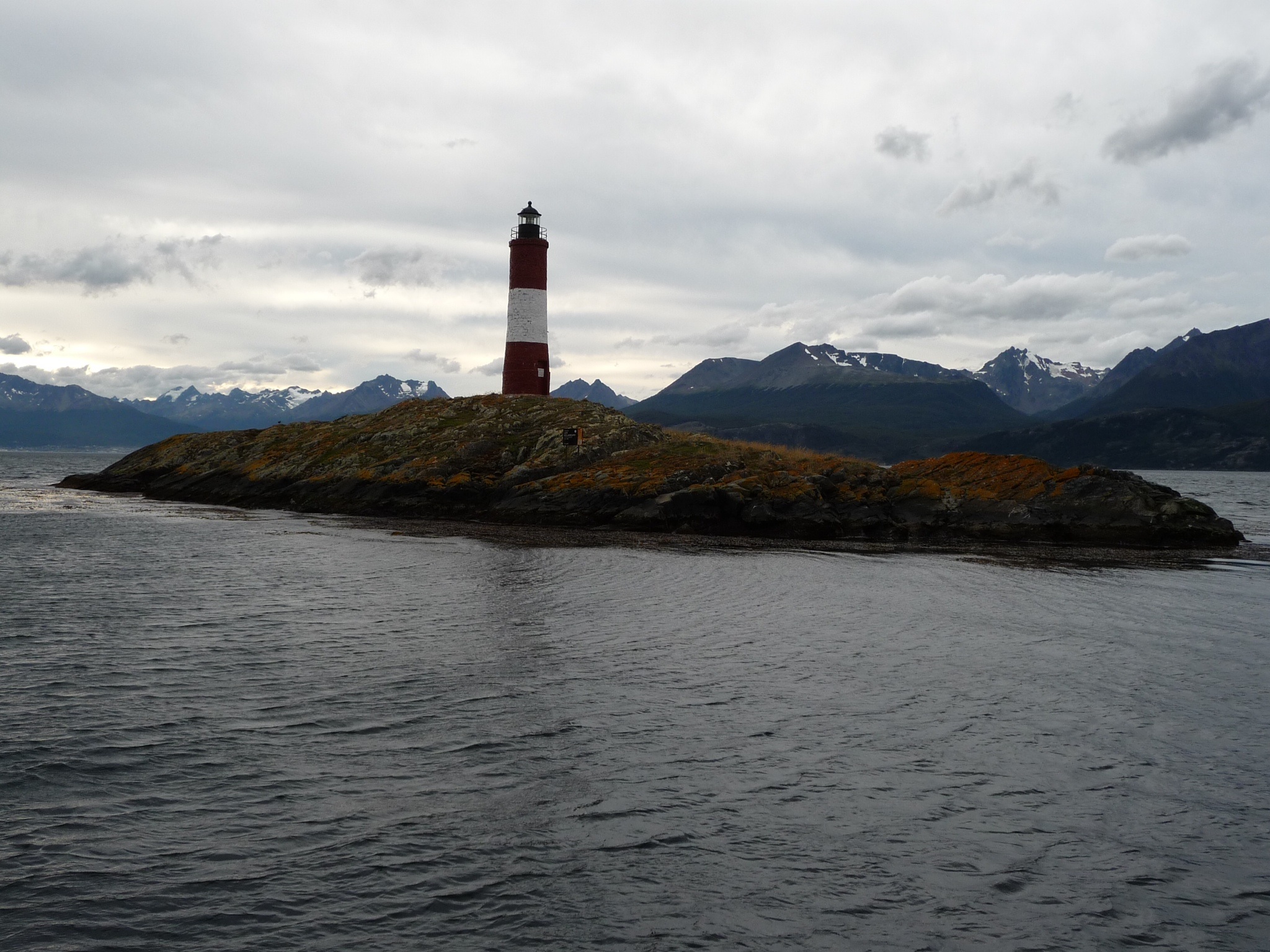
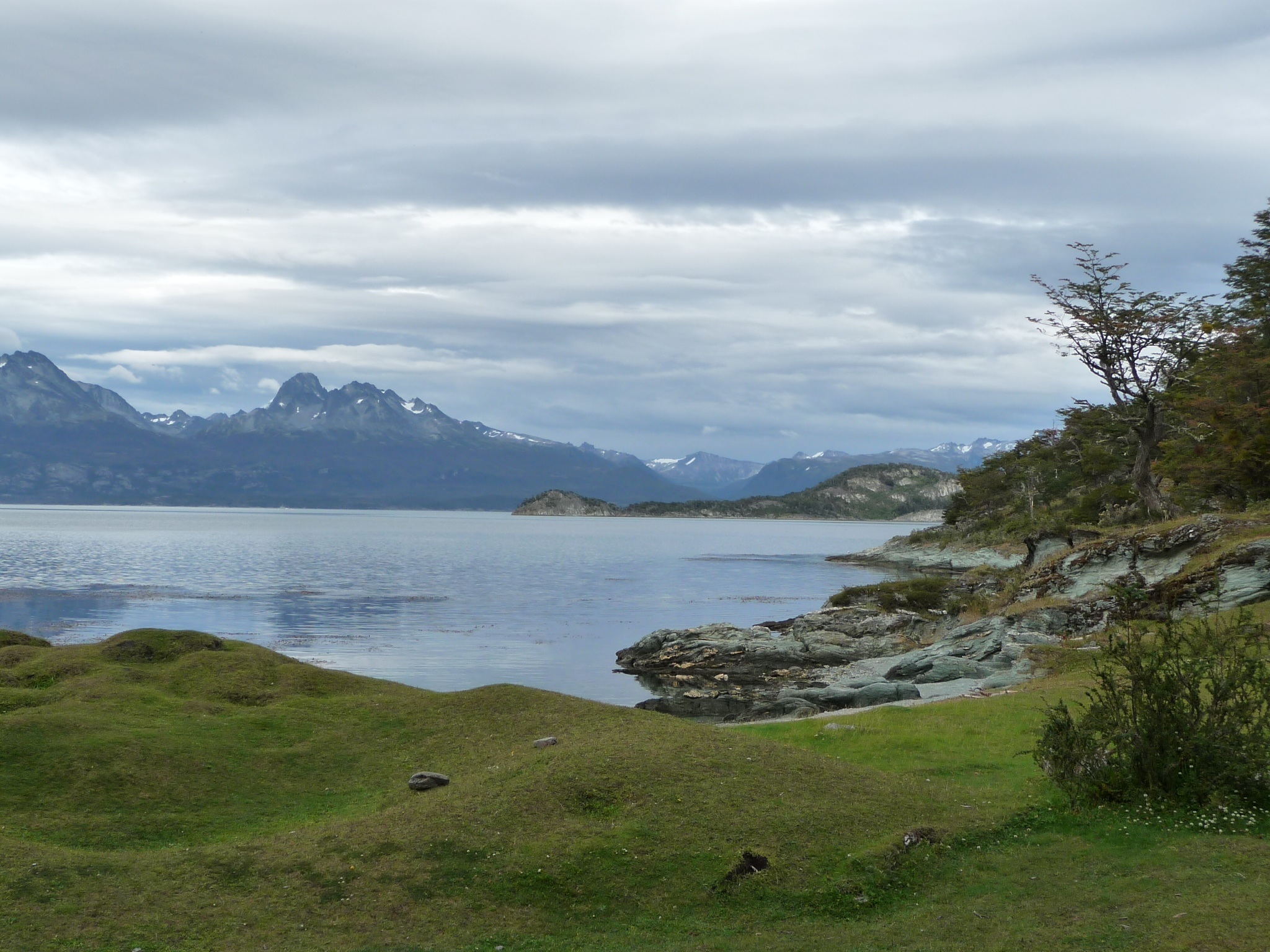
After visiting the very informative Ushuaia museum/prison we went on a cruise of the Beagle Channel where we viewed colonies of Southern American Seals (technically their ears on the outside and ability to walk on all four flippers makes them sea lions) and flocks of Imperial and King Cormorants. It was interesting to hear proclamations about ownership of the Falklands by the Argentinian guides and to watch the facial expressions of my British fellow travellers – still a sore point after all this time.
The next day we ventured to Tierra del Fuego National Park. I chose to take the very touristy train up to the park entrance; others took the bus so it wasn’t just me being lazy!  I did the Costela walk with Jo; a lovely four hour walk around the lake.
For dinner I convinced a few others to come along to a groovy local bar/restaurant I had discovered the night before. Early indications that perhaps I may be the lush in the group!  We got back to the room early (for Argentine standards) and at 11:30pm I heard rhythmic drums playing down on the foreshore. I was keen to go and check it out but I took note of my mature room buddy’s observation that the streets were pretty deserted; so I stayed in my PJs in the safety of my (very warm) room. I wonder what was going on?  Perhaps preparation for a festival?
We had an early start out of Ushuaia (in Frankie – our wheels for the next two weeks) for our entry into Chile and Southern Patagonia.  It was at this time, precisely while the guide was talking us through the days that lay ahead that I realised that in my haste to book the trip I may not have read the dossier sufficiently to understand the extremity of the hikes ahead of us!!!  Stories of only half of the group being likely to make it to the end of the walks had me a little concerned. Thankfully it became apparent Marcia meant that those who couldn’t make it would turn back not that they’d be given some sort of nature burial!  So at the next stop I packed away the summer dresses and sandals and prepared a pack of rather androgynous trekking gear – okay I might have kept out a pink scarf for some colour!
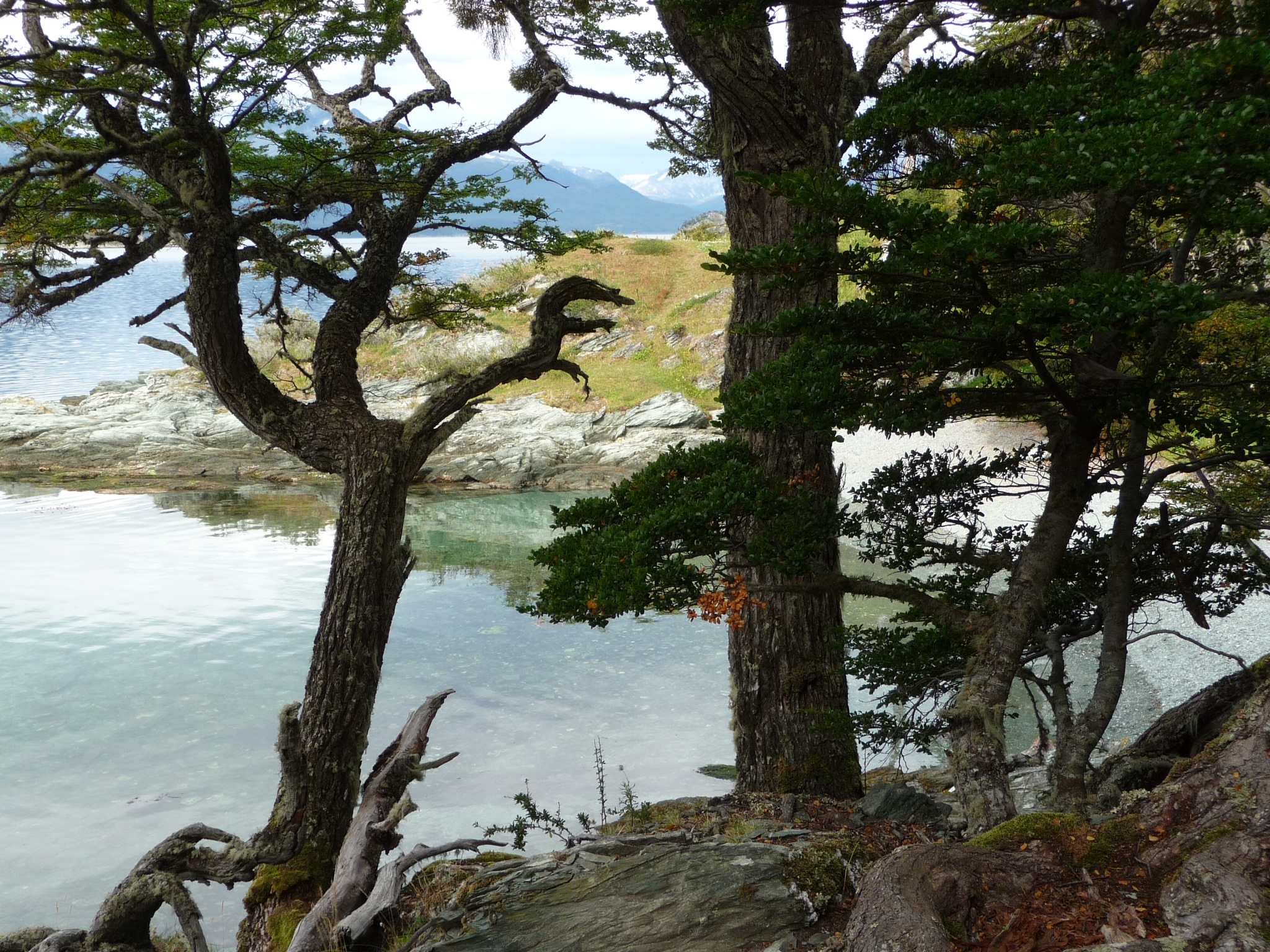
We ventured on, leaving behind the turning autumn leaves, cementing the memory of the land of fires!

Image

The end of The Andes

The end of The Andes

imageimage

The Beagle Channel

The Beagle Channel

image

The tree cemetery

The tree cemetery

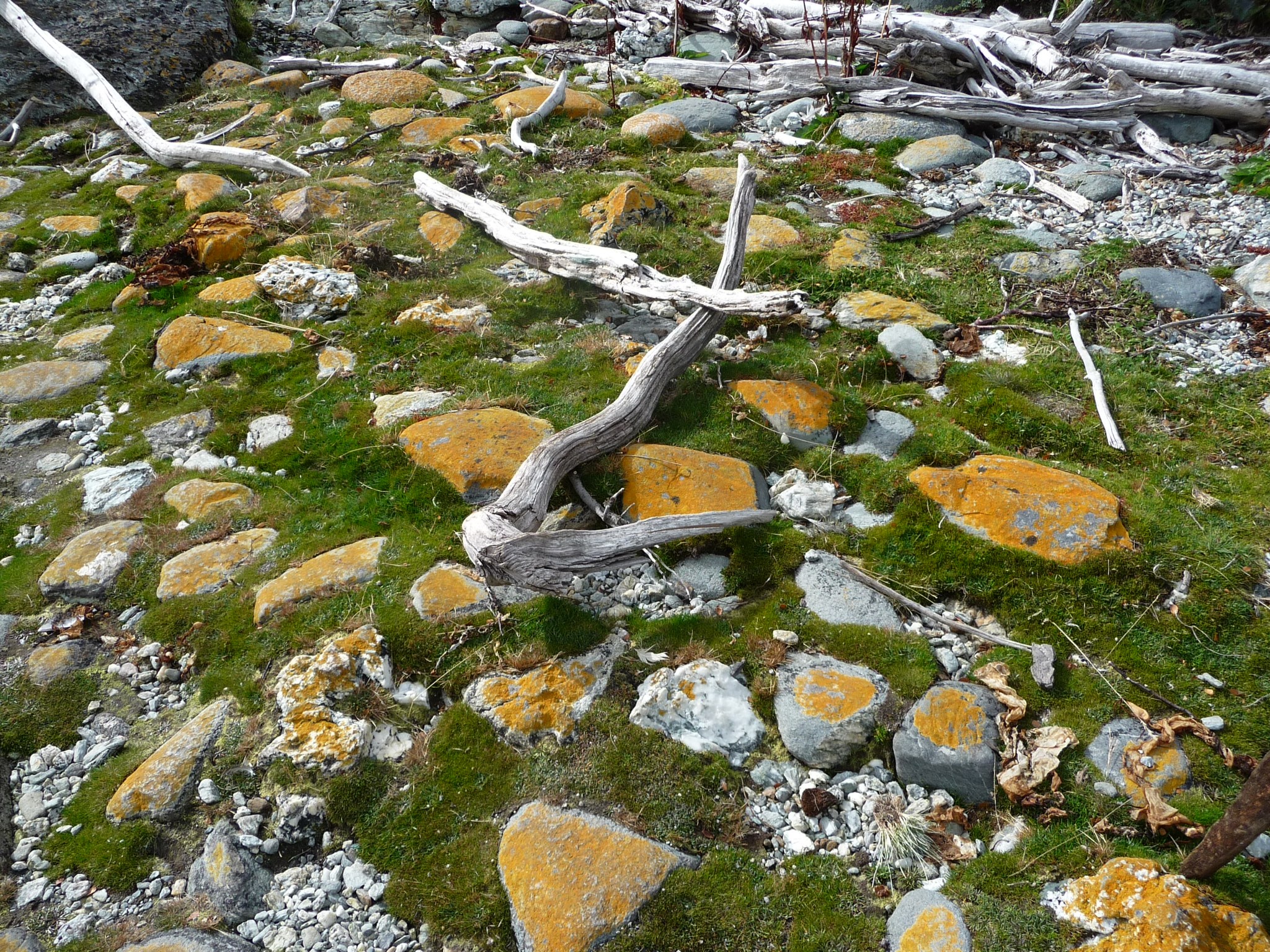
Tierra Del Fuego

Tierra Del Fuego

image

Tierra del Fuego

Tierra del Fuego

imageimage


Posted in Uncategorized | Leave a comment

Capturing the magic of the Aku-Aku on Isla de Pascua

This gallery contains 26 photos.

Iorana means welcome in Rapa Nui, the local language for Isla de Pascua (Easter Is) and its people. Rap Nui is also the polynesian name for the Island. The six hour flight was great, I had a lovely Chilean woman … Continue reading

More Galleries | 4 Comments

Hola South America

I was feeling rather drowsy as, after 26 hours of travel, our plane made its descent into Santiago but the fabulous sight of the Andes surrounding us soon woke me up and so….the eagle has landed.
You know that exhilarating feeling of having navigated your way through the first airport of your trip and arriving at the accommodation you’ve booked?  Well that’s the feeling I’m experiencing right now as I enjoy a vino tinto and a patata salad at a local bar where no one speaks English. I can do this – okay beyond a wine and salad I may struggle.
My quaint accommodation at Marilu’s Bed and Breakfast serves me well.  There are bars on the windows, the locks all work and Marilu has been a saint in helping me check in for my flight to Easter Island tomorrow.
The South America adventure has begun…..
Posted in Uncategorized | 2 Comments